Holmes' Return Timeline Tightens Mets' Rotation Window—And Clouds September Bullpen Math
By Erik Schwartz ·
A fractured fibula that sidelines Clay Holmes for six to eight weeks, followed by a six-week ramp-up, creates a narrow window for impact pitching when the Mets' season is already in free fall.
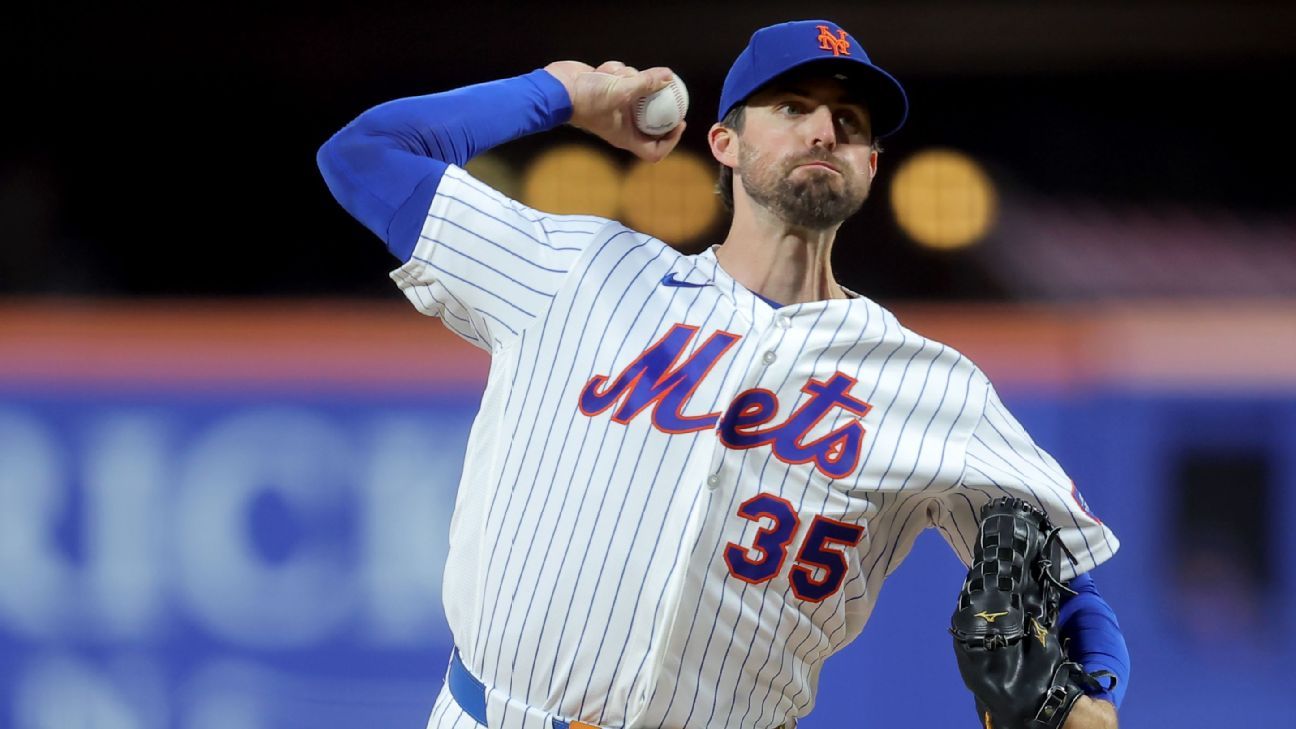
Clay Holmes took a 111.1 mph comebacker off Spencer Jones' bat Friday night and left the field with a fractured right fibula. Per the Mets' announcement, the right-hander is expected to miss six to eight weeks of healing, followed by a spring training-style preparation period of approximately six weeks. That timeline puts Holmes back on a mound sometime in late August or early September—if everything progresses without setback. Manager Carlos Mendoza confirmed the expectation: "Yes, definitely we'll see him this season."
The math is tight, but it's not illusory. A six-week healing window closes around early July; add six weeks of ramping intensity (bullpen work, light games, extended outings) and Holmes could genuinely pitch in September when postseason positioning matters most. The Mets need to know whether that's realistic or optimistic. Holmes is 4-4 with a 2.39 ERA in 2026, a reliable mid-rotation arm with closer experience in his past. That skill set has enormous value in October if he's ready—but only if his leg responds without complication.
Context sharpens the sting. The Mets began 2026 with baseball's highest payroll and have deployed it into an 18-26 record, last in the NL East. Their IL has become a roster—Lindor, Alvarez, Polanco, Luis Robert Jr., Kodai Senga, and now Holmes all sidelined. That injury cluster isn't noise. It's a statement about organizational health or, at minimum, short-term roster management. Mendoza acknowledged the weight: "Yesterday felt different." A closer is different from a struggling starter or backup. Holmes represents reliability, and the Mets are watching it vanish into a six-week calendar.
For bettors, the immediate implication is clear: Mets bullpen utilization profiles and win totals are both now anchored to a compressed timeline and an unproven return. If Holmes doesn't pitch until September and the team has already been eliminated, his return is postseason noise. If he clears the ramp and pitches in August with the Mets still in contention, his arm provides a tangible upgrade to a weakened relief corps. That binary outcome—meaningful contribution or ceremonial return—won't resolve for two months. Markets haven't fully priced the downside scenario where Holmes' ramp-up coincides with a playoff window that has already closed.
For September Mets bullpen props, for closer usage rates, and for team-total overs in August and September, this injury creates a hidden fragility. The public line assumes Holmes returns and contributes. Smart money is hedging the scenario where the Mets are already out of contention and his return becomes a 2027 audition, not a 2026 playoff asset. That's the edge: the market hasn't yet weighted the conditional probability that late-stage roster depth becomes immaterial if the ceiling collapses before the ramp-up finishes.