Thornton's Mets Debut Is a Control Bet, Not a Stuff Bet—Here's Why That Matters for Wednesday
By PropBetEdge Editorial Team ·
The Mets are banking on pinpoint command over raw velocity; that preference shapes how to read Thornton's first-inning and strikeout risk.
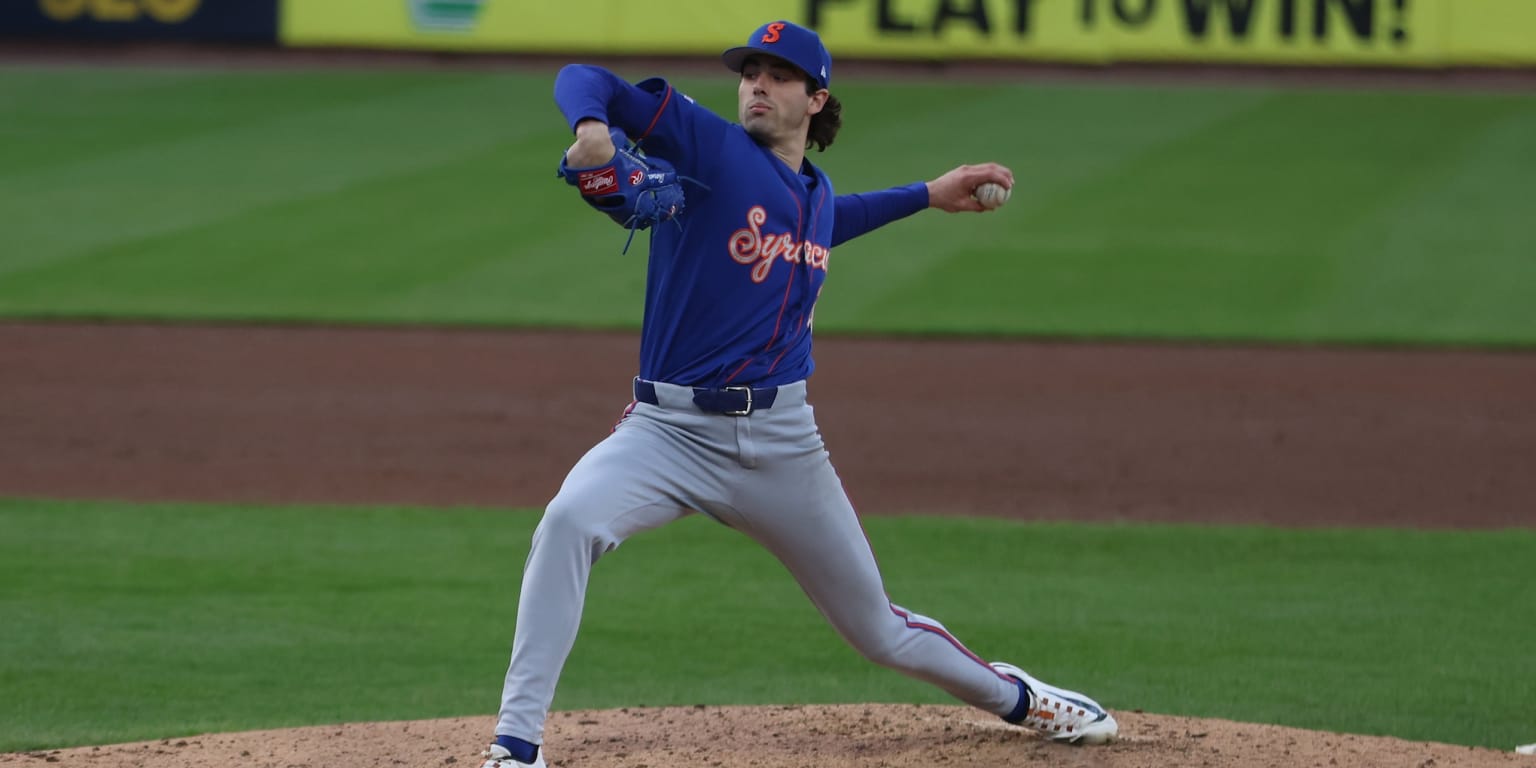
The Mets called up 24-year-old left-hander Zach Thornton on Wednesday to fill a rotation gap created by Clay Holmes's fractured fibula, passing over higher-ranked prospects like Jonah Tong and Jack Wenninger. The choice reveals a precise organizational valuation: Thornton's control and pitch sequencing trump the velocity numbers his peers possess. He sits 92–93 mph but has allowed three or fewer earned runs in 19 of his last 21 minor-league starts—a consistency rate that doesn't hide behind small samples or cherry-picked stretches.
There's a direct causal chain here. Thornton's fastball velocity is ordinary, but his secondary stuff—particularly a mid-80s slider deployed roughly as often as his fastballs combined—functions as a legitimate out pitch because he locates it. A rival scout's assessment captured it: "can really pitch and throw strikes," with the caveat that premium stuff matters if command lapses. That conditional risk is the hook for bettors. Thornton will face a Nationals lineup stocked with left-handed hitters (James Wood, CJ Abrams, Daylen Lile), whom he was expressly chosen to neutralize. The southpaw matchup is real; the execution risk is equally real.
For strikeout projections, the math is instructive. Thornton's control-first profile typically correlates with lower per-inning whiff rates—he's not a velocity-based strikeout artist. In the minors, his K/9 has hovered around 8.5–9.2 across his last three levels, respectable but not elite. Against a Nationals team that has fanned in the top half of the league's strikeout rate, a Thornton prop lean toward unders on strikeout totals makes structural sense. The Mets didn't select him for a power-arm audition; they selected him for ball movement and precision. If the line opens Thornton's K total at 5.5 or higher, the under carries an edge because the market may be pricing a bulk-role pitcher (3–4 innings potentially) as though he were a traditional starter with velocity buzz.
First-inning risk warrants separate treatment. Thornton's command profile is durable over a start, but his lack of premium fastball velocity means early contact is plausible. If Nationals hitters sit fastball early and make solid contact, the first-inning over becomes live, especially in a Nationals Park that plays as a hitter's park. Conversely, if Thornton establishes his slider early, the first-inning under is the rational bet. The key variable isn't Thornton's arm talent—it's whether the Nationals adjust to his sequencing within the first few batters. That's single-event variance, not a persistent edge, so any first-inning angle fades quickly after the opening frame.
Manager Carlos Mendoza's commentary—"a guy that's going to move the ball around, he's going to throw strikes"—is a betting tell. That description doesn't hint at strikeout upside; it flags a pitcher who will induce outs via weak contact and ground balls. Team total unders (Mets) carry modest appeal if their offensive matchup is unfavorable and Thornton's bulk role forces the Nationals to build an early lead, compressing run-scoring opportunities late. But the cleanest angle is Thornton's strikeout unders, assuming the line prices him as a traditional starter rather than a control-focused specialist operating in a reserve role.