Troy Melton Is Already Pricing Like a Front-Line Starter—And the Market Hasn't Caught Up
By Erik Schwartz ·
The Tigers' young right-hander struck out nine in five-plus innings on Wednesday while posting the AL's best ERA among qualified starters, but his strikeout props remain underpriced relative to his recent stuff and workload.
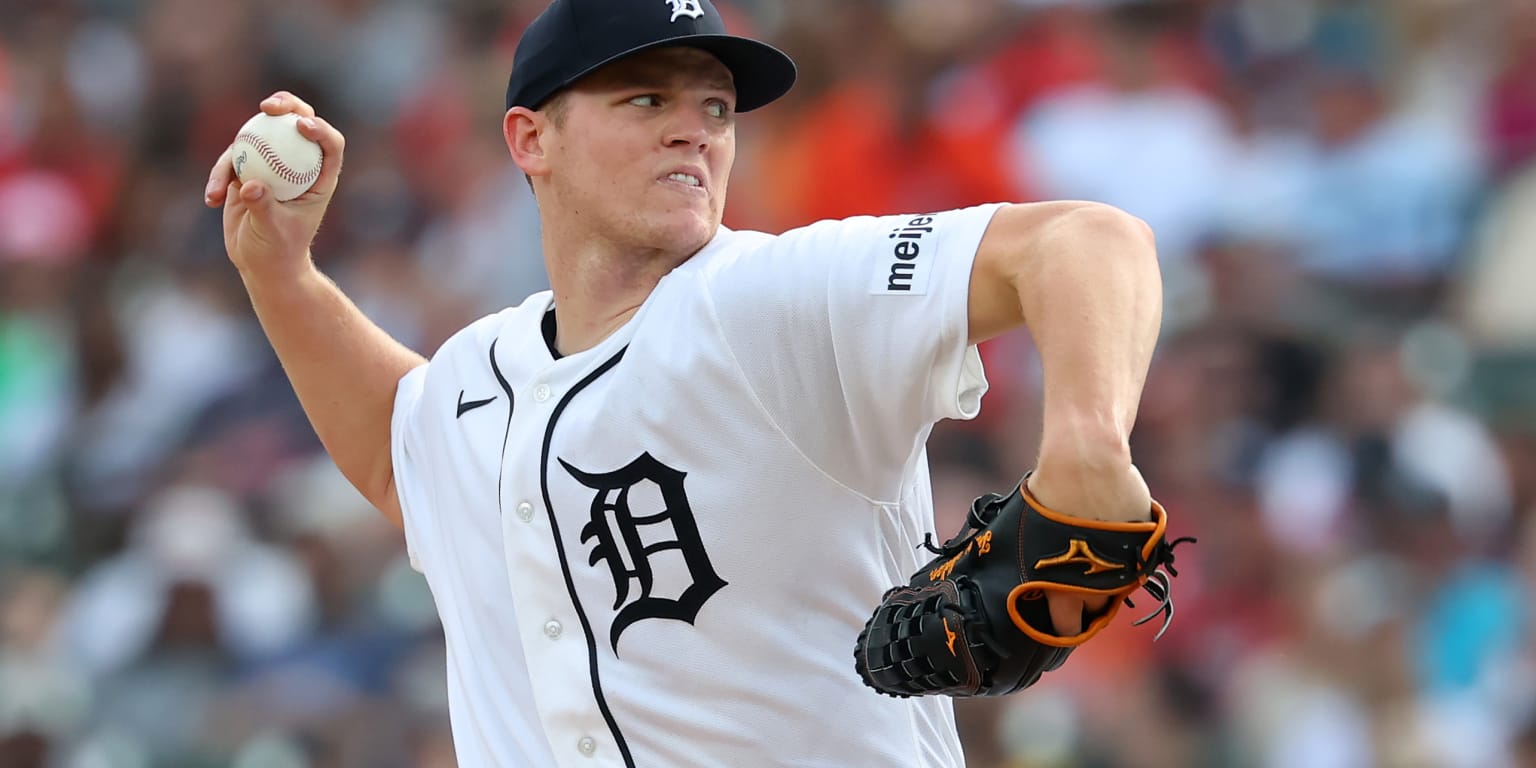
Troy Melton delivered a 9-strikeout performance across 5⅓ innings Wednesday night, leading Detroit to a 6-1 win over Oakland and cementing his case as the Tigers' successor to Justin Verlander, who announced his retirement earlier that day. The one run Melton allowed was unearned, courtesy of a Zach McKinstry error, which means his ERA sits at 1.82—lowest in the American League among qualified starters since his return from a right elbow injury on May 24.
The context matters as much as the line. Melton has thrown 23⅔ innings over his last four starts, allowing just two earned runs while striking out 27 batters. That's a strikeout rate of 10.3 per nine innings—elite territory, and far above his season average. More importantly, six of his last seven starts qualify as quality outings (at least six innings, three or fewer earned runs), a consistency pattern that separates reliable depth from a single-game spike. His 2.19 ERA through 12 career starts as a Tiger is the lowest by any Detroit pitcher in that same span since Mark Fidrych's rookie season in 1976, a comp that speaks to both his command and the historical rarity of what he's building.
What makes this runway particularly durable: Melton isn't riding unsustainable batted-ball luck or an elevated strikeout rate against weak competition. His nine strikeouts Wednesday came via methodical stuff—a 98 mph fastball that bucked Zack Gelof twice (third and fifth innings) and a cutter that produced three whiffs in the fourth alone. The Athletics entered with a top-10 strikeout rate in the majors, meaning Melton's performance wasn't inflated by a defensive liability. Over his four-start stretch, he's faced a mixed bag of lineups and maintained his K rate anyway.
The betting angle crystallizes here: Melton's strikeout props are still anchored to his pre-May-24 baseline, when injury uncertainty hung over his availability and he lacked game data. Books are pricing his upcoming starts as if he's a complementary depth piece, not a 27-K-in-four-starts operative. Oddsmakers haven't fully adjusted his K-over numbers to reflect either his elite command profile or the Tigers' clear intention to feature him in high-leverage spots as the Verlander era closes. The next two weeks of Melton starts—before the market fully resets his ceiling—represent the widest window to exploit that gap. His strikeout total will rise as his reputation solidifies; that movement is already baked into the market's longer-term outlook. Right now, early-week lines on his K prop carry a material discount.
Detroit's dominant offensive output (6 runs on limited hard contact from Oakland) also provides a secondary angle: if Melton continues to eat innings cleanly while the Tigers' lineup maintains its seven-of-eight win streak, the Tigers' team total and first-five-inning totals should benefit from both shallow pitch counts by opposing starters and run-support consistency that limits pressure on Detroit's bullpen.