MLB
McLean's Three-Week Ascent: From Below 4.00 ERA to Elite Strikeout Run
A rookie pitcher who couldn't find consistency in June is now stringing together Cy Young-caliber performance—and the strikeout props may not have caught up yet.
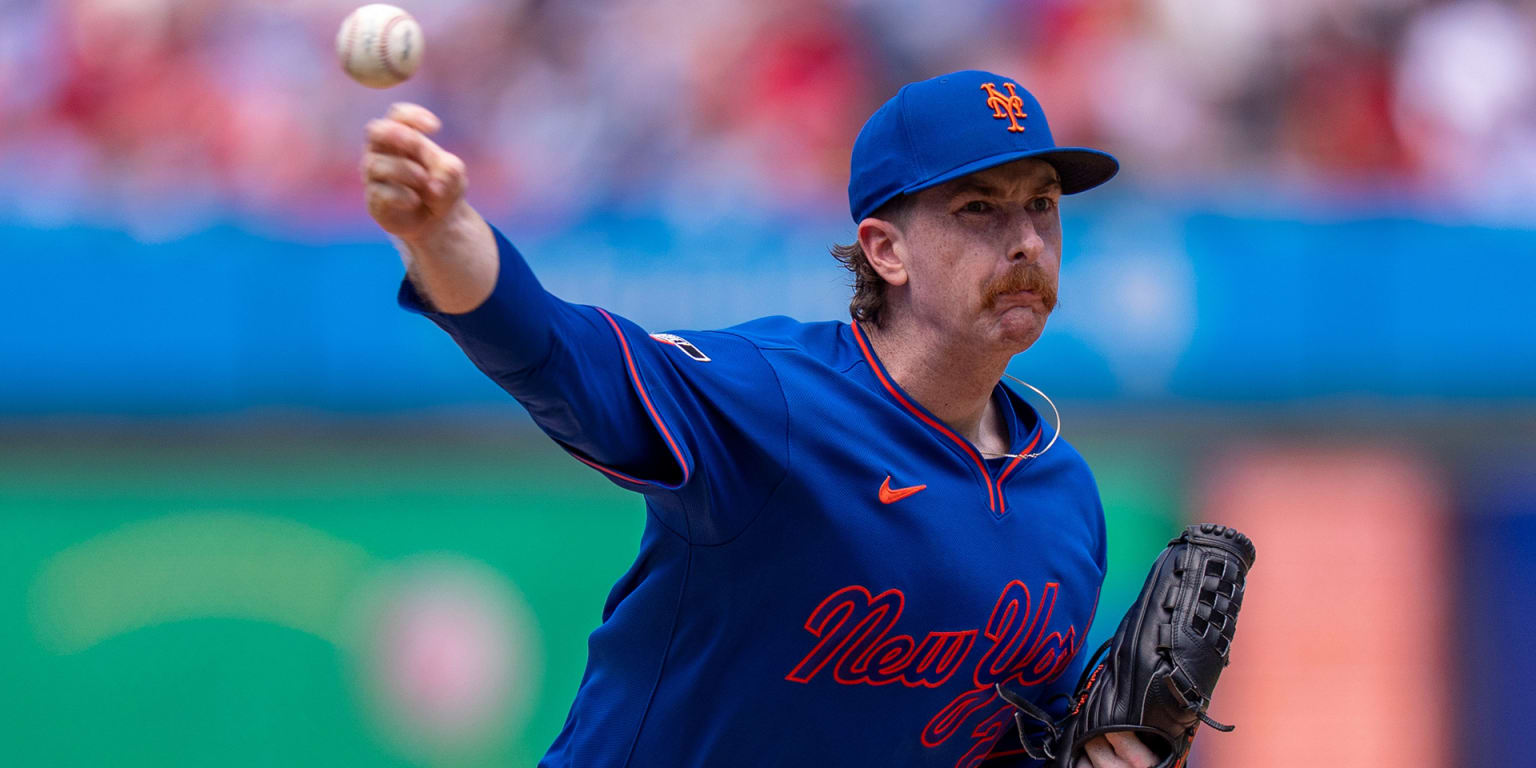
Nolan McLean walked into Citizens Bank Park on Sunday carrying momentum that didn't exist 17 days earlier. On June 30, the Mets' rookie right-hander posted his first scoreless outing after weeks of wrestling with an ERA north of 4.00—a concerning number for a prospect whose ceiling was suddenly in question. In the intervening three weeks, he's become one of baseball's sharpest pitchers. Against Philadelphia on Sunday, McLean threw six scoreless innings, punched out 10 batters, and extended his streak to 17 consecutive innings without an earned run, anchoring the Mets' 6-1 win.
The mechanics of his turnaround matter more than the headline. McLean isn't riding unsustainable luck. His last four starts carry a 0.75 ERA across 24 innings with 29 strikeouts against seven walks—that's a 4.14 K:BB ratio that suggests genuine command improvement, not variance. The Phillies managed to load the bases twice on Sunday but never advanced a runner. In the second, McLean induced a double-play sinker at 98.1 mph. In the sixth, facing two outs and two runners on, he deployed a 97.1 mph sinker that broke 18-plus inches horizontally, freezing Bryce Harper cold. His seven-pitch mix is operating at full depth, and his ability to locate his fastball in multiple quadrants—especially to generate swing-and-miss on off-speed—separates a streak performance from sustainable dominance.
The narrative arc here is critical for prop construction. McLean was undervalued in early July because the recency bias pointed backward: his first month was unreliable, and books hadn't caught up to his mid-June inflection point. Now, three weeks of elite performance is on the surface, and the market has started to notice. But the key variable—his strikeout rate—may still carry edge for the next 1-2 starts, particularly if he draws an opponent with a high strikeout rate in their own right. Over these four starts, he's averaging 7.25 K per game (29 K across 24 IP), which translates to a 10.88 K/9 rate. His underlying xFIP suggests that rate is repeatable; the Phillies struck out 11 times against him despite limiting hard contact elsewhere in the zone.
For prop players, the immediate question is whether McLean's K-prop line has expanded enough to reflect his new baseline. If his next start carries a line of 7.5 or 8 strikeouts—a number that felt generous six weeks ago but was reasonable at his June nadir—the over becomes vulnerable to sharp money. Conversely, if the line has already moved to 8.5 or 9, the market has likely overcorrected on a three-week sample, even if that sample is genuinely elite. The edge exists in timing: early oddsmakers may anchor to his June lows; late movers may extrapolate his July heights. The true pitch is that his 10.88 K/9 is durable enough to fade unders at inflated lines, but only if you're betting him before the market fully prices in his recent velocity and command gains. Francisco Lindor's three-hit outburst—a two-run homer in the first, an RBI single in the second, and a double in the eighth—was the offensive story Sunday, but McLean's name belongs in the conversation about pitchers whose mid-season adjustments have real staying power.
MLB Intelligence — Baseball intelligence beyond the box score. Open MLB Intelligence →