McCullers' Brewers Experiment Implodes: What a 11-Day Flop Signals About Milwaukee's Deadline Desperation
By PropBetEdge Editorial Team ·
Lance McCullers Jr. lasted 11 days in Milwaukee before the Brewers cut him loose, exposing both a misread on his health and a bullpen strategy that ran out of margin for error.
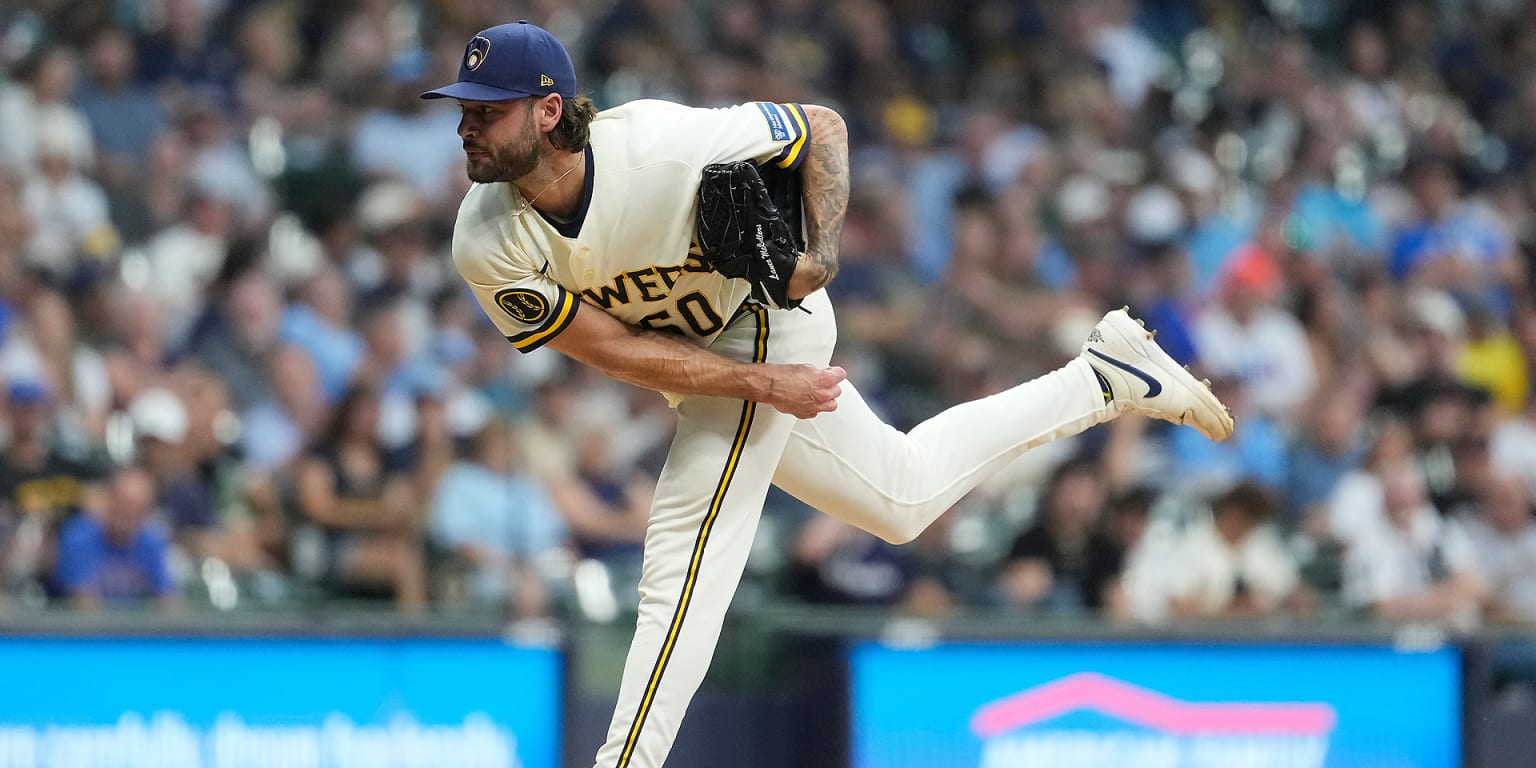
The Brewers designated Lance McCullers Jr. for assignment on Sunday, July 26, striking him from the roster just 11 days after trading for him on July 15. The veteran right-hander made exactly two appearances out of Milwaukee's bullpen—a role he had not filled seriously in his entire Houston career—before his final outing Saturday night devolved into a walk-fest that forced closer Trevor Megill to clean up his mess. In 4 2/3 innings, McCullers struck out five and walked five, posting a 3.86 ERA that masked a deeper problem: he was neither healthy nor functional in a setup role.
The timeline here matters. McCullers arrived on the injured list with right shoulder inflammation two days after the trade closed on July 15, got activated two days later, and pitched twice in five days. The Brewers sent Houston $4.23 million to cover his salary, leaving Milwaukee on the hook for $2.5 million—a material sunk cost for a player they never got off the ground. This was not a gradual decline or a compatibility issue. This was a miscalculation on McCullers' readiness that became obvious within 72 hours of first pitch. A pitcher who had started 148 of his 154 career games does not morph into a reliable reliever in a single week, particularly when he is carrying shoulder inflammation. The math was always going to be ugly.
For the Brewers, this is a bullpen-depth problem masquerading as a trade deadline miss. They gave up a minor-league outfielder and committed $2.5 million in payroll for a speculative arm they hoped would bridge a gap that—in reality—was too wide to close with one addition. Garrett Stallings, the right-hander recalled from Nashville to fill the spot, has a 3.70 ERA across 18 appearances (13 starts) at Triple-A this season and brings no proven track record at the major-league level. This is replacement-level pitching, which is precisely what Milwaukee is now depending on.
From a betting perspective, the Brewers' bullpen usage enters a period of heightened uncertainty. McCullers was supposed to absorb high-leverage innings; now those innings distribute across a thinner, less predictable group. Relief ERA and bullpen leverage situations become noisier—the team's ability to protect leads in the eighth and ninth deteriorates relative to pre-trade expectations. Games against the Brewers become slightly less predictable in tight scenarios, which pushes totals higher and makes underdog moneylines incrementally more valuable. The team's win probability in one-run games drops fractionally. This is not a massive shift—Stallings could pitch fine—but it is a directional deterioration in bullpen coherence at a point in the season when the Brewers can least afford it. Any team looking to target Milwaukee in late-inning situations now has a clearer opening.
The broader signal is organizational panic. The Brewers traded for McCullers because they believed in him enough to move assets. That belief lasted less than two weeks. The fact that they were willing to absorb $2.5 million in dead money to cut him loose immediately suggests the shoulder inflammation was either worse than disclosed or McCullers' performance drop was severe enough to override financial sunk-cost thinking. Either way, it is a data point on Milwaukee's ability to evaluate mid-season acquisitions—and it is not a favorable one.