Marlins' Power Surge Against Oakland Masks Deeper Volatility Entering July
By Ty Whitney ·
Miami's five-homer outburst capped a historic June but arrived after consecutive losses, raising questions about consistency in a division race that won't reward weekend heroics.
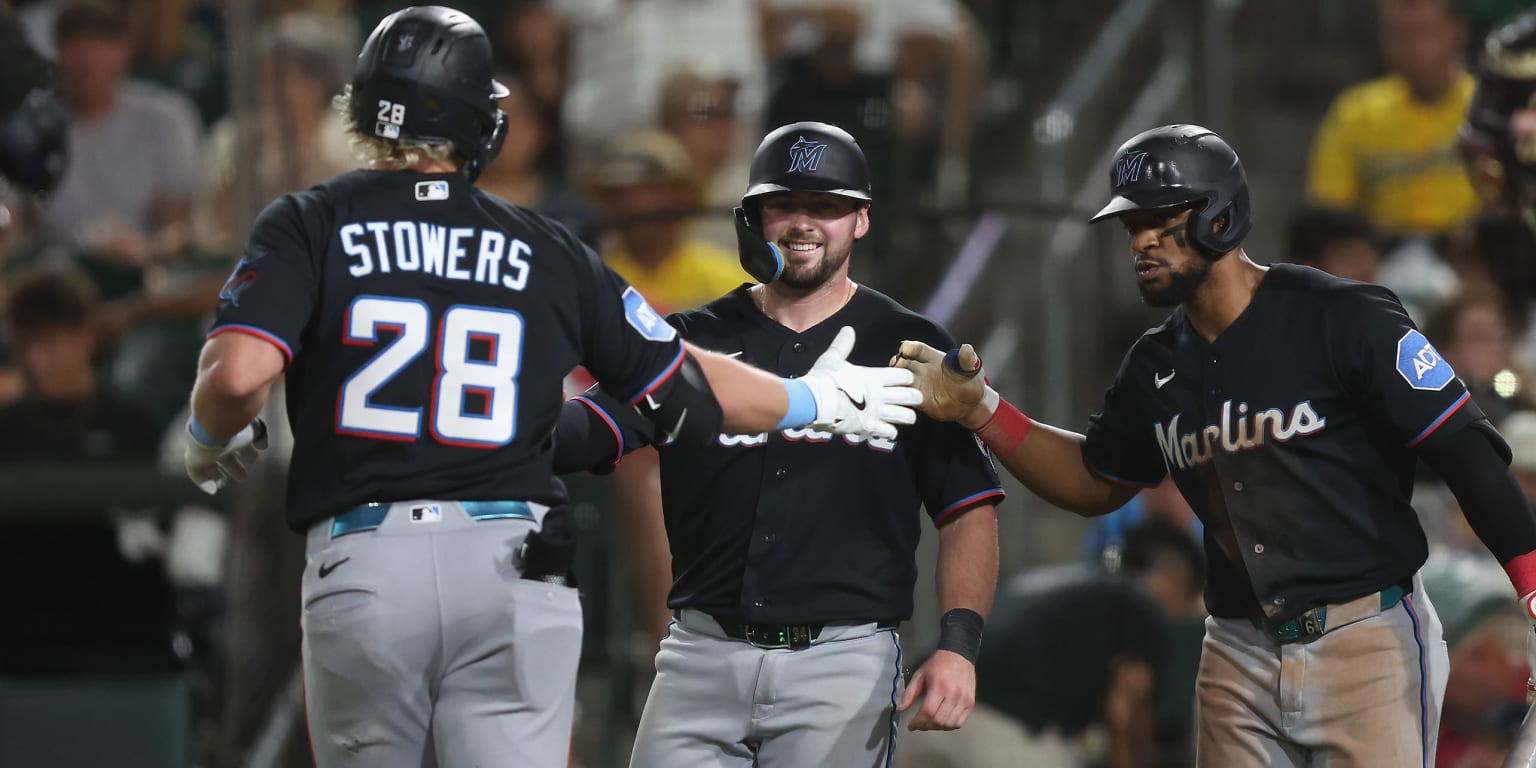
The Marlins exploded for five home runs Friday night in a 12-5 rout of the Athletics at Sacramento, with Kyle Stowers delivering two of them and Heriberto Hernández adding a three-run blast in a six-run first inning that saw nine batters come to the plate. The offensive fireworks snapped a two-game skid that carried over from Thursday's loss in Colorado, a pattern worth examining given Miami's recent trajectory: a historic 20-6 June suddenly derailed by consecutive losses to open July before Friday's barrage against an Oakland team that has lost 91 games in the calendar year so far.
The Marlins joined Toronto (April 19) and Colorado (May 1) as the only teams this season to score five runs with two outs in the first inning, a feat Miami hadn't accomplished since March 31, 2024. Hernández's three-run shot came on a center-cut two-strike fastball from Jack Perkins, while Marsee's solo homer arrived on a 3-1 fastball—both hittable pitches that the Marlins attacked aggressively. Stowers, who hadn't homered since June 17 and had logged a .109 average (5-for-46) during the drought, registered his tenth home run of the season and third multihomer game, including a leadoff blast in the sixth and a two-run laser in the eighth.
What matters for the betting lens: Miami's win-loss record when wielding their bats tells a cleaner story than the volatility. The Marlins are 17-4 when hitting two or more homers and 41-11 when scoring four or more runs—those edges are massive and persistent across a 52-game sample. Friday's explosion fits the pattern of a team that lives and dies by power output. Double-digit runs occurred for the third time in their last five games, signaling that when Miami's offense wakes up, it tends to wake up decisively. But the timing of the wake-up relative to the recent losses matters: this was a floor team for two consecutive games, not a ceiling team sustaining momentum.
For prop bettors, the angle hinges on opponent quality and timing. Oakland's pitching staff has been historically exploitable; a team that's given up 114 runs in their last 10 games creates an artificial ceiling for Marlins production that won't repeat against quality divisional opponents. Jacksonville's upcoming matchups include the Guardians and Mariners—both top-10 defensive units with starting pitchers who generate swings-and-misses at elite rates. If the Marlins' edge relies on hunting fastballs in the zone (as Friday demonstrated), expect tighter pitch selection from those opponents. The 41-11 record when scoring four-plus runs is durable, but it's built on a season where the Marlins have faced a relatively soft schedule by strength of opponent. Fade aggressive over-betting on team totals and home-run props until Miami proves it can sustain power against upper-tier arms; Friday's sample, however dominant, was against a team that gave Oakland a blueprint for failure.
Marsee's emergence from a 46-at-bat slump with a solo shot is the one outlier worth monitoring. His homer drought lasted from June 17 to Friday—a 17-day gap—during which he managed only weak contact. If his exit velocities have corrected and his swing mechanics have reset, Marsee becomes a secondary source of power behind Stowers and Hernández. But single-game data points against non-contenders don't reprrice medium-term props; confirmation against the Guardians or Mariners would. For now, treat Friday as a ceiling-case expression of Miami's offense, not a new floor.