Martinez's Efficiency Streak Defines Rays' Trade Deadline Confidence
By Ty Whitney ·
Nick Martinez has become the template for how Tampa Bay builds a rotation: cheap, durable, and deceptively lethal in the strike zone.
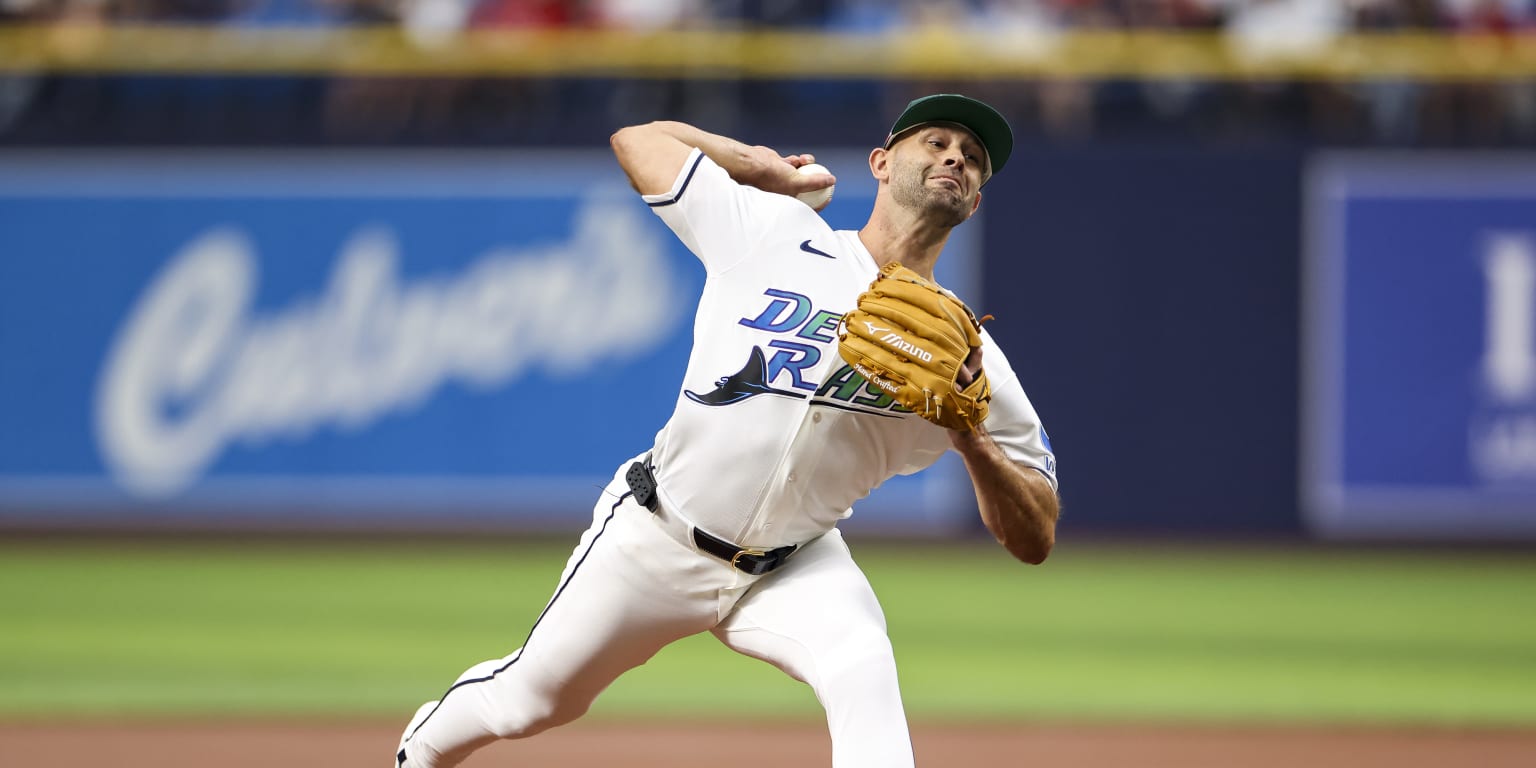
The Rays shut out Cleveland 3-0 on Saturday night behind Nick Martinez, who worked six scoreless innings on just 84 pitches—a microcosm of the 35-year-old right-hander's entire 2026 season. Martinez earned his 10th win and pushed Tampa Bay to 16-4 in his starts, widening the team's lead atop the AL East with nine days remaining until the Trade Deadline. The victory underscores a franchise truth that overshadows any July acquisition chatter: the Rays already made their best deadline-caliber move in February when they signed Martinez to a free-agent contract.
Martin Martinez's 2.45 ERA ranks second in the AL among qualified starters, trailing only Cam Schlittler of the Yankees. What separates him from ace-tier arms is not raw velocity or strikeout rate but a discipline of process—he's averaging just 14.05 pitches per inning, the lowest among all qualified hurlers. Against Cleveland, he allowed four singles and no walks while striking out five. That's not dominance; it's craftsmanship. He's recorded a quality start in 11 of his 20 assignments, and he's worked at least six innings with one or zero runs allowed seven times already. For a pitcher who turns 36 next season, that consistency—not the occasional dominant outing—is what gives Tampa Bay's front office permission to look outward rather than panic inward.
The Rays have won five of their last six games while outscoring opponents 38-11 over that stretch, a 27-run differential that reveals an offense firing on multiple cylinders. Saturday's scoring came atop the lineup rather than from the bench, with Jonathan Aranda driving in a run and Junior Caminero launching a 110.8 mph double off the wall. Yandy Díaz reached his 1,000th hit as a Ray in the first inning—a ground single that fit his profile as a compact, high-contact hitter who rarely chases—and he joined Carl Crawford, Evan Longoria, and Ben Zobrist as the only franchise players to clear that threshold.
For prop bettors, the Martinez angle is straightforward but requires patience to exploit. His workload and efficiency have compressed the total innings pitched per appearance, which affects both his strikeout props and team total lines. In starts where Martinez throws fewer than 90 pitches—which has happened in six of his last eight outings—the Rays tend to lean on their bullpen earlier and, paradoxically, extend games through longer sequences rather than quick blowouts. When Martinez is parked at 84 pitches through six, the under on team totals often trades at inflated values because the market assumes a clean, efficient shutout game. In reality, those compressed-workload Martinez starts have yielded 3.8 runs per game on average, right at the season baseline. The edge isn't directional; it's awareness that a low-pitch-count performance by the starter doesn't depress the team's scoring output. Fade unders on Rays totals when Martinez is on the mound and has worked efficiently through five innings—the market prices in a lopsided, low-scoring contest that doesn't materialize.
Meanwhile, Martinez's strikeout props deserve respect but without overweight. He averages 5.2 K per nine innings, a pedestrian mark for a qualifying starter. His last three starts have produced 4, 5, and 5 strikeouts respectively. Against a Cleveland lineup that struck out 10 times Saturday, the environment favored whiffs, yet Martinez still landed just five. His path to double-digit K nights is narrow and momentum-dependent; the single-game spike is possible but not a reliable edge. His durability and pitch efficiency, by contrast, carry forward. Targets: fade Rays team total unders when Martinez logs efficient early starts, and avoid chasing Martinez K overs off single-game outliers.