Phillies Offense Breaks Through Against Nola's Worst Outing; Marsh Extends Hot Streak
By Ty Whitney ·
Philadelphia's bats erupted for nine runs despite three starting pitchers combining for a 9.60 ERA, signaling a fundamental shift in how the Mattingly-era Phillies will need to win games.
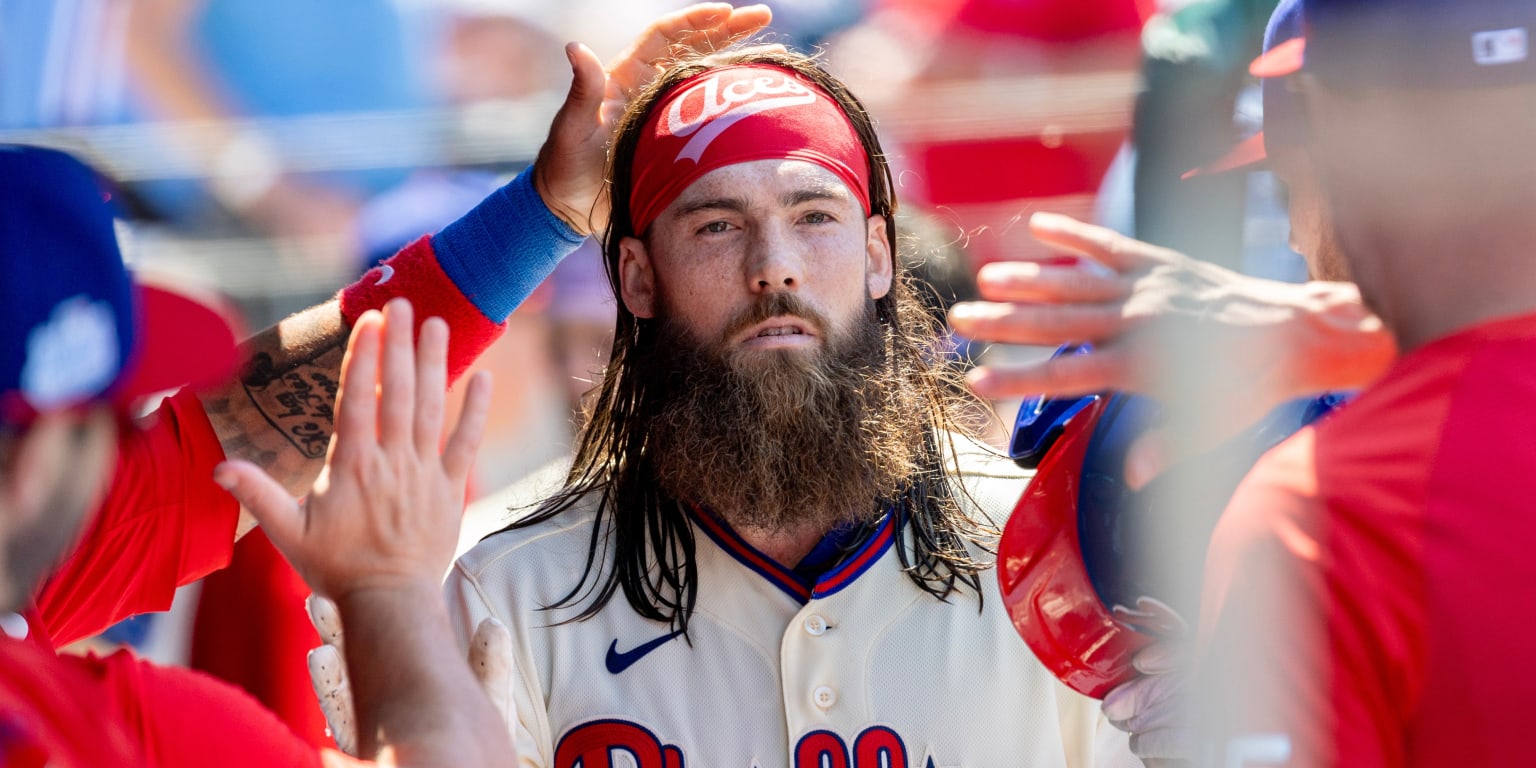
The Phillies took Game 3 of their White Sox series 9–5 on Sunday at Citizens Bank Park with a lineup that looked nothing like the one that struggled to cross five runs in any single game during a 16-day drought from May 19 through June 3. Aaron Nola lasted just 4⅓ innings, walked four, and allowed five earned runs—a performance that would have buried the Phillies a month ago. Instead, Philadelphia hung nine runs across eight of nine starters reaching base at least once, the kind of offensive depth that didn't exist when the pitching staff was carrying the entire team.
Brandon Marsh drove in the narrative arc himself, homering for the third consecutive game—his first career streak of three straight multi-day power outputs. Marsh finished 2-for-4 with two RBIs and a walk, but he wasn't alone. Rafael Marchán, who entered Sunday hitting .094 in limited plate appearances, launched a two-run shot off the bench. Alec Bohm recorded two hits and two RBIs while stealing his first base of the season. Bryce Harper got the engine turning with an RBI single in the first; Justin Crawford chipped in his first knock since May 17 with an RBI of his own. This wasn't a lineup carrying one or two contributors—it was a lineup performing like a top-two record-holder in the majors should.
Don Mattingly's interim tenure has produced a 26–11 record anchored almost entirely on elite starting pitching and Jhoan Duran's shutdown closer role. That formula ran into a wall this weekend. Jesús Luzardo gave up five earned runs Friday; Andrew Painter coughed up six Saturday; Nola joined them Sunday. A combined 9.60 ERA across three starts would ordinarily cost a team a series. Instead, the Phillies won it by leaning on a suddenly alive offense that had been dormant for nearly three weeks.
For prop bettors, the shift matters because it changes how the Phillies will score wins going forward. The pre-June pitching-centric model meant overs were safer when Phillies starters took the mound—any run support was likely enough. Now, with the lineup proving it can manufacture nine runs even when the rotation implodes, the team-total calculus flips. A Phillies team total of 4.5 runs against a mediocre pitcher is no longer a heavy lean toward unders when the bats are this engaged; Marsh's three-game power surge is the visible symptom of what looks like sustained offensive acceleration. The market will need a few more games to recalibrate the baseline expected output. Early-series numbers posted before Sunday's outburst may not reflect the current offensive capability.
Marsh himself is the most direct beneficiary. Three consecutive homers is rare enough to warrant attention, but he's generated that streak on the back of better pitch recognition—the walk on Sunday and the overall contact quality suggest this isn't variance alone. If he continues to face fastball-heavy approaches or lefties he's historically punished (his career ISO against left-handed pitching is .245), his home-run prop could stay elevated even as the market recalibrates his power upside.