Marlins' 8-Run 10th Inning Exposes Tampa Bay Bullpen Fatigue in Extra-Inning Collapse
By PropBetEdge Editorial Team ·
Miami's franchise-record inning reveals why late-game reliever workload matters when oddsmakers price October baseball.
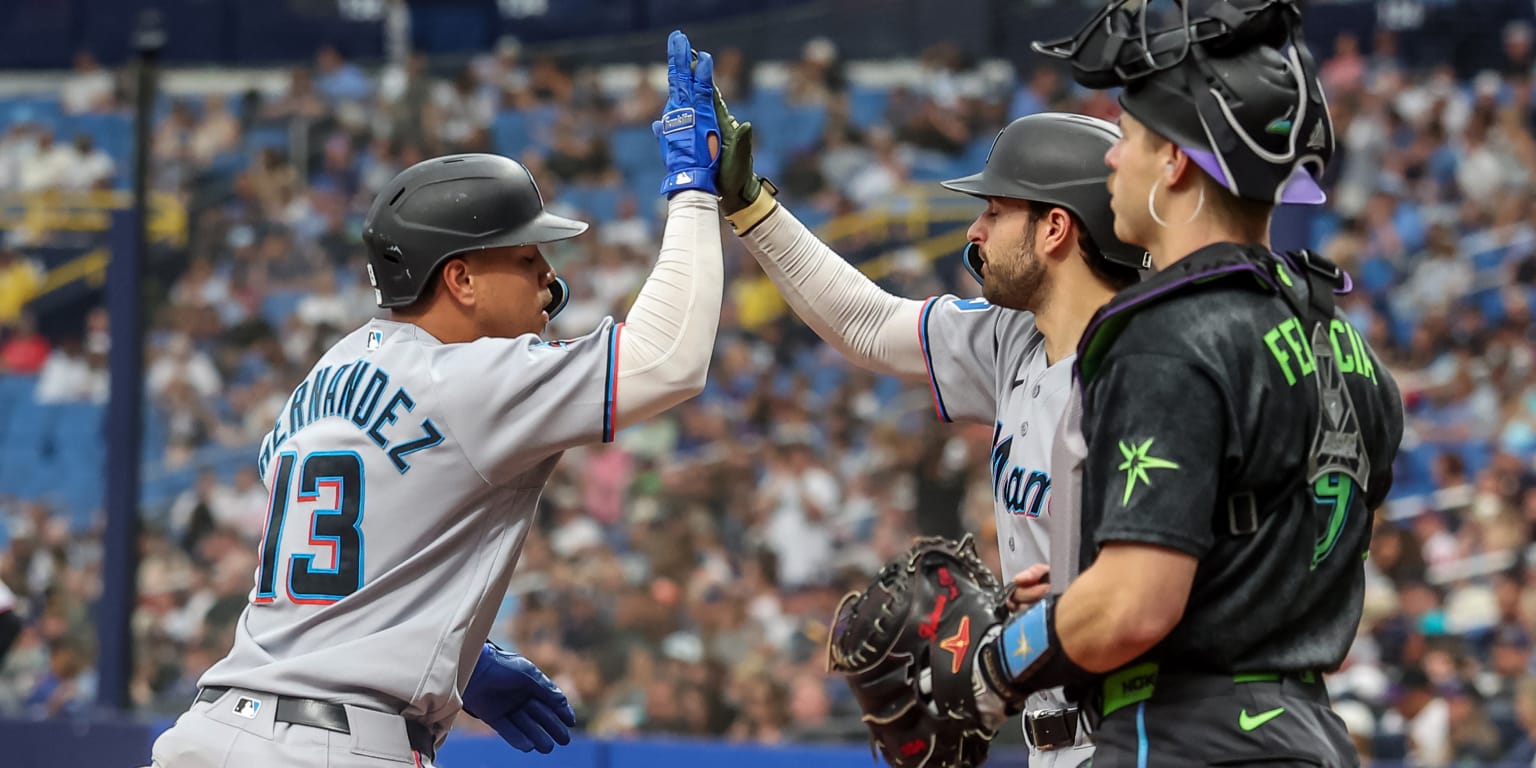
The Marlins scored eight runs in the 10th inning Saturday at Tropicana Field, a franchise record for a single frame, to defeat the Rays 10-2 and even the Citrus Series. The explosion came against a Rays bullpen stretched thin by midseason depth issues, with right-hander Hunter Bigge taking the loss after Tampa Bay's defense—specifically a shift designed to cover gaps—failed to contain Miami's contact approach. The inning began with Joe Mack singling and Xavier Edwards walking to load the bases. Liam Hicks punched a hole through the right side for a two-run single, Otto Lopez added a sacrifice fly, Connor Norby drove in another, Javier Sanoja delivered a three-run double, and Esteury Ruiz capped the sequence with an RBI single.
What preceded the 10th tells a sharper story about bullpen exposure. The game remained tied at 2 entering extras after the Marlins clawed back from a 1-0 deficit through two moments of offensive opportunism. Right-hander Nick Martinez had held Miami scoreless through six innings before Heriberto Hernández, inserted as a pinch-hitter against left-hander Garrett Cleavinger in the seventh, ambushed a first-pitch slider for a 107.9 mph exit-velo solo homer to left-center (439 feet projected distance). That blast knotted the game and forced the Rays into a ninth-inning situation where longtime reliever Pete Fairbanks—reinstated Wednesday after nerve irritation—faced a two-out rally. Fairbanks surrendered an RBI single off Javier Sanoja's glove to allow the go-ahead run, bringing the game to 10 innings tied.
The structure of this loss matters for understanding late-season volatility in extra-inning spots. Sandy Alcántara had delivered a quality start (six innings, one unearned run), and the Rays' starter Nick Martinez had similarly performed at a high level. By the 10th, however, both teams had burned through primary relief options. The Rays' deployment of Bigge—rather than a seasoned veteran—in a high-leverage extra-inning frame reflects Tampa Bay's bullpen constraints and the cost of using Pete Fairbanks earlier in the stretch. This is the mechanical flaw that prop bettors should isolate: extra-inning games after 1 AM ET or in late-season scenarios where relief depth is compromised tend to see offensive explosions because fatigued bullpens miss their command marks and defense breaks down under fatigue.
For prop purposes, the actionable pattern here centers on how extras amplify variance in run-scoring environments. Miami's eight-run inning is an extreme tail event—their previous franchise record for a single inning was nine runs in the fifth against the Dodgers on September 6, 2023—but the mechanism driving it was predictable: a bullpen caught off-balance, a shift that left gaps exposed, and contact hitters (Hicks, Norby, Sanoja) who don't chase. When one team has burned bench depth and relief arms, unders on team totals for subsequent games become less reliable because fatigue-induced walk rates and hit-by-pitch frequency spike. Conversely, overs in games where a team's bullpen sees a full rest day after a long outing gain durability.
The Marlins' second-half run should be viewed with caution in terms of sustainability. They're 8 runs better than their Pythagorean expectation in this single game, but more important is the signal that Rays relief depth is now a public weakness. Teams facing Tampa Bay in the next 10 games should have overs on their team totals priced slightly tighter than the baseline; the Rays will be forced to deploy marginal relievers in leverage spots, and Miami just proved the blueprint for exploiting that constraint. Monitor whether Tampa Bay's bullpen health status changes, because if Fairbanks' return is followed by another injury, team totals against the Rays compress further into profitable-underdog territory.