Snelling's UCL Sprain Forces Miami to Scramble Starting Rotation Mid-Season
By Erik Schwartz ·
A freshly promoted left-hander's elbow injury strips the Marlins of rotation depth and reshuffles their pitching economics for the stretch run.
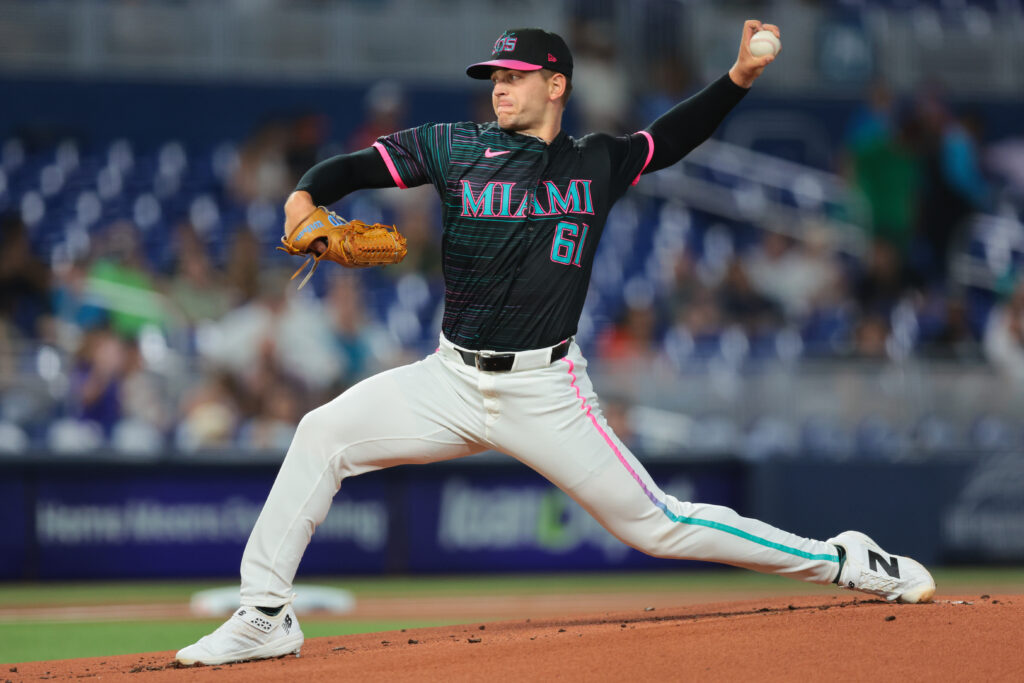
Robby Snelling landed on Miami's injured list with a UCL sprain in his left elbow, upending the Marlins' rotation plans just as he was set to take the ball Thursday. Per MLB Trade Rumors, the team recalled left-hander Braxton Garrett to fill the spot vacated by Snelling's absence, while right-hander Pete Fairbanks was reinstated from his own IL stint in a corresponding move.
Snelling represented depth upside for a Miami rotation that has weathered injuries all season. A young arm still building his MLB resume, he carried minor-league pedigree and the kind of fastball-slider combination that plays in pennant-race situations. The UCL sprain—short of full ligament rupture, but serious enough to warrant immediate rest—kills any immediate return timeline. Even at 15 days minimum, muscle memory and command reconditioning typically stretch acquisitions like this into three to four weeks before a pitcher can pitch effectively off the mound.
Garrett's recall plugs the hole, but he carries different value. The 27-year-old southpaw has shown flashes but lacks the velocity ceiling that scouts projected for Snelling. His recent IL stint (reason unspecified in the announcement) means he's ramping up rather than coming in at full strength. For a Marlins club fighting for relevance in a tight division, losing a high-variance arm mid-sequence and replacing it with a cautious one-inning-at-a-time option signals a material downshift in starter quality.
Fairbanks' return on the position-player side adds slight relief to the bullpen depth chart, but he cannot pitch off the rail after injury absence—he'll need workload management and will eat innings that otherwise might have gone to lesser leverage guys. That creates a domino effect: if Garrett struggles early or gets gassed, Miami either burns relievers in back-end games or watches quality starts dip below breakeven. For the Marlins' team total and moneyline pricing, this is a marginal but real deterioration. Games Snelling would have started now come with a Garrett baseline that's 5-8% lower in expected innings quality, depending on opponent and context.
The prop angle lives in the Marlins' next 4-6 games: their team total and overs become slightly weaker inventory because the rotation quality has concrete downward pressure. If Miami was pricing unders at -110 with Snelling's average appearance pending, those same unders now sit fractionally closer to fair value (or better) with Garrett in the slot. The edge isn't massive—Garrett can eat innings without disaster—but the Marlins' overall run-prevention profile has ticked down in measurable terms.