Marlins Cut Losses on Morel as First-Base Experiment Ends
By Ty Whitney ·
Miami outrights Christopher Morel to Triple-A after Griffin Conine returns, signaling the organization's pivot away from one of its marquee offseason additions.
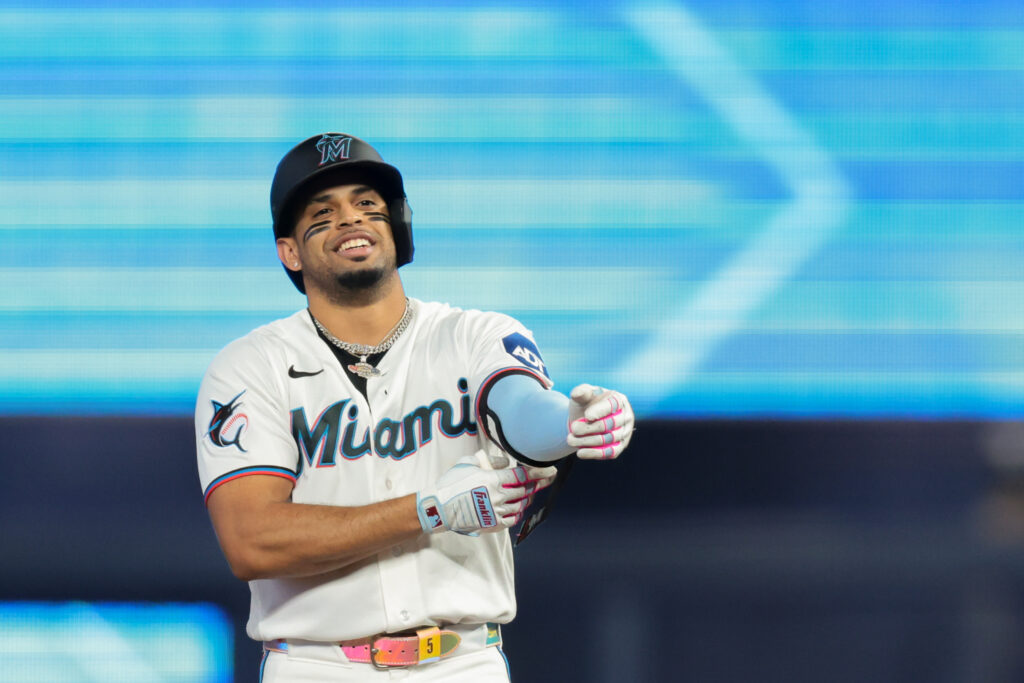
The Marlins sent Christopher Morel outright to Triple-A Jacksonville this week after Griffin Conine cleared hamstring surgery and rejoined the active roster. The move amounts to a formal acknowledgment that Morel, acquired as Miami's projected primary first baseman, has not lived up to that role—and that the team is moving on. With less than five years of service time, Morel will accept the outright assignment without triggering free agency, remaining organizational depth rather than major-league contributor.
Morel arrived in Miami as part of a calculated offseason bet: a reclamation project with upside, plugged into a rebuilding roster that could afford patience if the bat eventually arrived. Instead, his performance has been uneven enough to justify relegation. The return of Conine—a 24-year-old first baseman and former first-round pick—provides the organization with a cleaner path forward at the position, one that doesn't require faith in Morel's mechanical adjustments or plate discipline corrections materializing in real time.
The Marlins' willingness to eat this assignment speaks to internal roster construction clarity. They are no longer operating under the assumption that Morel will contribute meaningfully at the major-league level this season. This is a sunk-cost decision, but a decisive one—the kind that costs a front office credibility in the moment but prevents further opportunity cost bleeding into September. Morel's demotion is functionally a waiver-wire result without the public rejection of actual release; he remains available for recall, but the organization's priority has reset.
From a betting lens, this move reshapes Miami's offensive architecture. Conine's return after injury typically carries innings-management risk in the short term, but his presence as the primary first baseman narrows the offensive variance on the Marlins' roster. Morel had been a wild card—capable of high-variance output or near-automatic outs depending on the matchup and his mechanical state. With Conine locked in at first base and Morel's role reduced to minor-league depth, Miami's daily lineup construction becomes more predictable. That matters for team total prop pricing, which can now factor Conine's actual playing time and matchup profile rather than hedging for Morel's productive variance. Over/unders on the Marlins team total in games where Conine plays should tighten, as the removal of an unpredictable at-bat from the everyday lineup reduces downside volatility.