Marlins' Comeback Depth Rewrites Deficit Ceiling
By Ty Whitney ·
Miami's 21st rally win this season reveals a bullpen-dependent offense that thrives when trailing—a pattern with real implications for live betting.
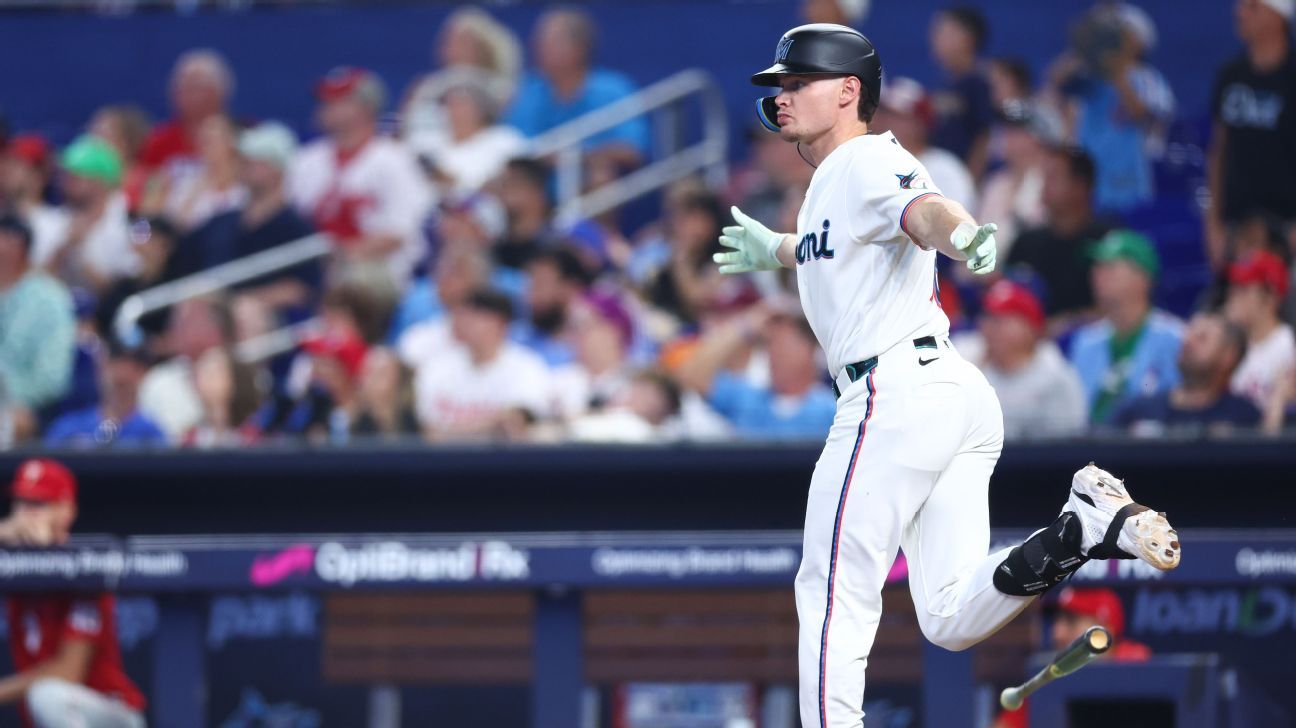
The Miami Marlins erased a 6-0 hole Wednesday against Philadelphia, with Griffin Conine's pinch-hit eighth-inning homer providing the go-ahead blast in an 8-6 victory. The comeback marked the Marlins' largest deficit recovery of the year and their 21st come-from-behind win. Otto Lopez, Heriberto Hernandez, and Xavier Edwards each drove in two runs to fuel the rally.
What stands out is not the single result but the organizational pattern it reflects. Twenty-one comeback wins places Miami in elite territory for resilience—that's a team that has trained itself to execute when scoreboard pressure peaks. The offense didn't explode; it accumulated. Lopez drove in one run grounding out in the fifth, then added another single in the seventh. Hernandez launched a 416-foot changeup to left-center after Luzardo's six-run start. Edwards followed with a two-RBI single. The rally was methodical, low-velocity contact threading gaps while Philadelphia's bullpen (Jonathan Bowlan taking the loss, Seth Johnson blowing the save) lost command. Conine's appearance—his second go-ahead pinch-hit homer against the Phillies this season (he also delivered a walk-off RBI single Monday)—underscores Miami's depth off the bench.
For bettors, the Marlins' comeback frequency suggests two counterintuitive edges. First, live-betting unders on Marlins games carry hidden risk when Miami trails by more than three runs after four innings. The team's 21 comeback wins indicate they don't surrender momentum—their bullpen allows baserunners with consistency, and their lineup has developed patience in deficit scenarios. Second, Conine's utility (two go-ahead hits in three days against the same opponent) signals that Miami's coaching staff identifies matchup edges aggressively. When pinch-hitters see repeated deployment, it means the organization has isolated a repeatable edge in their favor—in this case, Conine's ability to elevate off right-handed fastballs that get up in the zone.
The Phillies' meltdown matters less than the mechanism. Luzardo allowed six runs on six hits over 6⅓ innings—hardly a historic collapse—but the Marlins' accumulation approach (drawing walks, taking changeups up the middle, advancing runners) suggests they've built a recovery system independent of any single pitcher's failure. This isn't about Philadelphia's arms being bad; it's about Miami's offense operating with a clear script when trailing. That script has worked 21 times this season, far more than random variance would predict.