Mariners Flip the Script: Trading Rotation Depth for Offensive Help
By Erik Schwartz ·
Seattle's willingness to move Hancock signals a mid-season pivot from pitching surplus to lineup reinforcement with playoff positioning still in reach.
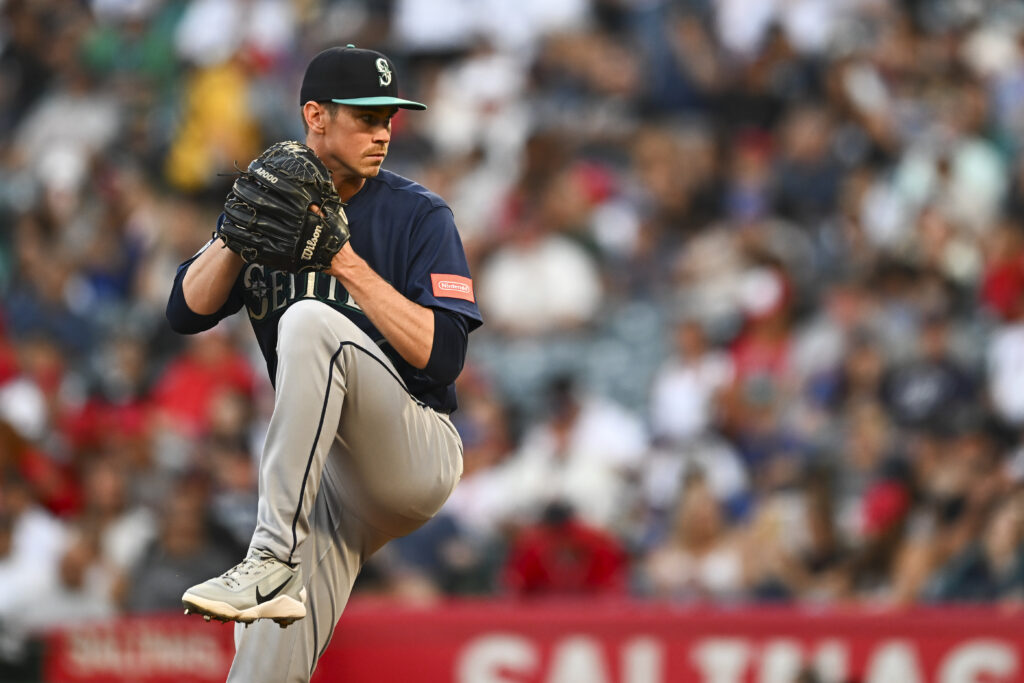
The Mariners are actively shopping right-hander Emerson Hancock to contending teams, according to reporting from The Athletic's Ken Rosenthal and Will Sammon. Seattle's front office has signaled to the market that they'll trade from their rotation depth in order to acquire offensive help—a clear strategic shift for a club sitting at 51-52 but just half a game out of a wild-card position as of mid-July.
The calculus here is straightforward: the Mariners have more starting pitching depth than they can deploy, and their offense remains the organizational constraint. Hancock, a former first-round pick whose development has been fitful, becomes tradeable precisely because Seattle has alternatives. This isn't fire-sale desperation; it's asset reallocation. The club believes they can compete if they upgrade their run production, and they're willing to bet their pitching surplus can sustain them if they lose one starter.
What matters for betting is the timing and the signal. Mid-season rotations are less fungible than you'd think—teams don't casually shed arms in July unless they're confident in what remains. The Mariners' decision to shop Hancock suggests internal confidence in their remaining rotation to handle a playoff stretch. That confidence may be overcooked or it may be justified, but it's a data point about how the team views its own pitching health and depth.
For prop players, Hancock's removal from Seattle's rotation opens minute changes to the club's pace and bullpen workload. If the Mariners acquire an offensive piece and remain competitive down the stretch, their team totals could tick upward—their current offensive underperformance relative to projection is what's keeping totals suppressed. Conversely, any acquiring team takes on a mid-rotation arm with variable performance history; Hancock's strikeout rate (8.1 K/9 in 2025) isn't elite, which means he's unlikely to drive standalone K props for his new club unless he's dropped into a premium role immediately. The real angle is on Seattle's team total if they land a credible bat, not on Hancock's individual peripheral rates.