Raley's Forearm Injury Opens Path for Fairchild; Seattle's Outfield Mix Shifts Mid-Season
By PropBetEdge Editorial Team ·
A left forearm strain ends Luke Raley's run with Seattle and accelerates Stuart Fairchild's return, forcing a recalibration of the Mariners' late-summer lineup construction.
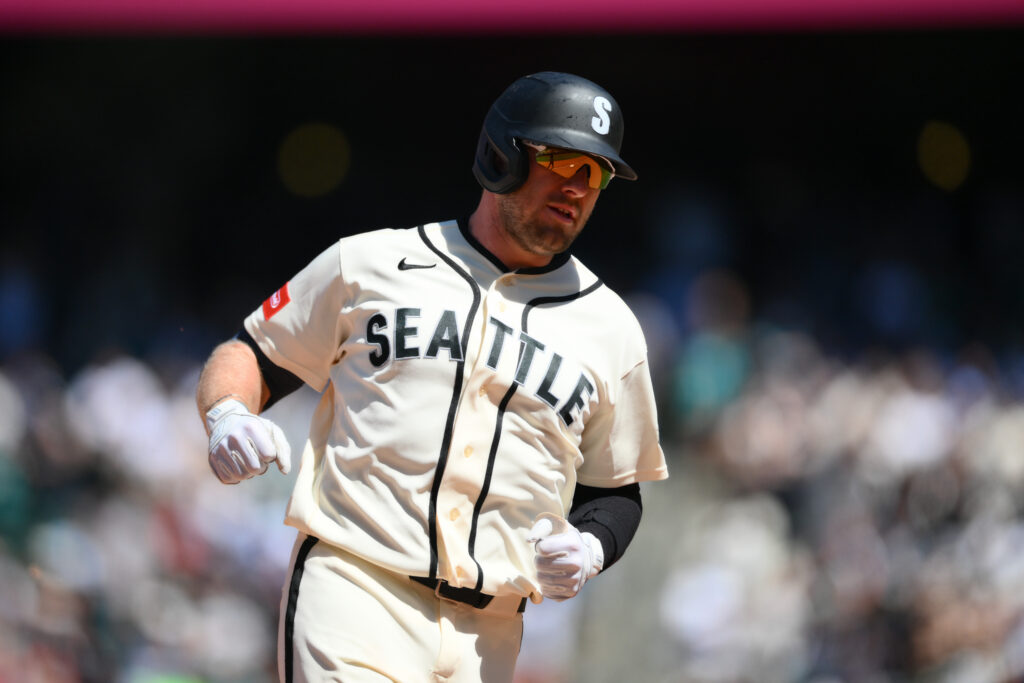
Luke Raley is headed to the injured list with a left forearm strain, effective retroactively to July 31. Seattle wasted no time filling the void, selecting Stuart Fairchild from Triple-A to restore the 26-man roster to full complement. The move came with an added luxury: the Mariners already had two open slots, so no corresponding subtraction was necessary. In one stroke, the organization pivots its outfield depth chart mid-August and signals—or at least revisits—its confidence in Fairchild as a productive contributor down the stretch.
Raley's exit removes a left-handed bat that has shown occasional pop but whose regular playing time had grown sporadic as the season matured. A forearm strain carries uncertainty around recovery speed; the 10-day IL is the minimum floor, but inflammation in that region can linger or recur if the underlying biomechanical issue isn't resolved. The fact that Seattle didn't scramble into a trade or claim a free agent suggests the front office views this as a temporary gap rather than a long-term void that demands external talent. That restraint itself is information: Fairchild's profile must align with what the roster needs in the final two months.
Fairchild's Triple-A numbers and timeline matter here. His recall from the minor-league affiliate confirms that Seattle retained enough conviction to keep him in the organization despite earlier roster churn. Triple-A production doesn't translate cleanly to the majors, but Fairchild's presence on the 40-man roster and his immediate availability signal he's a real option, not a placeholder. The Mariners are making a statement about flexibility: if Raley's forearm sidelines him past the minimum IL window, they've already hedged by activating a prospect-adjacent option rather than cycling through waiver-eligible replacements.
From a lineup composition angle, this changes Seattle's pinch-hitting and late-inning substitution calculus. Fairchild's bat will occupy at-bats and defensive positioning that might otherwise have gone to platoon depth or bench usage. If Fairchild produces—even at modest major-league averages—he becomes a legitimate sink for outfield plate appearances. If he struggles or sits primarily against righties, Seattle's offensive depth thins and teams can exploit it. The real prop angle isn't Fairchild's individual lines (too much variance on a first-week call-up), but rather how this reshuffles run-production surface area for the Mariners' team total. A roster with Raley available offered more offensive flexibility; a roster without him for two or more weeks absorbs a small hit to offensive ceiling unless Fairchild immediately outperforms replacement level. Against weak pitching, the gap compresses; against elite arms, it widens. Look for Seattle's team total lines to tick downward slightly in the next round of markets if Raley's injury shows no signs of rapid improvement.