MLB · injury
Arozarena Returns as Mariners Complete Outfield Healing
Seattle's core hitters are finally on the field together again, reshuffling the team's offensive floor and ceiling after 41 days of piecemeal roster construction.
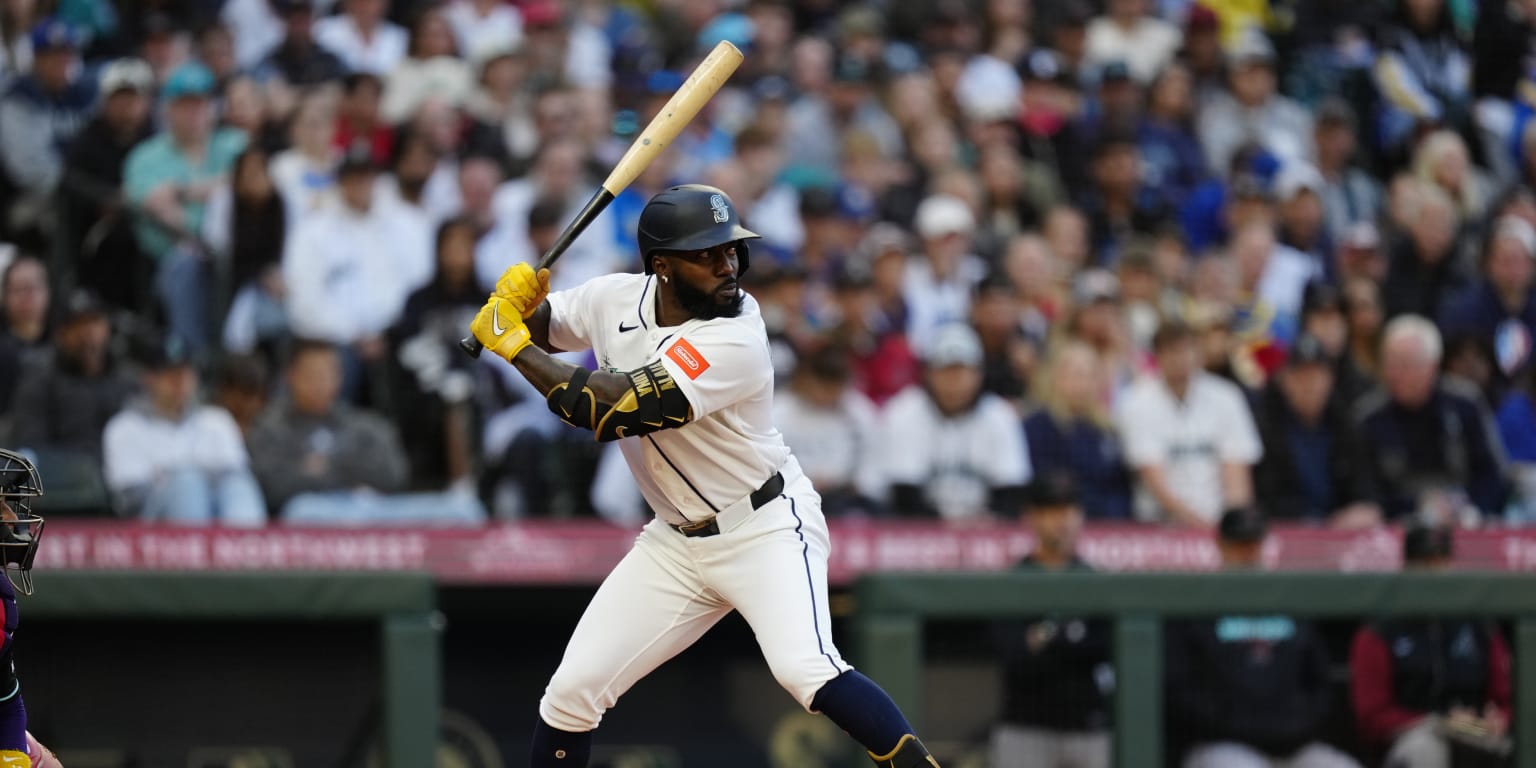
Randy Arozarena came off the injured list Tuesday and slotted immediately into the Mariners' DH spot against Pittsburgh, ending a 10-day absence from a left hamstring strain that cut his season short at 71 games. His activation marked the third major lineup piece to clear the IL in as many weeks—joining catcher Cal Raleigh and infielder J.P. Crawford—and restored Seattle's opening-day infield and outfield core to the same field for the first time since May 13, a 41-day gap that functionally reset the team's offensive identity midseason.
Arozarena's return timing matters less for what he does individually than for what the lineup becomes when he, Raleigh, and Crawford occupy the same batting order. Before the hamstring sent him down, the 31-year-old was posting a .291/.377/.448 slash with 33 RBIs and 19 stolen bases in 71 games—a pace that tracks to a 20-20 season if he can maintain velocity in his final ~90 games. His on-base and power numbers are in line with career standards; the real shift is context. With Raleigh catching and Crawford handling the infield, the Mariners' top three hitters now have the defensive infrastructure and game-planning consistency that turbocharges efficiency. Seattle's offense functioned during the injury carousel—the team has actually scored at a league-average clip since mid-May—but it functioned like a shortstaffed restaurant. Now it operates with full stations.
Luke Raley, who missed seven games with an illness, also returned to the lineup Tuesday. Dominic Canzone remains out after exiting Sunday's game with a right hamstring issue, signaling that Seattle's injury luck has not fully reversed. But the overall trajectory is clear: the Mariners are consolidating health just as they enter the back half of June, when playoff contention either crystallizes or dissolves. The trade-off is roster management—Connor Joe was optioned to Triple-A to make room—but that math is elementary. Joe's absence costs almost nothing; Arozarena's presence unlocks the team's actual ceiling.
For prop bettors, the lineup reunification creates a specific edge in team-total construction. The Mariners' run-scoring output has been constrained not by talent but by availability; their expected runs (xR) over the last 30 days track at 4.6 per game, but actual production sits closer to 4.2, a gap that widens when key position players rotate. With Raleigh, Crawford, and Arozarena all active, that xR-to-actual spread should compress. Pittsburgh's pitching staff (4.48 ERA, 5.0 K/9 against LHH) is middle-tier; the Pirates' defense is durable but not elite. If Seattle's team total opened at 4.0 or lower before Tuesday's game, that number reflects the injury-carousel version of the lineup. The full-strength version has a measurable 4.3–4.5 floor over a series. The edge narrows after line movement, but early moneyline and series-total pricing often lags roster news by 4–6 hours.
Arozarena's individual props—RBI, hits, stolen-base totals—are secondary plays. He's not walking into a hot streak; he's walking into a normalized lineup context. The real angle is team-total over-pricing in the window before the market recalibrates for three full-strength starting position players on the field at once.
MLB Intelligence — Baseball intelligence beyond the box score. Open MLB Intelligence →