MLB · milestone
Scherzer Crosses into Strikeout Top 10, Milestone Masks the Real Velocity Story
Max Scherzer became the 10th all-time strikeout leader Saturday, but his path to Cooperstown hinges on workload patterns that prop bettors should monitor closely.
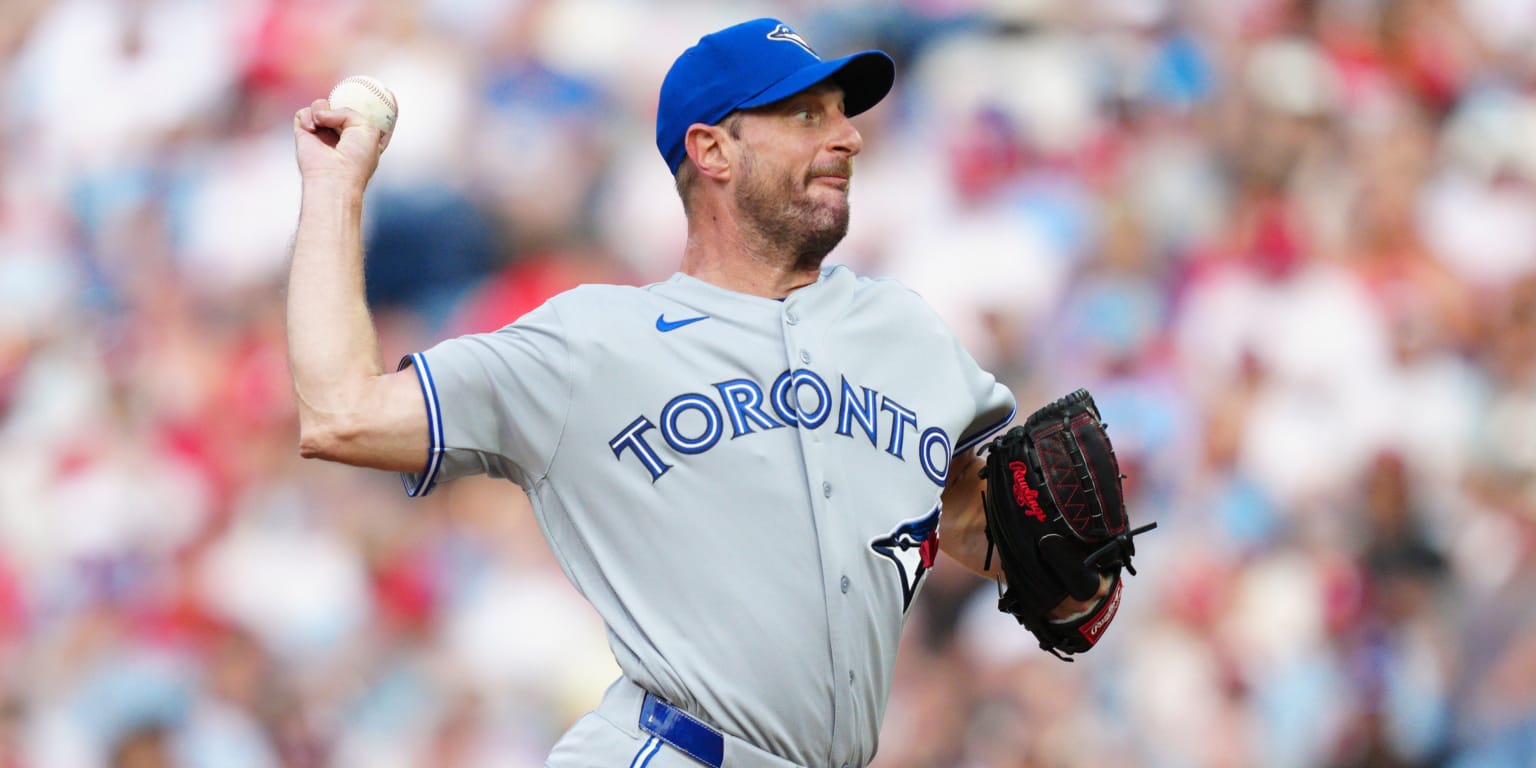
Max Scherzer passed Walter Johnson for 10th place on baseball's all-time strikeout leaderboard Saturday night in Philadelphia, recording his 3,516th career K with a sixth-inning check-swing call on Kyle Schwarber. The milestone—Scherzer needed four strikeouts entering the game and punched it out by the sixth—capped a performance that landed him in a club with the game's most durable arms. At 42 years old, Scherzer remains second only to Justin Verlander among active pitchers in both wins and strikeouts, a reflection of his uncommon ability to sustain elite velocity and command across two decades.
The symbolism of Philadelphia matters here. Scherzer has faced the Phillies more than any other opponent in his career, racking up 255 strikeouts against them—a testament to both longevity and the grinding reality of a pitcher who has posted 19 seasons of quality starts. His 116 strikeouts at Citizens Bank Park are the most by any visiting pitcher since the park opened in 2004. That's not accident; it's the byproduct of repeated exposure and sustained performance in one building. But it also signals something prop bettors need to understand: Scherzer's strikeout volume has come through high-leverage situations and workload concentration, not just raw stuff.
The broader context reveals where his edge sits. Gaylord Perry (3,534 K) stands next on the ladder, followed by Verlander (3,554) and Don Sutton (3,574). Scherzer will climb toward those names, but the rate at which he accumulates strikeouts matters more than the total. A 42-year-old pitcher doesn't maintain sub-3.00 ERA velocity by accident—he does it through selective usage, high-confidence fastball location, and the kind of pitch sequencing that creates weak contact rather than just swing-and-miss. The Cy Young awards and World Series rings testify to that precision. His manager, John Schneider, emphasized the underrated side of Scherzer before the game: the competitiveness, the willingness to elevate in crucial moments, the decision-making that turns strikeouts from volume into clutch currency.
For bettors, the prop angle emerges from workload distribution. Scherzer's strikeout rate per nine innings has remained stable (10.2 K/9 over his career), but the games in which he approaches double-digit strikeout nights cluster in matchups where opposing lineups generate early counts that let him work deep into at-bats. Against the Phillies lineup Saturday—Harper, Schwarber, Kyle Schwarber in sequence—he harvested three strikeouts through the fifth inning before tiring. His K props will trade at premiums in spots where the opponent generates chase-heavy at-bats early; fade them when facing patient, disciplined offenses that work counts and force him into later innings sooner. The milestone is narrative; the consistency of his deployment strategy is the betting edge.
Scherzer's path to Cooperstown is now mathematically assured—five years after retirement, per Hall voting protocol—and that credibility has already begun to reshape how sportsbooks price his individual games. Don't chase the milestone momentum; instead, track the opponent's strikeout rate allowed and the pace of play. Those tell you whether Scherzer gets to work freely or faces compression.
MLB Intelligence — Baseball intelligence beyond the box score. Open MLB Intelligence →