Raley's Season Ends; Seattle's Right Field and DH Market Shifts
By Erik Schwartz ·
A forearm strain ends Luke Raley's 2026 campaign early, forcing the Mariners to reshape their outfield and bench production for the final two months.
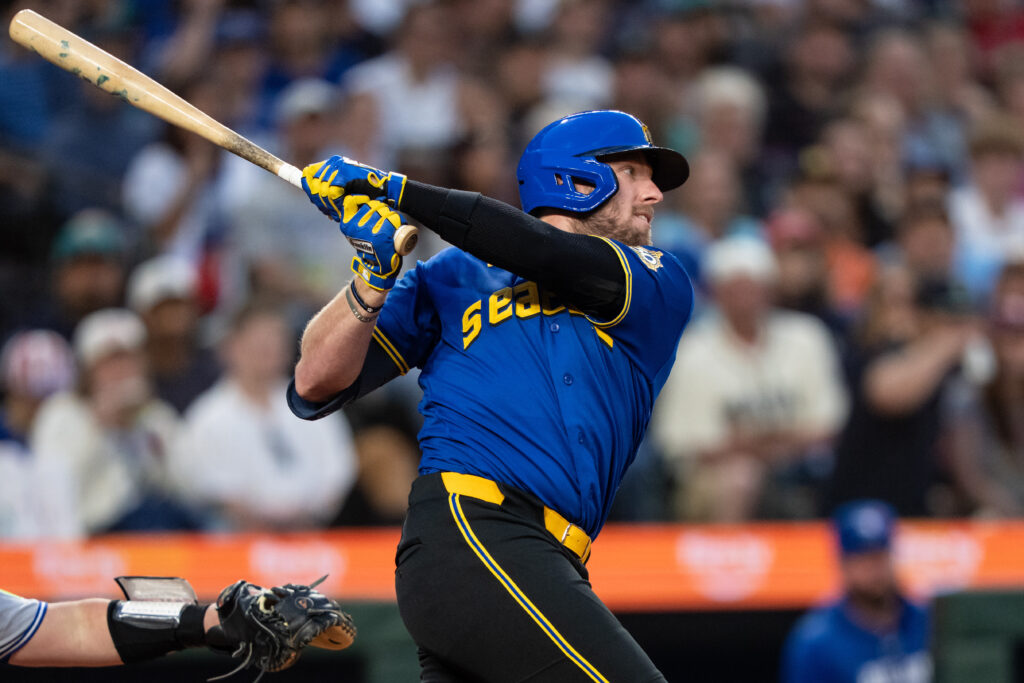
Luke Raley's season is over. The Seattle Mariners slugger will miss the remainder of 2026 after a forearm strain, sustained late in July, proved too severe to work through. Per the Seattle Times, Raley was shelved roughly a week ago and has now been ruled out for the final stretch, eliminating any chance of a late-summer rehab return.
The timing is brutal for a player who started the year among baseball's hottest hitters. Raley's early-season production—strong enough to carry the Mariners' hopes for an October run—withered once he hit the injured list. That gap between what he was and what he might have been this October underscores how thin margin between roster depth and competitive collapse sits in August.
Seattle now enters the final 60 games without one of its primary run-producing bats. Raley's absence opens three immediate roster questions: where the right field and DH innings go, whether internal options (Arroyo, Montes) can hold the load, and whether a midseason depth acquisition becomes necessary. The Mariners' offensive math changes. Every lineup now lacks a potential 30-homer contributor who was, when healthy, a reliable high-leverage presence.
For bettors, Raley's removal shrinks Seattle's ceiling on team totals going forward. The Mariners' scoring expectancy drops measurably once you subtract a corner bat capable of 100+ RBIs in a full season. Teams that had priced Mariners run production around aggregate league averages may now need to recalibrate downward—not dramatically, but enough to matter in a season where every offensive contribution is live. Seattle's bullpen and pitching will need to tighten margins that used to be covered by lineup pop. Unders become more attractive as the season's final third unfolds, particularly in games where the Mariners face mid-tier or better pitching.
Looking ahead to 2027, Raley's durability profile shifts the cost-benefit of retaining him. A two-year, $4 million commitment on a player now carrying a forearm injury history enters next offseason with different weight. The internal math for the front office tips toward depth over star power in that corner—a roster-construction signal worth watching as free agency opens.