Lowder's Controlled Rehab Outing Accelerates Cincinnati's Rotation Timeline
By PropBetEdge Editorial Team ·
A clean 70-pitch debut for Triple-A Louisville signals the Reds' ace prospect could rejoin the majors within days, reshaping Cincinnati's injury-ravaged pitching calculus.
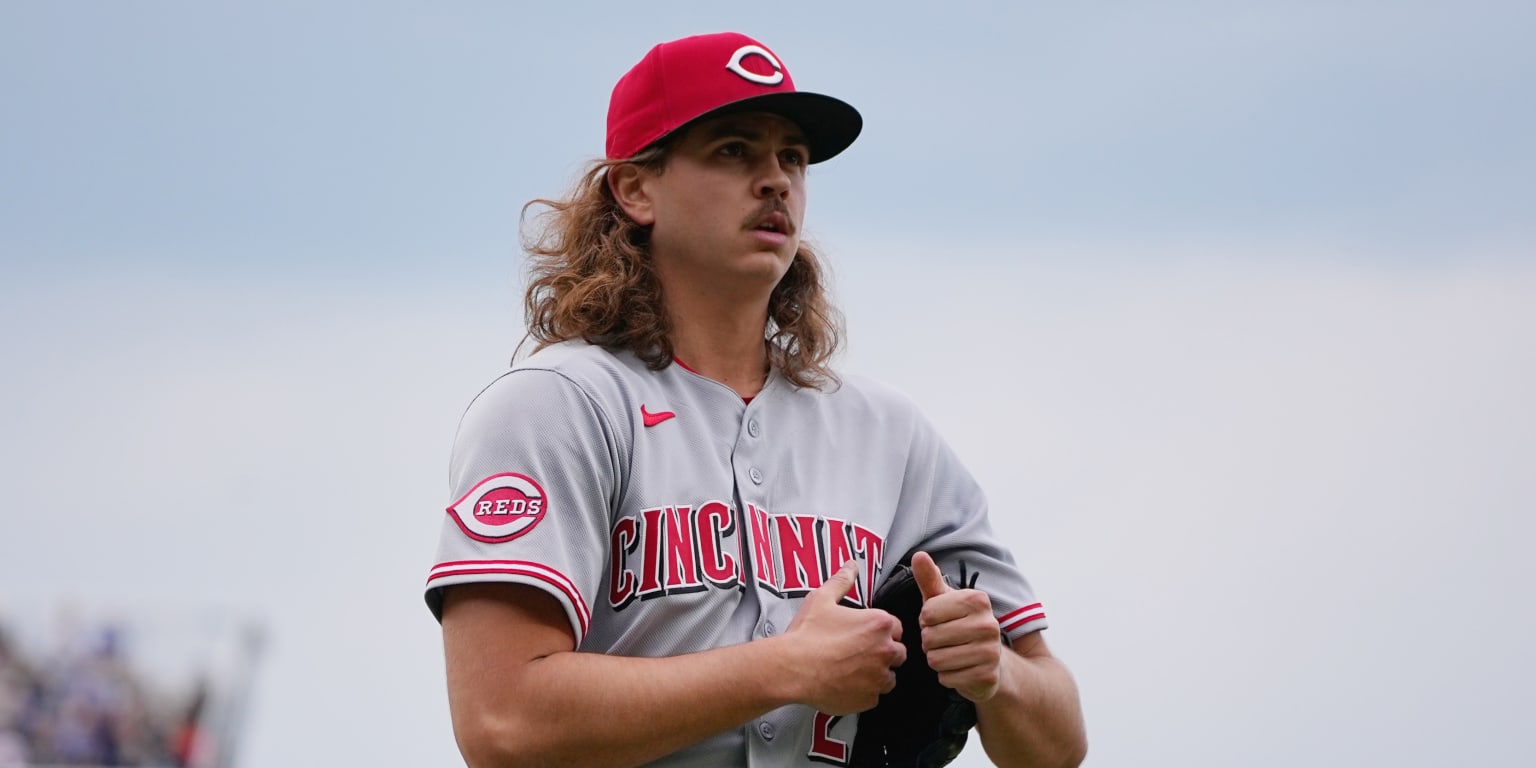
Rhett Lowder threw 70 pitches across five innings for Louisville on Tuesday, his first competitive action since shoulder inflammation landed him on Cincinnati's injured list in mid-May. The right-hander allowed three runs on six hits, struck out eight without issuing a walk, and hit 50 of 70 pitches for strikes—control metrics that suggest his mechanics stayed intact during the layoff. The Reds haven't announced whether Lowder faces another rehab outing or moves directly to a major-league assignment, but the efficiency and strikeout rate indicate he's further along the ramp than a typical early-stage rebuild.
The timing matters because Cincinnati's pitching infrastructure is in active collapse. Hunter Greene, Graham Ashcraft, and Elly De La Cruz (who handles short-stop depth but matters to lineup projection) are all sidelined. The rotation has absorbed multiple spot starters and has been relying on depth arms that aren't built for front-line workloads. Lowder, before his injury, was operating at a 3.00 ERA with 9.2 K/9 over his first nine starts. Reintroducing a strikeout-heavy arm at that performance tier immediately changes how Cincinnati projects in games going forward.
From a prop-betting angle, Lowder's return triggers two distinct market adjustments. First, his addition to the active rotation should lower team batting totals modestly for Cincinnati opponents once he starts—a strikeout specialist entering games where the bullpen has been overworked is a run-suppression tool. Second, any team facing Lowder in his next four starts sees elevated strikeout equity on the board. His 9.2 K/9 pre-injury combined with a fresh arm coming off rehab typically produces brief volatility in strikeout props (both directions—the market may overcorrect either way depending on how quickly books adjust to his return). His 50-of-70 strike percentage is particularly instructive: he's not losing feel for his fastball or secondary offerings, which means his strikeout rate should remain in the upper percentile of MLB starters rather than regressing to league average.
The key unknown is deployment. If the Reds space out his innings across a longer sequence of starts rather than ramping him to a full 90-100 pitch workload immediately, his strikeout-per-game volume could tick down through July. But the clean line in Louisville—no walks, eight whiffs, zero damage on hanging stuff—suggests the Reds are confident enough to activate him without another minor-league tune-up. Monitor Cincinnati's next rotation announcement. If Lowder gets a five-day slot, strikeout props against him will likely land at or above his pre-injury 9.2 K/9 baseline. Books won't immediately rebuild pricing for a pitcher coming off an injury delay, which creates a brief window to back strikeout overs if his line lands at or below 8.5 K.