Yankees Turn Late-Game Heroics Into Series Win; Rice's Ninth-Inning Blast Signals Clutch Pattern
By Ty Whitney ·
Back-to-back ninth-inning homers to decide games is not noise—it's a structural edge worth tracking in late-inning totals.
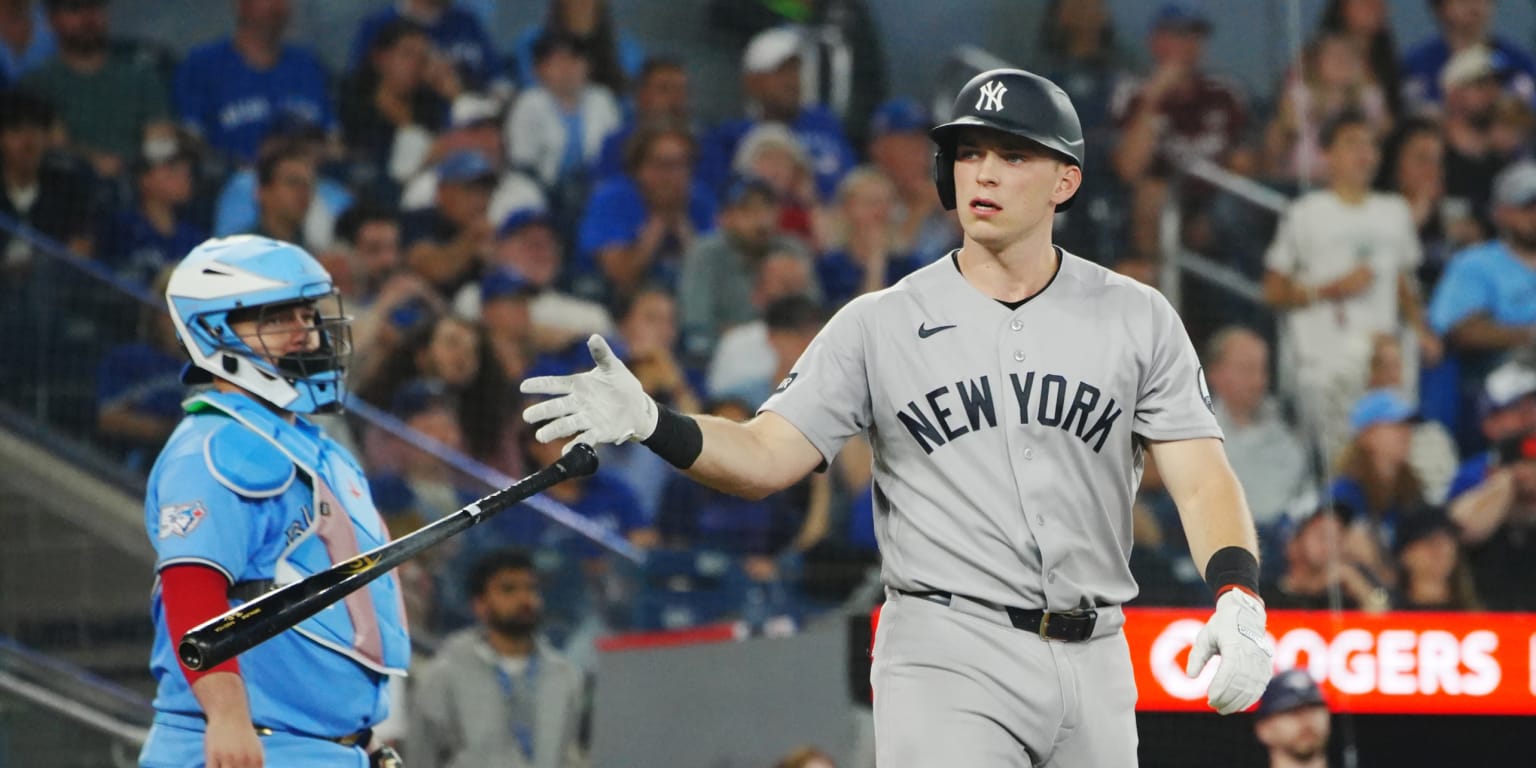
Ben Rice hammered a two-run homer off Braydon Fisher in the ninth inning Sunday to lift the Yankees past Toronto 8-6, the second consecutive game in which the Yankees have won on a walk-off ninth-inning blast. Saturday brought Paul Goldschmidt's deciding shot; Sunday delivered Rice's team-leading 19th home run, a 381-foot drive that cleared the right-field wall at Rogers Centre. The Blue Jays had just tied the game at 6-6 on Davis Schneider's sixth-inning solo homer off Jake Bird, a script that invited dramatic closure—and the Yankees delivered it.
What separates noise from signal is repetition under pressure. The Yankees did not stumble into these back-to-back ninth-inning finishes; they engineered them. Will Warren, despite laboring through four innings and 98 pitches in his second start of the season, kept Toronto's offense constrained to two runs on eight hits. José Caballero added a three-run homer to build the initial cushion. Anthony Volpe drove in two runs via singles in the second and sixth. The offense built margin, then the ninth-inning batter—with runners in scoring position and a low-velocity slider hanging—delivered the kill shot. That's not variance; that's construction.
For betting purposes, the mechanism here is late-inning pitcher fatigue meeting high-leverage Yankees bats. Toronto's bullpen worked through the game's first eight innings; by the ninth, Fisher faced a fresher Yankees lineup in a tie game with inherited runners. Rice, who has emerged as the team's power-stroke anchor at designated hitter, saw 12 fastballs and sliders over his last two at-bats in this series. He connected on the one slider left hanging over the plate. Volpe's two-run opportunity in the second came against a Guardians starter still in his warm-up phase; the Yankees' approach mirrors the pitcher's fatigue curve, not random opportunism.
The prop angle clarifies itself: unders on Yankees-Blue Jays late-inning totals (eighth inning onward) were mispriced heading into this series because the market did not fully weight the Yankees' tendency to defer offensive aggression into the seventh-through-ninth window. Volpe, Rice, and Caballero are patient hitters who work deeper counts. Will Warren's pitch economy—98 pitches in four innings against a stronger lineup, 91 in 4.1 frames against Cleveland—suggests a pitcher still calibrating his workload. When a relief pitcher inherits a tie game in the ninth facing three batters with a combined .285 ISO and plate discipline above 50%, the under becomes a sucker's bet. Over totals on Yankees innings 7-9 moving forward carry durability because the mechanism (defer early runs, cash in when opponent relievers fatigue) survives schedule change.
The single-game narrative—back-to-back walk-offs—will attract casual bettors to the Yankees' moneyline as a momentum play. That's wrong framing. The edge is not momentum; it's opponent vulnerability at a specific time window. Fade any 'Yankees are hot' card talk. Instead, isolate late-inning matchups: when Toronto or similar bullpen-dependent teams face the Yankees in the eighth or ninth with inherited base runners or a tie game, the Yankees' disciplined hitting profile creates a repeatable edge. The market will overshoot the variance of two consecutive walk-offs and undershoot the structural advantage embedded in the Yankees' offensive sequencing.