Cubs' Lineup Shuffle Fails to Break Seven-Game Skid; Structural Offensive Problems Remain
By Erik Schwartz ·
Desperate roster tinkering masks a deeper hitting crisis that lineup rearrangement alone cannot solve.
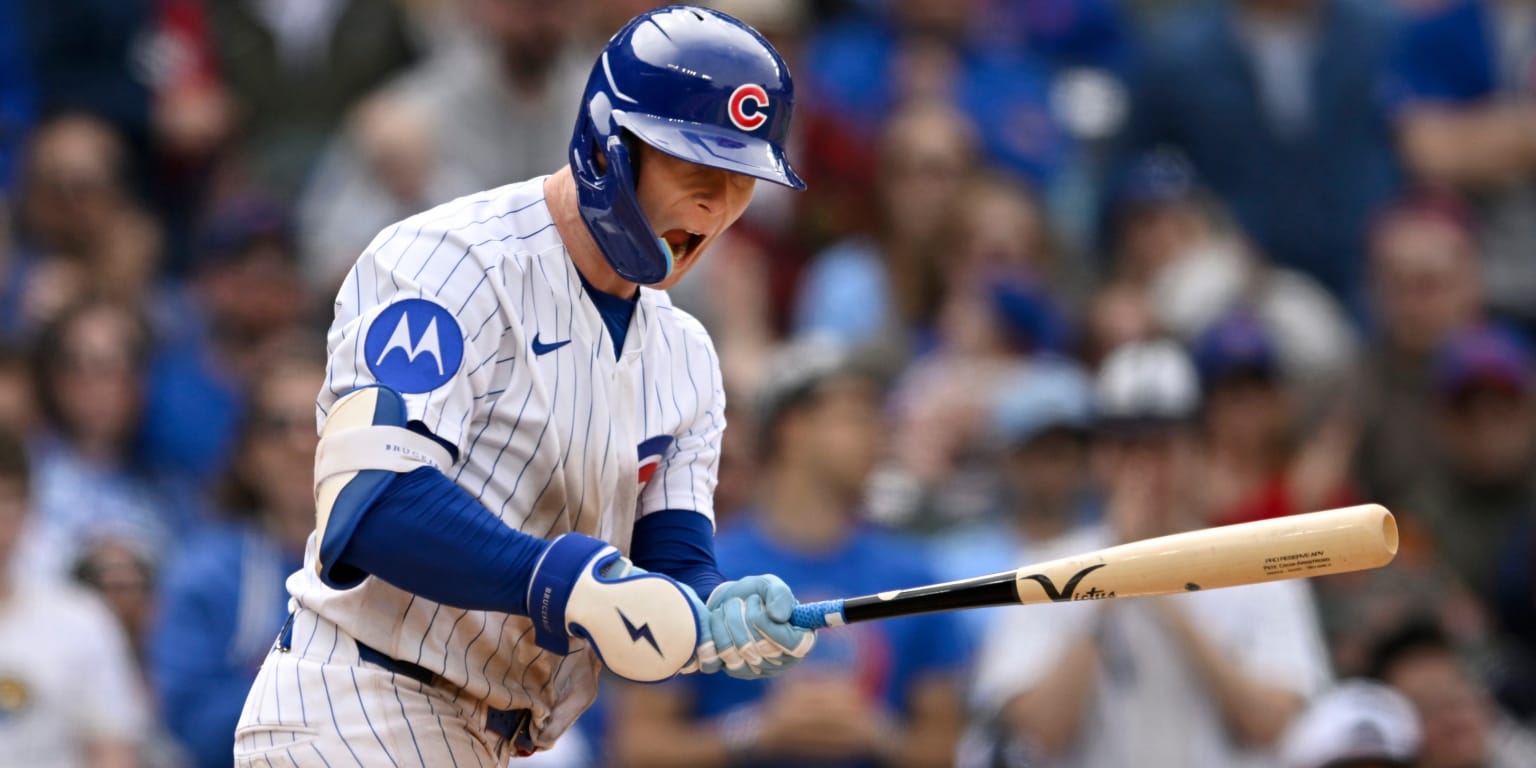
The Cubs lost their seventh consecutive game Saturday at Wrigley, falling 3-0 to Houston despite moving Pete Crow-Armstrong to the leadoff spot and promoting Nico Hoerner to cleanup for the first time in four years. Manager Craig Counsell framed the shuffle as a way to "give guys a different look," but the result—two double plays with runners in scoring position, a caught stealing that stranded Dansby Swanson on third, and only two hits off Astros starter Kai-Wei Teng—revealed that repositioning names on a lineup card does not fix what has become a compound offensive failure.
Chicago's hot start has evaporated over the past two weeks, and the symptoms point beyond individual slumps or cold streaks. Colin Rea pitched seven solid innings for the Cubs, allowing only four hits, yet surrendered two home runs to Christian Walker (a two-run shot in the first, a solo blast in the fourth) that proved decisive. When your pitcher limits opponents to four hits and still loses 3-0, the offense has stopped executing in high-leverage moments. The double plays with runners in scoring position—the second and third innings—are not random variance; they reflect a team making contact but not the kind that advances runners or generates the ball movement needed to extend rallies.
The front office's promotion of prospects Kevin Alcántara and Pedro Ramírez in recent days signals institutional panic more than strategic depth. These moves inject youth and roster energy, but neither addresses the mechanics of why a lineup that ranked among baseball's most productive two weeks ago has gone dormant. That kind of volatility—hot offense to ice-cold over 14 days—typically indicates either a fundamental mechanical degradation (swing changes, timing issues against certain pitch types) or matchup-specific problems (opposing pitching features exploiting a known weakness). Teng's six strikeouts in six innings on Saturday suggests the latter: the Astros' starter found a repeatable way to generate whiffs, likely exploiting a timing or approach vulnerability that rearranging the batting order does not repair.
For prop bettors, the implications are stark. The Cubs' team total has likely drifted downward after seven straight losses, but that line movement reflects recency bias rather than structural improvement. Until Chicago demonstrates the ability to execute with runners in scoring position—to avoid double plays, to take pitches that advance baserunners, to generate quality contact against the specific pitch mix it will face—overs on their team totals should be approached with extreme caution. The fact that Counsell resorted to a lineup shuffle signals he has few tactical levers left to pull beyond waiting for personnel changes to take hold. That wait typically lasts longer than the market prices in the immediate aftermath of a losing streak.