Rodriguez's Late-Game Audition: Can a Catcher Returning From Twin Injuries Force Pittsburgh's Hand?
By Erik Schwartz ·
After two years of Tommy John and flexor repairs, Endy Rodriguez gets his window to prove the Pirates' catching depth is more than organizational band-aid management.
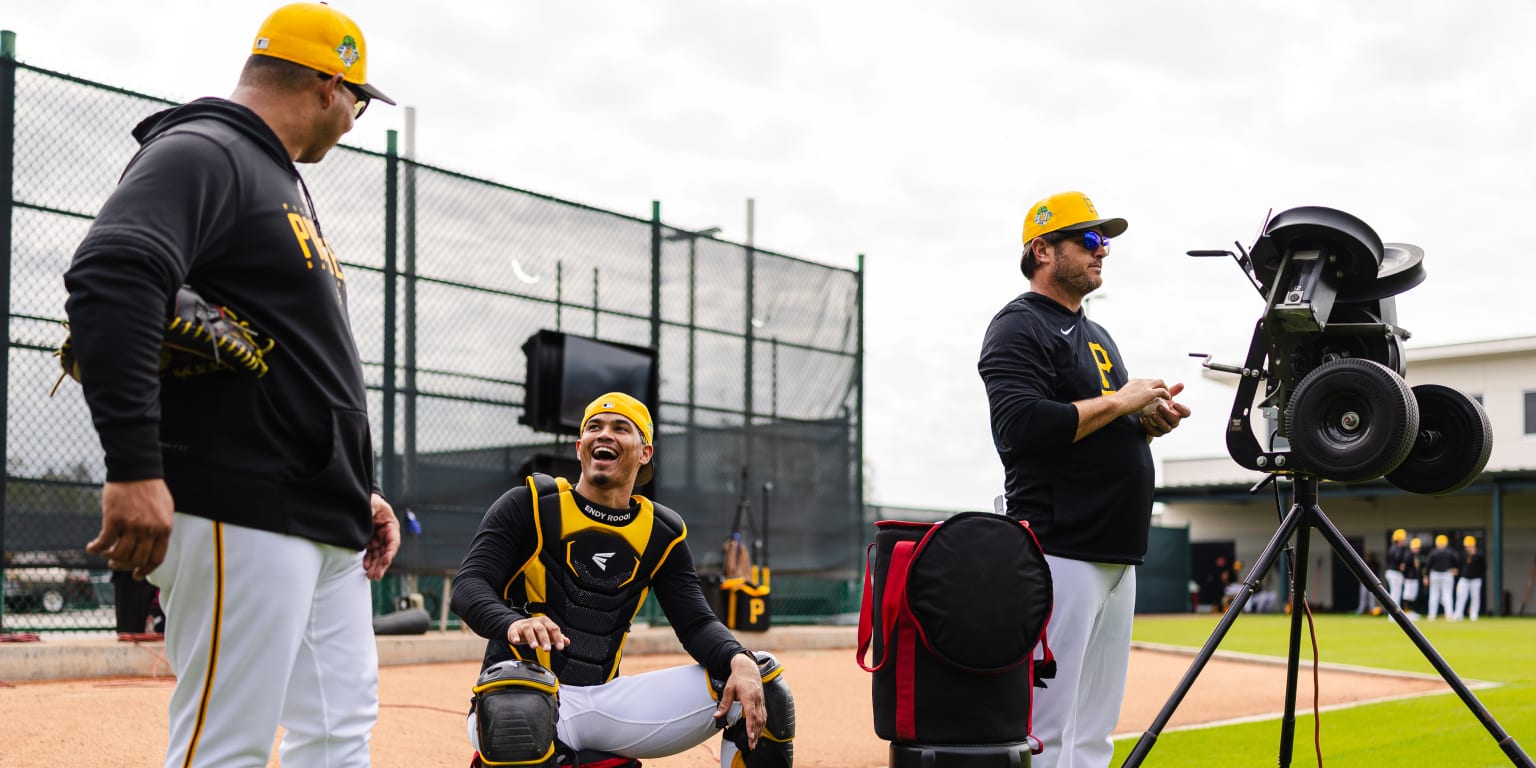
Endy Rodriguez was on a minor-league bus headed to Louisville when the Pirates called to promote him to Pittsburgh on Tuesday, filling in for Joey Bart's foot injury. The 25-year-old switch-hitting catcher has chased this exact opportunity before—he debuted in 2023—but elbow surgeries (Tommy John in December 2023, flexor tendon repair and ulnar nerve procedure in August 2024) compressed his development into a 36-game stretch across two seasons. "It felt like the first time," Rodriguez said of the recall, wrestling with the same jitters that greet most debuts. The emotional distance between hope and pragmatism is measured in scar tissue and rehab reports.
Rodriguez enters on sharply divergent recent form. In 2025's first 14 games, he hit .135 with a .496 OPS—deep water for any position, lethal for a catcher expected to anchor a pitching staff. Over the last 20 games in Triple-A Indianapolis, though, he'd climbed to .295 with five extra-base hits, 13 walks against just 14 strikeouts. The sample reversal is real enough that Pirates manager Don Kelly cited Rodriguez's "energy and positivity" as selection criteria over Rafael Flores Jr.—a tactical choice that doubles as a low-confidence vote on Rodriguez's immediate offensive ceiling. Kelly needed someone; Rodriguez was willing and comparably productive.
The pitching staff context matters here. Henry Davis will catch Mitch Keller (who has been Pittsburgh's ace fastball touch), while Rodriguez draws Carmen Mlodzinski on Thursday. Mlodzinski doesn't carry the leverage profile of Keller or Paul Skenes; he's mid-rotation depth. Rodriguez's workload will cluster around non-elite starters, limiting his sample-size impact on overall Pittsburgh pitching metrics. Bart was trending upward before the foot ailment sidelined him. By contrast, Rodriguez arrives as the organizational alternative when depth fails, not the solution-tier option.
For bettors, the angle is containment-focused rather than opportunity-heavy. Rodriguez's recent Triple-A surge is real—a 120-point OPS jump—but the underlying mechanics suggest volatility rather than breakthrough. He's seeing the ball better in the last three weeks, yes, but his strikeout rate (14 in 20 games) still runs above league-average catcher rates. Against softer pitching, the contact improvements stick; against MLB arms, they compress. The Pirates' team total should remain stable through this recall because Rodriguez's presence doesn't materially reshape their offensive profile—he's a reserve catcher getting spot starts, not a lineup anchor. His strikeout prop, if offered, likely overweights the recent hot streak. A 7.5+ K line on Rodriguez over his next two games carries embedded recency bias; the underlying hitting approach hasn't fundamentally shifted.
Rodriguez's path forward is binary: he forces the organization's hand by hitting at an MLB-usable rate over the next 10 days, or he returns to Triple-A and the Pirates pivot to a different catching solution when Bart's timeline clarifies. The former requires sustained contact improvement against major-league fastballs, not a repetition of his warm-up weeks. Until he produces that evidence in an MLB uniform, his recall is organizational necessity masquerading as opportunity.