Snell's Early Throwing Program Signals Conservative Dodgers Timeline Despite Surgery Speed
By Ty Whitney ·
Blake Snell began throwing just 17 days after elbow surgery, but the Dodgers' refusal to chase his return timeline tells bettors when to expect him back—and what that means for LA's rotation depth.
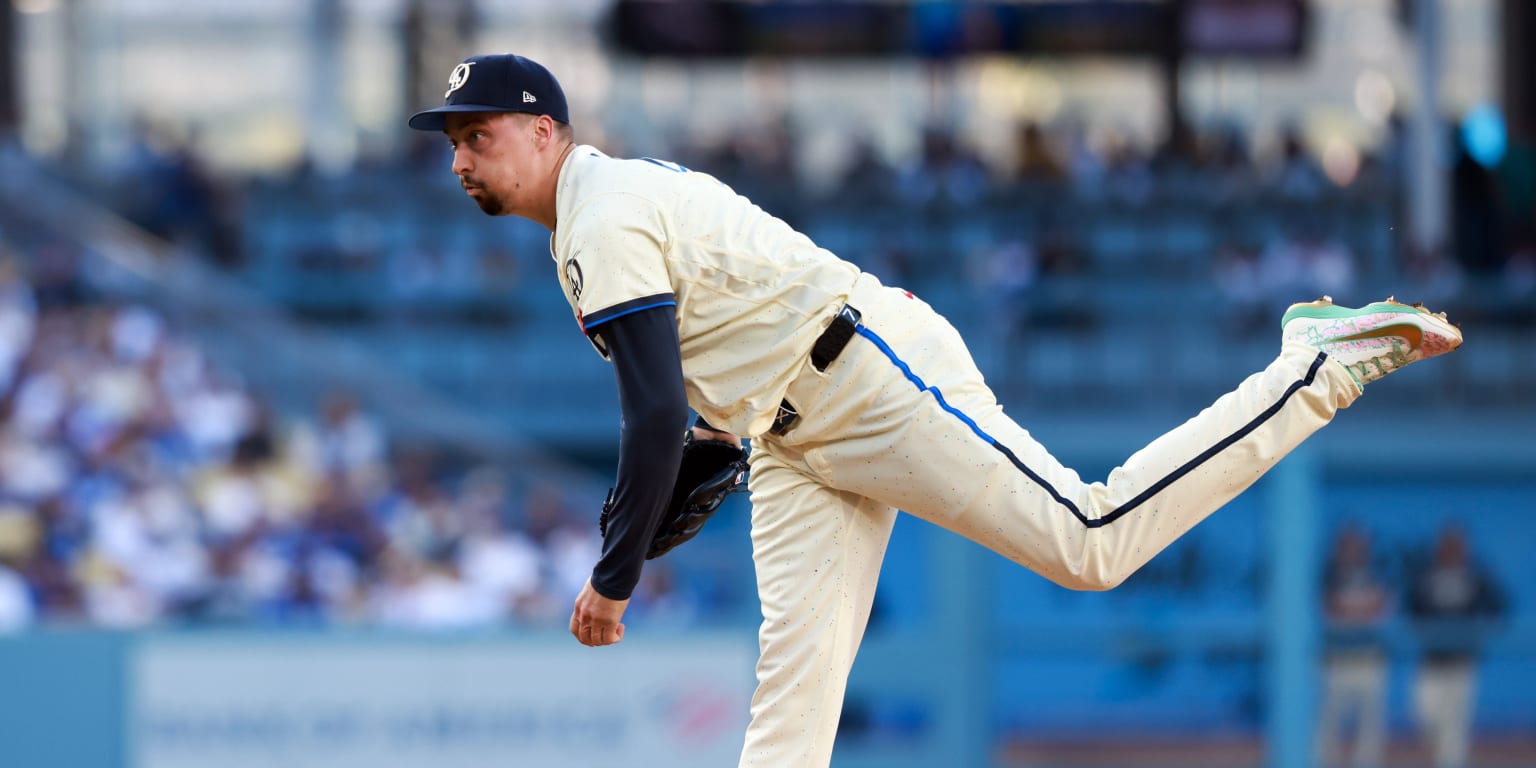
Blake Snell picked up a baseball on Friday, June 5—about two and a half weeks after undergoing arthroscopic surgery to remove loose bodies from his left elbow. The move marks the formal start of his throwing progression, though the Dodgers' framing of his absence leaves no ambiguity: he won't pitch competitively until mid-July at the earliest, and likely later. Snell landed on the 60-day injured list post-surgery, which guarantees his ineligibility through July 5 at minimum. Manager Dave Roberts made the organizational stance explicit—there's no incentive to rush a left-hander who will anchor a playoff rotation.
The contrast with Tarik Skubal illuminates the calculus. The Tigers' ace underwent the same NanoNeedle Scope procedure just over a month before Snell, and Detroit is fast-tracking his return for a rehab start this weekend. Skubal is an impending free agent and Detroit's most valuable trade chip if the team falls out of contention; getting him back now protects both his market value and the franchise's deadline leverage. The Dodgers, by contrast, operate from a position of organizational patience. They're not selling, they're not desperate for innings, and Snell's free-agent status begins after this season—meaning LA has structural incentive to preserve his health over the next two months rather than gamble on an accelerated timeline.
Snell's early May start against St. Louis proved ill-fated; he threw five innings before elbow discomfort forced his exit. That was his only appearance all season. Before that, he opened on the IL with left shoulder fatigue—a sign that his physical foundation needed reset before being asked to carry a full workload. The surgery itself was a cleanup operation, not a reconstruction, which theoretically shortens his overall recovery arc. But recovery arc and usable innings arc are different things. Early throwing does not translate to hitter-facing readiness; the Dodgers will demand a multi-week buildup of long toss, bullpen sessions, and minor-league games before Snell faces major-league hitters again.
For rotation-dependent bettors, this matters immediately. The Dodgers' starting depth will be tested without Snell through at least the first month of his absence. Their projected rotation now tilts toward dependence on Tyler Glasnow, Yoshinobu Yamamoto, and roster fillers until mid-July. Any team-total overs on the Dodgers should account for a rotation that will cycle in secondary starters or call-ups for multiple weeks. The pitching depth market—specifically Los Angeles starter K props and team strikeout totals—faces reduced ceiling in the absence of a high-velocity, high-whiff left-hander. Books have already priced this into Dodgers moneyline and run-line valuations, but the specific architecture of that discount (favoring overs and batting totals, suppressing pitcher K props) becomes visible for bettors willing to dissect the rotation gap.
The timeline also matters for second-half slate construction. Snell's return around mid-July positions him as a depth add rather than a September savior. That's organizational choice, not injury-driven fate. The Dodgers are betting they're built to win in June and July without him, then reload in August with a healthy ace for a playoff run. That's a high-confidence organizational statement—and a reminder that prop bettors should follow management priority signals, not just recovery timelines.