Lee Breaks Month-Long Drought in Giants Blowout; Timing Matters for Regression
By Erik Schwartz ·
Jung Hoo Lee's first homer in 99 plate appearances sparks a five-run third, but a .207 batting average over the prior stretch raises a timing question: is he out or just warming up?
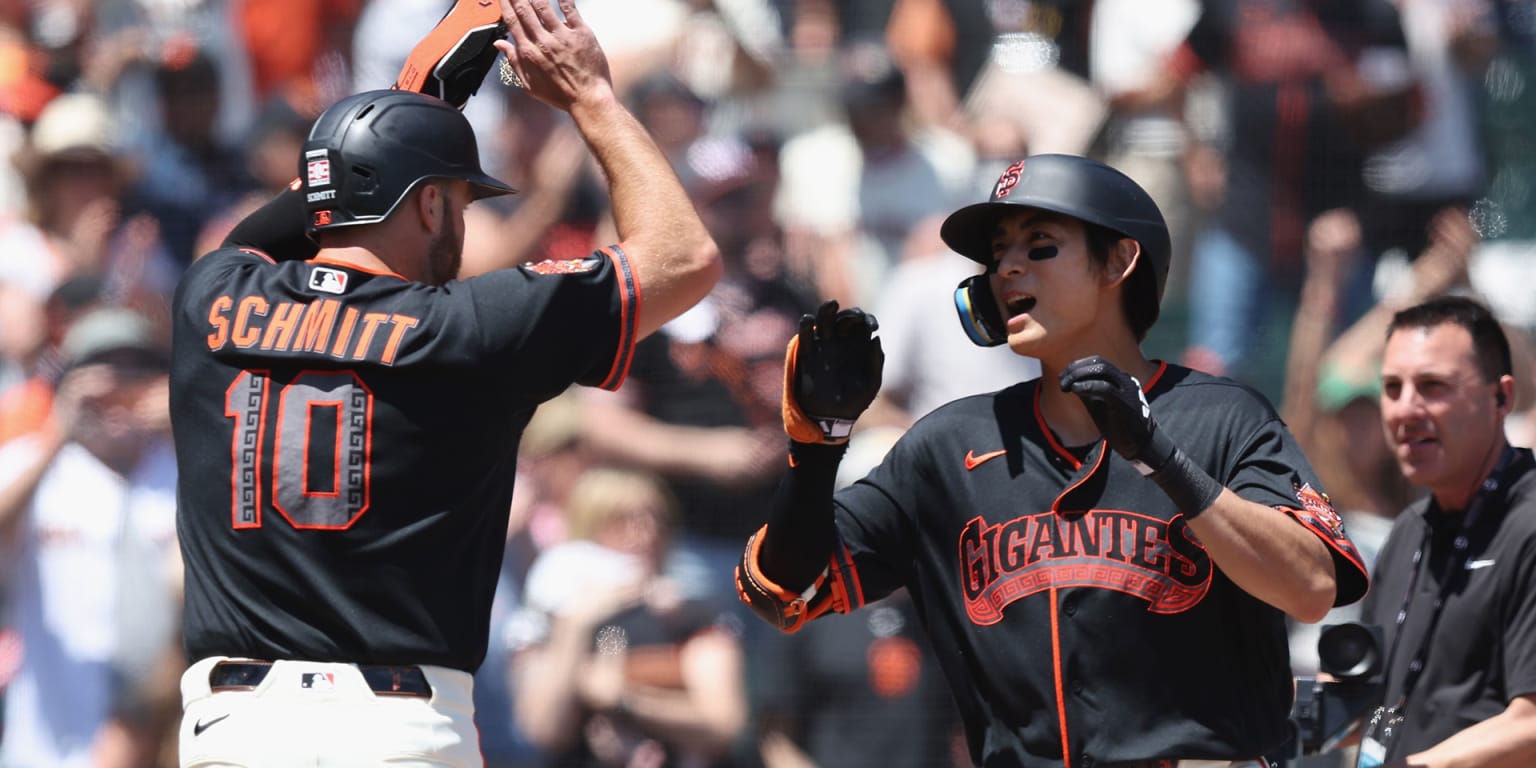
Jung Hoo Lee smashed a first-pitch home run off Angels starter Ryan Johnson on Saturday, ending a 99-plate-appearance drought dating back to June 23. The Giants rode that blow—part of a five-run third-inning explosion—to a 9-2 victory and series win. On the surface, it looks like classic relief: a slump ends, a key bat wakes up, and a team capitalizes on a vulnerable opponent.
But the underlying narrative is more textured. Lee opened 2026 on fire, hitting .331 through June 23. Then came the fall. Over the next month, spanning 99 plate appearances, he managed only a .207/.232/.283 slash line—a collapse that dropped his season average from .331 to .299 entering Saturday's game. That's not a minor correction. That's a pitcher's adjustments meeting a hitter's elongating swing. One home run doesn't erase 32 consecutive games of struggling contact; it signals either a mechanical fix or a regression bounce that will test itself immediately.
The circumstances matter too. Johnson was in trouble from the start—four singles in six batters in the third—and Lee took advantage of chaos. A first-pitch fastball to a hitter trying to climb out of a 99-PA hole is not the same as Lee executing against a locked-in pitcher. His defensive value is real (the leaping catch, the assist on the cutdown), and his season production—six home runs through 99 plate appearances entering today—pegs him around a 0.06 HR/PA rate, which sits comfortably in the upper-middle tier for qualified right fielders. But that rate was built on a .331 June. The .207 month is the more recent signal, and one game doesn't rewrite a month's worth of mechanical evidence.
For prop bettors, Saturday is a cautionary moment. Lee's home run line will almost certainly widen—books will factor in his "breakout" moment and push his HR prop higher for the next series. But the causal mechanism here isn't "slump broken"; it's "chaos capitalized." If Johnson had command, Lee likely goes 0-for with a strikeout. Fade home run overs on Lee for the next 7-10 games while the market overcorrects. His underlying contact quality—K rate, barrel%, xBA—will be the real tell. One swing doesn't reset a month of mechanical drift.