McCarthy's IPHR Barrage Exposes a Rare Edge in Small-Sample Volatility
By PropBetEdge Editorial Team ·
Jake McCarthy just became the first player since 1929 to hit two leadoff inside-the-parkers in one season, but the statistical oddity masks a real question about speed, positioning, and how fast the market reprices extreme outcomes.
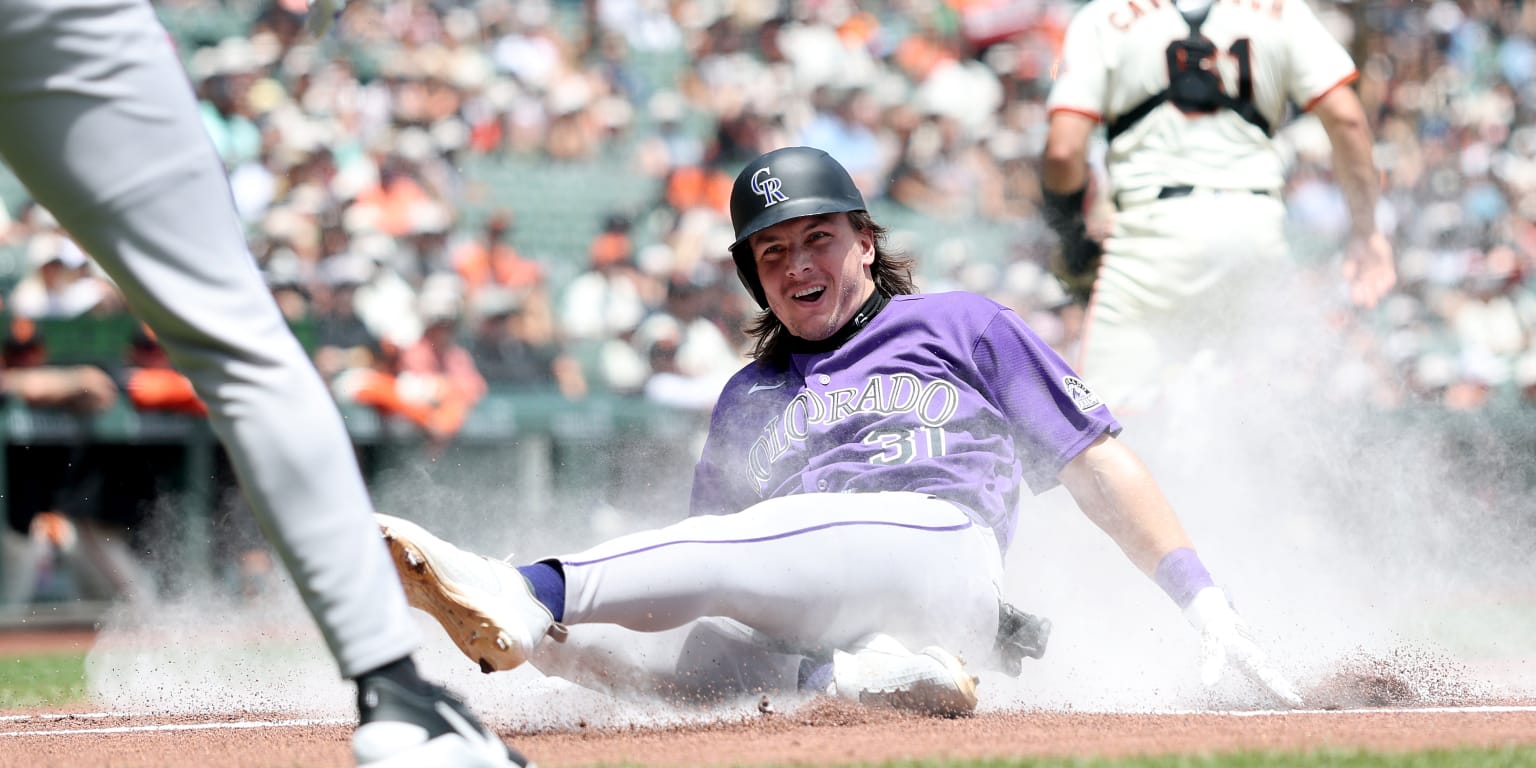
Jake McCarthy hit an inside-the-park home run leading off Sunday's game against the Giants—his second of the season after recording his first against Pittsburgh on June 20, roughly three weeks prior. The feat marks the first time since Edd Roush in 1929 that any player has opened two games with an inside-the-park homer in a single season, an outcome so rare that McCarthy became only the ninth player since 1901 to record two such home runs in the same year at all.
The mechanics reveal why this matters beyond the trivia line. McCarthy's second IPHR came on a ball into Triples Alley in right-center at Oracle Park that initially fooled both the Giants' outfielders and the official scorer. Giants right fielder Jung Hoo Lee and his center-field counterpart both decelerated believing the ball would carry over the fence as a ground-rule double, then watched it carom off the wall as McCarthy—a plus-runner capable of beating the relay—circled the bases. The official scorer first marked it a triple and error, then corrected to a home run. The inside-the-park home run is not a skill; it is a collision of speed, batted-ball luck, and opposing defense executing below standard. Yet McCarthy has now authored two of them in less than a month.
What the historical footnote obscures is the volatility in McCarthy's plate profile this season. The 28-year-old acquired from Arizona in January has registered two of baseball's most improbable hitting outcomes without necessarily changing his underlying bat-to-ball skills or hard-contact rate. His speed is genuine—he's a 6.7-second home-to-first runner—but even elite sprinters don't trigger two leadoff inside-the-parkers in isolation. This is variance clustering, and it matters because sportsbooks price team-total overs and unders on expected offensive output, not on the probability of rare defensive collapses and favorable wall caroms.
The Rockies' offensive profile entering this week sits below the National League median in runs scored per game. Adding an expected 1.2 runs from IPHR outcomes (which McCarthy has now inflated through sheer statistical accident) would overstate the team's sustainable production if the market hasn't already adjusted. Conversely, if bettors perceive McCarthy's recent success as evidence of a breakout season in run production, team totals in Colorado's favor could drift higher than the underlying mechanics support. The edge does not belong to the long IPHR narrative—it belongs to disciplined resistance to outcome-based narrative drift. The next time the Rockies' total swells on McCarthy's name recognition, the smart fade is the over, not because McCarthy will regress, but because the market has priced an outlier as a trend.