Phillies' Rotation Gamble: Why Settling for Fifth-Starter Depth Misses the Real Edge
By PropBetEdge Editorial Team ·
Philadelphia's month-long search for rotation help reveals a deeper strategic problem—and a betting opportunity in how the market prices their playoff ceiling.
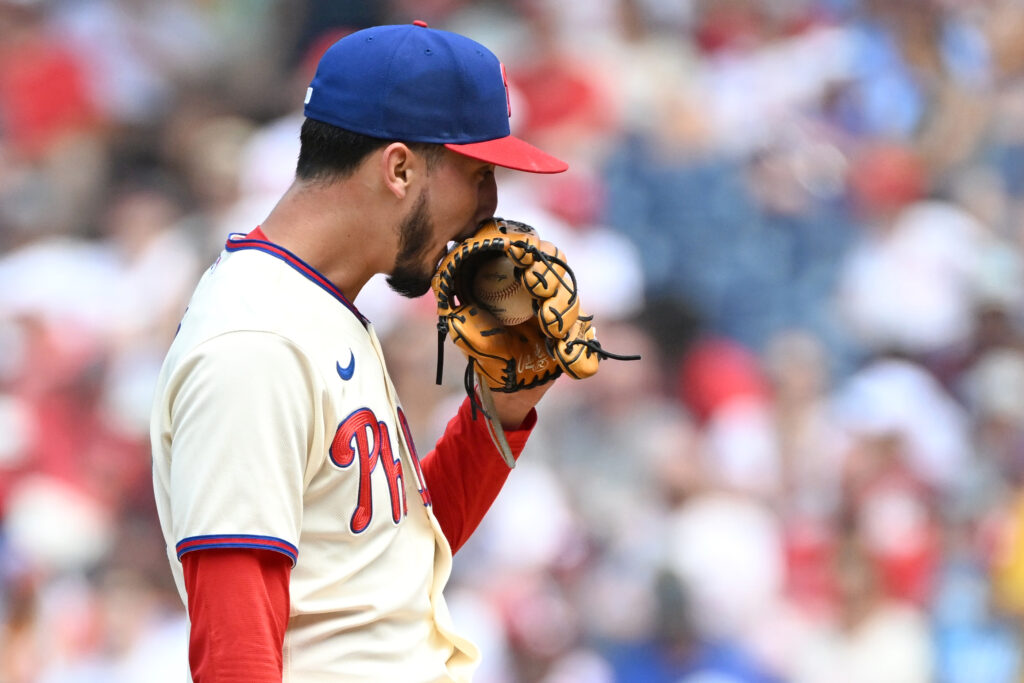
The Phillies optioned Andrew Painter to Triple-A on June 17, acknowledging what five weeks of trade-market silence has now confirmed: finding a fifth starter isn't the answer to their rotation problem. Painter's 7.2 ERA across 65 innings made the decision straightforward, but the subsequent inability to land a mid-tier arm in trade talks suggests something more systemic. Philadelphia has three All-Star level starters locked in—a luxury most teams never assemble—yet the market's refusal to part with useful fifth-starter depth at reasonable cost points to an uncomfortable truth: the Phillies' rotation depth chase is a trap.
The conventional move would be to cycle a prospect or reclamation project through game-four duties, absorbing the inevitable wear. But Philadelphia's front office appears caught between two equally flawed paths: overpay for a fourth starter they don't truly need, or accept the bloat of a rotating cast of innings-eaters that compounds their leverage disadvantage in October. The fact that no deal has materialized in over a month—a span covering the trade deadline window where supply should be highest—suggests either the asking price has been prohibitive or the team is increasingly open to pivoting toward bullpen investment instead. The latter makes more sense given the leverage that a dominant three-man rotation and elite relief corps could exert in a best-of-five series.
For bettors, this situation creates a narrow but actionable gap between perceived and actual ceiling. The market has likely already baked in a binary view: either the Phillies acquire rotation depth and ascend as co-favorites, or they limp into October with a patchwork four-five slot and face early-round vulnerability. What the market may have underpriced is the third option—that Philadelphia doubles down on bullpen reinforcement and weaponizes their elite top-three starters and relief depth as a short-series formula. In elimination games, elite starting pitching and lockdown arms frequently matter more than rotation depth, and the Phillies have the former in abundance.
This reframes playoff futures pricing. If the Phillies' front office has genuinely pivoted away from chasing a fourth starter and toward fortifying relief instead, their postseason equity may be higher than the market has priced it—not because of what they acquire, but because of what they've stopped trying to force. A roster built on three-starter dominance and bullpen depth has a different variance profile than one stretched thin trying to field a competent fourth arm. The market's assumption that a fifth-starter acquisition is prerequisite to contention may be overweighting the importance of depth games relative to the October meta where leverage situations compress and elite arms see repeated usage.
Watch the Phillies' remaining deadline activity for bullpen vs. rotation allocation. If they add a setup reliever or closer rather than a fourth starter, that's a signal the organization has accepted a different playoff blueprint. That shift in strategic emphasis—moving away from traditional rotation construction toward a three-ace, three-reliever model—creates edge in their postseason win-total and National League pennant lines, where short-series dynamics reward concentration of talent over breadth. The silence around rotation trades may be more valuable information than any deal would have been.