Toronto's Rotation Crisis Deepens: Cease and Gausman Carry the Load
By Erik Schwartz ·
With Eric Lauer designated for assignment and injuries mounting, the Blue Jays' pitching depth has collapsed—forcing management to hunt the trade market or face a first-half collapse.
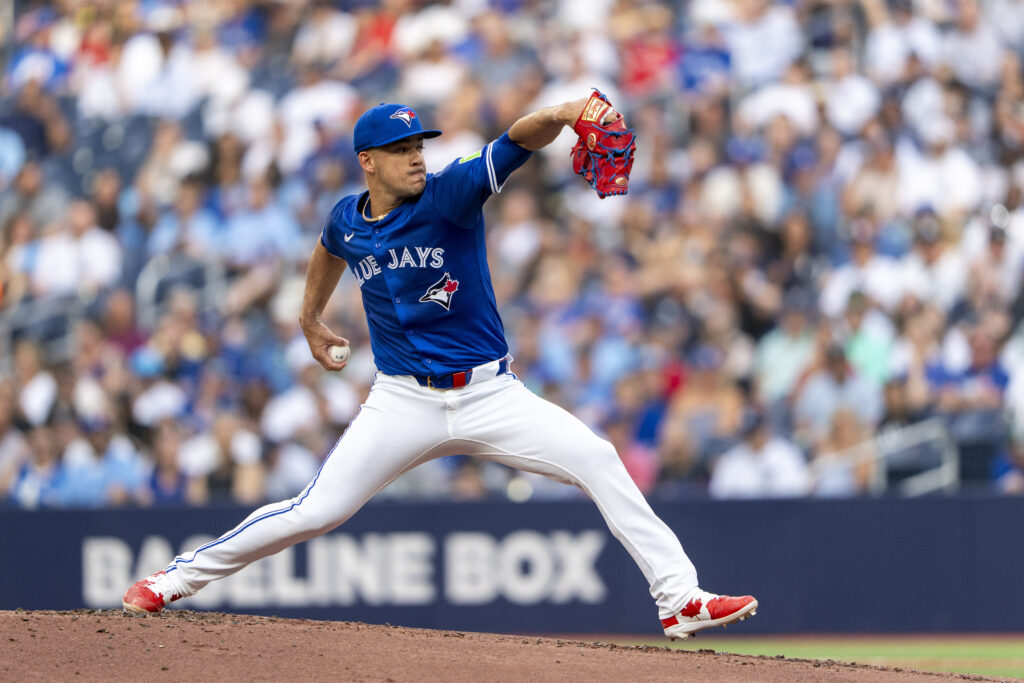
The Blue Jays' rotation has fractured under the weight of injuries and underperformance. Eric Lauer's recent designation for assignment removed what was supposed to be a stabilizing mid-rotation presence, leaving Toronto with only four healthy starters: Dylan Cease, Kevin Gausman, Trey Yesavage, and Patrick Corbin. That roster construction—built around three names, really, since Yesavage and Corbin are depth arms—is unsustainable over a full season. Manager John Schneider has hinted publicly at acquiring external pitching help, signaling that internal options have been exhausted.
The timing matters. A rotation built to contend cannot function on a three-man core for an extended stretch. Cease is the ace-in-waiting but carries a track record of durability concerns. Gausman, at 35, remains effective but represents limited runway. That's not a playoff rotation; that's a triage situation. The Lauer failure—a trade-deadline pickup in 2024 who was supposed to provide length and consistency—has crystallized the department's vulnerability. Toronto's front office cannot bank on internal improvement or slow development from the minor-league pipeline if they're competitive now.
From a betting lens, this creates immediate operational constraints. Any starter not named Cease or Gausman becomes a fade candidate. Yesavage will absorb starts in the near term, but he's a swing arm with limited track record at the major-league level—expect elevated walk rates and higher earned-run averages than league baseline. If Toronto pivots to a trade acquisition, the new arm may not be seasoned to the team's approach for 2-3 starts, creating variance in strikeout rates and command metrics. Additionally, the Blue Jays will likely lean harder on their bullpen in games started by depth options, compressing run-scoring opportunities and lowering team totals in those matchups.
The trade-market angle is layered. If Toronto acquires a mid-tier veteran starter (age 30-35, $10M-$15M salary range), that pitcher will immediately absorb 25-30% of the remaining rotation innings—cannibalizing workload from Yesavage and Corbin. This doesn't fix the underlying problem but it does stabilize variance. For prop bettors, watch the acquisition date: any new arrival will take 2-3 starts to build baseline strikeout and command data with a new staff. Fade full-suite projections on an acquired pitcher's first two outings; the market will price him as a league-average starter when he's likely to overperform or underperform his Vegas line until he's integrated into Toronto's system.
The Berrios question—whether the injured starter returns to productive duty or becomes a roster footnote—remains unanswered. Until Toronto provides clarity on his timeline, assume he's unavailable for meaningful innings before mid-June. This extends the rotation crisis another 3-4 weeks, during which Cease and Gausman will shoulder a disproportionate workload. Monitor their per-start strikeout lines for elevation: in the absence of reliable depth, their usage patterns will intensify, potentially boosting K rates above their season benchmarks in May and early June.