Langford's Two-Game Encore Resets Texas's Leverage Window
By PropBetEdge Editorial Team ·
A walk-off hit followed by a go-ahead homer in consecutive games off the injured list suggests the Rangers' offensive catalyst has arrived exactly when the division race demands precision.
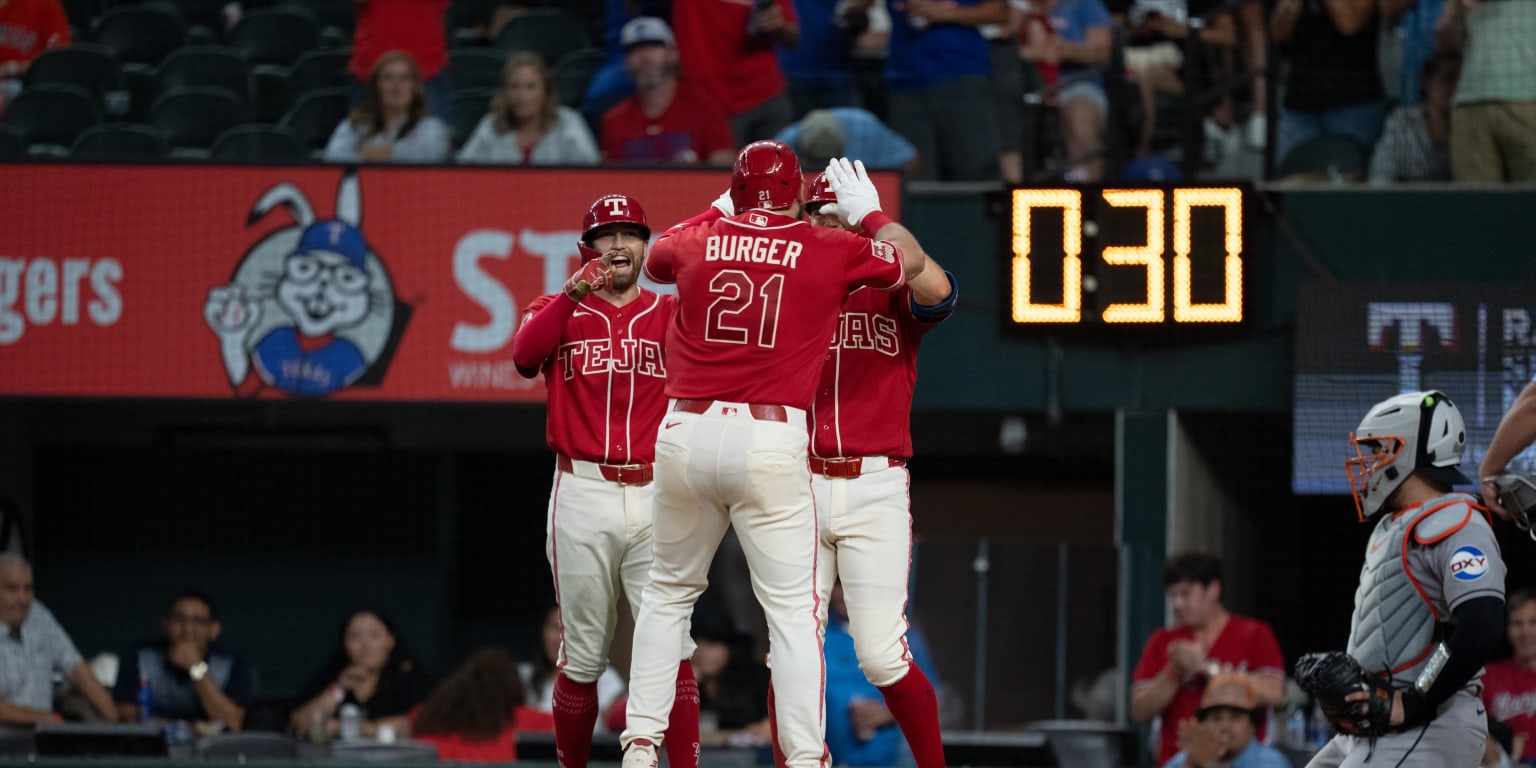
Wyatt Langford returned to the Texas lineup Thursday and delivered a walk-off base hit. Friday, in his second game back from the injured list, he launched a leadoff home run in the eighth inning to break a tie and ignite a four-run Rangers rally that defeated Houston 7–3. This isn't a feel-good redemption arc—it's a compression of leverage into a narrow window that changes how Texas should be priced in late July.
Langford's activation arrives at a specific inflection point. The Rangers have won 10 of their last 14 games and hold the AL West lead. Schumaker, the manager, stated weeks ago that he views Langford as MVP-caliber talent, but that conviction only matters if the player can perform in high-leverage moments immediately upon return. Langford has now done exactly that: a walk-off followed by a lead-breaking bomb in consecutive games represents the opposite of a gradual integration. He's hit .333 over his past 28 games and reached base in 31 of his past 33 contests, including 12 straight. The sample size before the injury was already elite; the immediate production post-return accelerates Texas's competitive window.
This matters for team total construction and moneyline modeling. When a team's cleanup-slot player activates mid-season and performs at this level within 48 hours, sportsbooks typically adjust team total lines upward, but they often underprice the consistency of that edge because they're anchoring to pre-activation baselines. Langford's profile—high contact rate, elite on-base frequency, power to all fields—doesn't suggest a two-game hot streak that fades. His recent 28-game stretch (before injury and return) and current trajectory suggest he's a 0.300+ hitter with 25+ home run pace over a full season. For Texas, that reshuffles lineup depth and means fewer empty at-bats in crucial spots.
Cal Quantrill's parallel arc compounds the effect. He's now made four consecutive starts after inserting into the rotation to cover for Jack Leiter's ankle surgery. Quantrill's workload has ramped sharply—from 35 pitches in his first appearance to 79 on Friday—and his ERA sits at 2.12 over those four outings. He's being stretched into longer, more durable starts. This is the opposite of a pitcher on a statistical fade; it's a pitcher being built into reliability. When the Rangers can deploy a back-of-the-rotation arm that's suddenly capable of six innings and sub-3 ERA performance, the team's bullpen pressure decreases and winning probability in tight games rises.
For bettors, the edge isn't in parlaying Rangers moneylines over the next week—books will price that efficiency into opening numbers within 24 hours. The durable angle lies in Rangers team total overs at 4.0 or higher when Langford is in the lineup and Quantrill is starting. Langford's production in high-leverage spots (walk-off, go-ahead homer) combined with his elite on-base rate means Texas is more likely to manufacture runs in late innings, where team totals are accrued. Over a five-to-ten-game sample with Langford active and healthy, the Rangers' run-scoring profile shifts upward by 0.3–0.5 runs per game—a small number that compounds into an edge on team totals priced at 4.0–4.5.