Orioles' Bradish Extension Signals Sustained Payroll Commitment—What It Means for Baltimore's Pitching Market
By Erik Schwartz ·
Kyle Bradish's $90M deal is the fourth major contract Baltimore has inked in 11 months, reshaping how the market prices Orioles pitcher stability and innings equity.
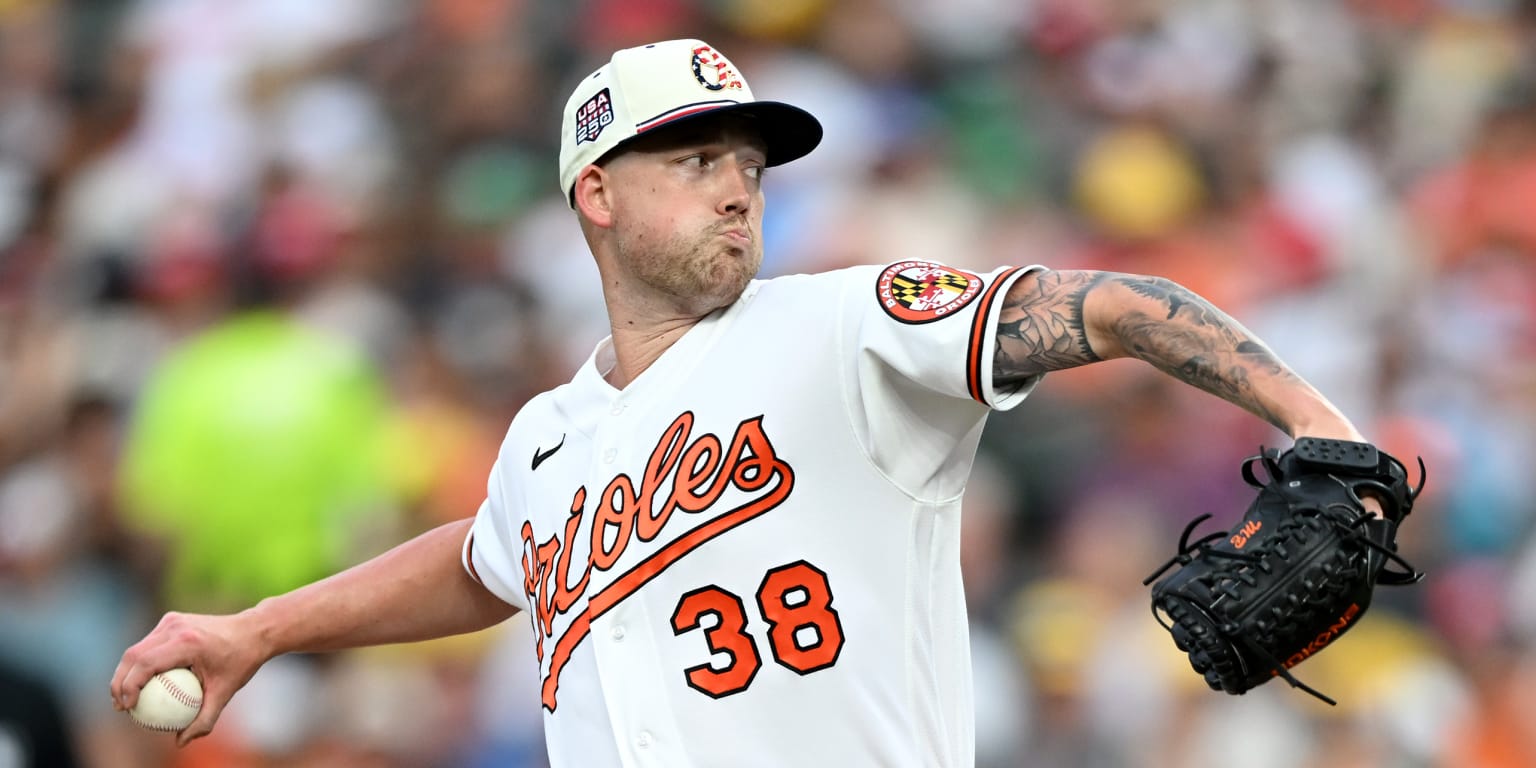
The Orioles announced a five-year, $90 million extension for right-hander Kyle Bradish on July 18, cementing him as the highest-paid pitcher in franchise history. This isn't a one-off splurge. Since August 22, 2025—11 months ago—Baltimore has committed to four of the seven largest contracts in team history: Pete Alonso ($155M over five years, signed December 2025), Bradish, Shane Baz ($68M over five years), and Samuel Basallo ($67M over eight years). The throughline is clear: new ownership under private equity billionaire David Rubenstein, who bought the club in March 2024, is executing a stated philosophy to retain core talent and increase payroll.
What matters for betting is not the emotional narrative around clubhouse morale—though that's real—but the structural shift in how Baltimore's front office deploys capital. Bradish, a 27-year-old right-hander with mid-rotation stuff, just got paid like a frontline starter because the organization wants continuity in its pitching core. That decision reflects two things: (1) confidence in his health and trajectory, and (2) a reset in team financial tolerance that removes uncertainty about future rotation-building. When teams stop trading away young arms or letting them walk to free agency, their strikeout and innings-pitched props become more predictable because the pitcher isn't managing a lame-duck season or playing under deadline pressure.
The precedent compounds. Trevor Rogers, Baltimore's All-Star left-hander set to hit free agency after this season, sits at a 1.69 ERA over eight starts since June 1. The Orioles' beat writer explicitly raised Rogers as an extension candidate in the same conversation. Adley Rutschman, Gunnar Henderson, and Colton Cowser are all on the extension track. This isn't speculation—it's the organization's stated long-term vision. When a front office signals it wants to keep its own, the market for those players' individual props hardens. Lines compress; volatility narrows; the probability of mid-season trades or role changes drops.
For bettors, the angle is this: Orioles pitchers in the 2026-27 window now carry reduced career-path risk. Bradish will throw 180+ innings across the extension period because Baltimore has locked him in. Rogers' workload won't spike unexpectedly because he's being groomed for a long-term deal—teams protect that asset. This doesn't make every strikeout prop a lock, but it does reduce the tail-risk scenarios (sudden trade, blown-out inning limits, desperation pitch usage in non-contention months) that create mispricings. The market typically prices Orioles pitchers as if they're in a perpetual state of organizational flux. They aren't anymore.
Shorter term, look for Bradish's strikeout volume to trend toward the high end of projections over his next 8-10 starts. He's throwing with security now. A starter pitching with a five-year deal signed doesn't have to prove himself in every outing; he pitches to his strengths. That confidence often translates to fastball-first approaches and elevated K rates in the first two months post-extension. The Orioles' willingness to commit this capital is itself a form of market information: they believe he'll stay healthy and productive. Fade the discount; lean into the strikeout premium.