Oakland's Vegas Surge Translates Home: Kurtz Leads A's Past Pirates in Test of Offensive Legitimacy
By Ty Whitney ·
The Athletics' six-game power clinic in Las Vegas looked like a mirage—until Nick Kurtz and a suddenly productive lineup proved Monday night that the momentum was real.
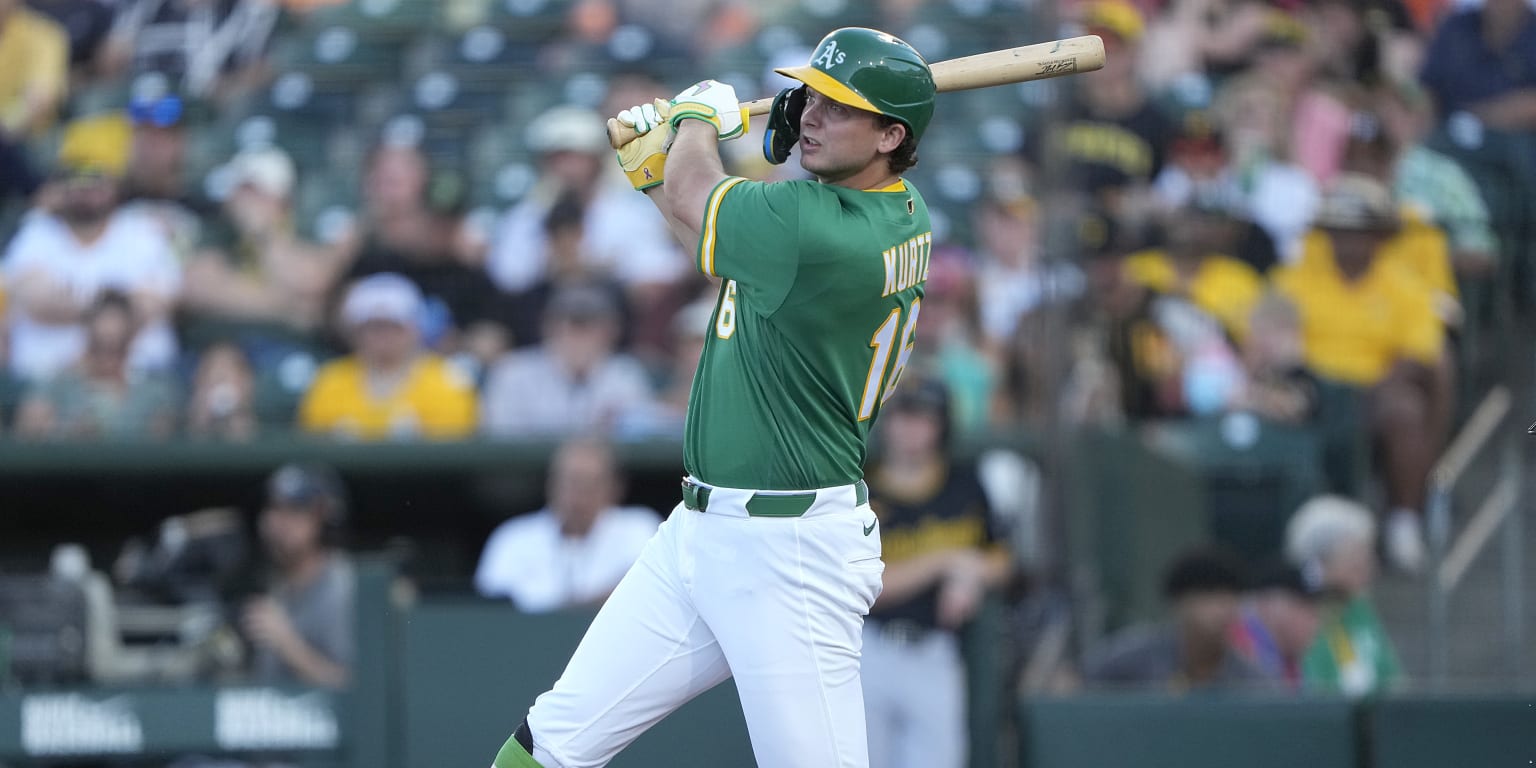
Oakland dismantled Pittsburgh 11-2 on Monday at Sutter Health Park, with first baseman Nick Kurtz swatting two opposite-field home runs to seize the MLB lead in June dingers at eight. The win capped a critical stretch: after exploding for 20 home runs and 47 runs across six games in Las Vegas last week, the A's faced immediate skepticism about whether that offensive outburst would evaporate upon returning to a conventional ballpark. Kurtz erased that doubt with a two-run blast off Jared Jones in the second and a three-run shot in the seventh, his 47 home runs on the season already signaling serious run-production credibility for a franchise that has struggled for consistency.
The Vegas visit wasn't a mirage—it was a reset. Oakland's offense had been stuck in neutral for most of the season, but something shifted during that six-game sequence at Las Vegas Ballpark. A's manager Mark Kotsay publicly stated after Sunday's win over Colorado that the club could "move the needle forward" if it carried that offensive aggression back to West Sacramento. Monday's 15-hit performance against Pittsburgh wasn't a one-man show: second baseman Jeff McNeil snapped an 0-for-20 drought with a 3-for-4 night, a homer, and four RBIs. Third baseman Zack Gelof extended his hitting streak to 19 consecutive games—the longest active streak in the majors—with an RBI single. Outfielders Tyler Soderstrom and Lawrence Butler both registered multi-hit games. The A's have now topped 10 hits in four consecutive contests, a sign that the lineup has fundamentally shifted from streaky to sustained.
What matters for bettors is whether this is sustainable variance or a genuine recalibration. The Vegas environment—elevation, air density, shorter fences—did inflate the raw numbers, but Oakland's underlying approach metrics improved during that stretch, not just their exit velocities. The lineup isn't just swinging harder; players are making better contact decisions. Gelof's 19-game hitting streak is a multi-week pattern, not a single outlier. McNeil breaking his 0-for-20 collar suggests his swing mechanics stabilized, not that he caught a lucky break. Starter J.T. Ginn's six innings of one unearned run against a productive Rockies lineup signals that Oakland's pitching can hold up when the offense generates early leads, removing the pressure cooker dynamic that has plagued their bullpen.
For prop purposes, the A's team total and run-line markets should recalibrate upward only gradually, because the books already factored in Vegas regression at open. The real angle is in player-specific totals for Kurtz, McNeil, and Gelof over the next 7-10 games. Kurtz's 47 home runs through June 16 puts him on pace for 125+ dingers, an unsustainable figure that will correct, but his opposite-field power—which he showcased Monday—remains an underpriced edge against right-handed pitchers who haven't adjusted to his approach change. McNeil's 3-for-4 night ends his drought, but his season-long average had been dragged down by that 20-at-bat skid; once you strip that out, his rolling average sits around .285, which means his over on hits+runs totals carries value for the next 5-7 games before the market reprices upward. Gelof's 19-game streak is now harder to ignore; the market may not have fully priced the possibility that it extends to 22-25 games. That's not regression risk—that's recognition that a cold-streak hitter has warm hands.
The A's leave for Las Vegas permanently in 2028, but Monday night proved they don't need to be there to play championship-caliber baseball. What they need is consistency in approach, and for the first time this season, they have it.