Kolek's Command Masterclass Exposes Market Gap in Royals Pitching Value
By Ty Whitney ·
Stephen Kolek's 108-pitch shutout signals the Royals may have found a durable depth arm priced below his true stuff profile.
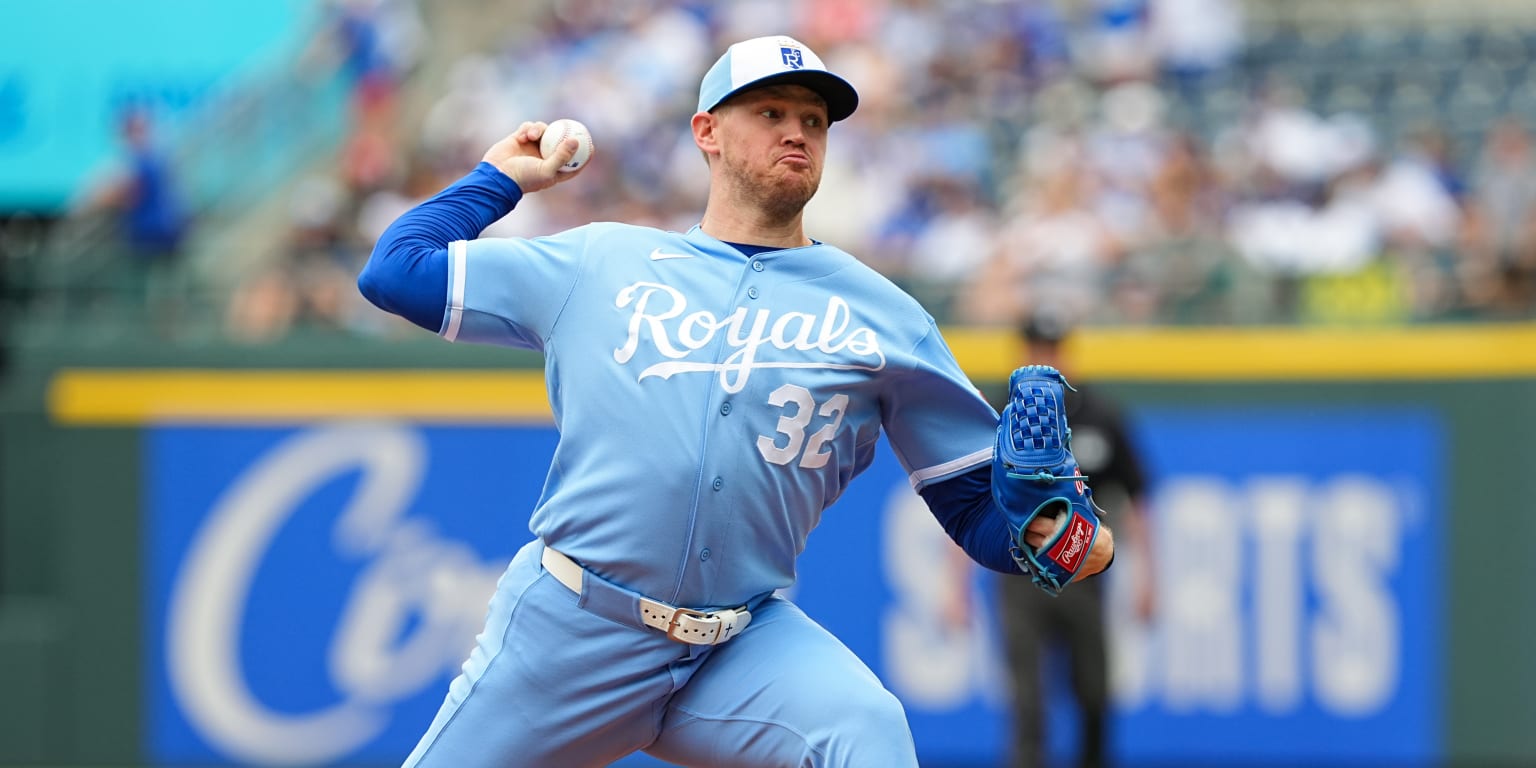
Stephen Kolek threw a complete-game shutout Saturday at Kauffman Stadium, leading Kansas City to a 5-0 win over Seattle and snapping a four-game losing streak. The right-hander faced 29 batters, allowed four hits, walked none until the seventh (erasing it via double play), and threw just 108 pitches in nine innings. It was his second career shutout in 23 starts—a rare feat for a pitcher acquired mid-career after bouncing between four organizations.
What made Saturday's performance analytically distinct wasn't the strikeout total—Kolek posted just two K's—but the contact profile he engineered. He induced 12 ground balls among 27 outs, held average exit velocity to 86.9 mph, and forced 22 of his 29 batters to see four or fewer pitches. That's not the signature of a strikeout pitcher. It's the signature of a command artist who understands how to generate weak contact without chasing swing-and-miss. Only seven batters extended their at-bats past four pitches; 41 of his first 108 pitches were thrown through four innings. Kolek himself described his philosophy in plain terms: go deep, protect the bullpen, induce early contact. Manager Matt Quatraro never consulted the bullpen phone. "He was clearly in control," Quatraro said simply.
The market has historically undervalued this archetype. Pitchers who accumulate outs through contact management rather than velocity or strikeout rate tend to carry longer innings pitched props and lower strikeout totals at casual retail pricing—and when they deliver on deep outings with minimal run support risk, the market reprices them upward after the fact. Kolek's nine starts for Kansas City since last summer's trade deadline have yielded eight quality starts (minimum six innings, three or fewer earned runs). That 89% quality-start rate sits well above the league baseline of 60-65% for similar usage profiles. The Royals' pitching coach noted the obvious: Kolek's value proposition—mix of three fastball types, multiple breaking balls, changeup, and early-contact inducement—has never made sense at the organizational level until now, with clear alignment between his approach and Kansas City's ground-ball-heavy defense.
For prop bettors, the angle centers on Kolek's next start: first-five-innings under pricing. When a pitcher throws 41 pitches through four innings against a league-average offense and the line opens with typical early-inning run totals, there's daylight. The Royals' four-run offensive margin Saturday (scoring three in the first) relieved pressure early, but Kolek's contact management—not offensive support—is the repeatable edge. His 86.9 mph average exit velo ranked near the bottom decile league-wide Saturday. If Kolek pitches again while the public remains anchored to his low strikeout output (nine K's in 48 innings since arrival), first-five unders carry cushion. The strikeout prop itself is a fade; his calling card is efficiency, not velocity, and any line above 4.5 K's in a standard nine-inning start is vulnerable to the same contact-driven exit profile that surfaced on Saturday.
The durability question matters for longer-term exposure. Two career shutouts in 23 starts is elite. The sample is small enough that Saturday could be an outlier—one afternoon where everything clicked. But the Rays' Chris Archer and the Mariners' Mike Montgomery, the only two pitchers to debut post-2010 with two shutouts in 23 starts, both went on to stabilize at the mid-rotation level. Kolek is no prospect; he's 29 and has legitimacy across multiple organizations. The Royals' decision to let him finish the ninth inning—and Quatraro's refusal to even prepare a reliever—wasn't sentiment. It was recognition that a pitcher executing contact management at this level deserves the ball when he's throwing 108 pitches on the money.