Kepler's Return Power: Early Signs of Rhythm in Arizona's Outfield
By PropBetEdge Editorial Team ·
Max Kepler's first homer since activation reads as a genuine timing marker, not noise—and the Diamondbacks' usage pattern matters for his near-term prop pricing.
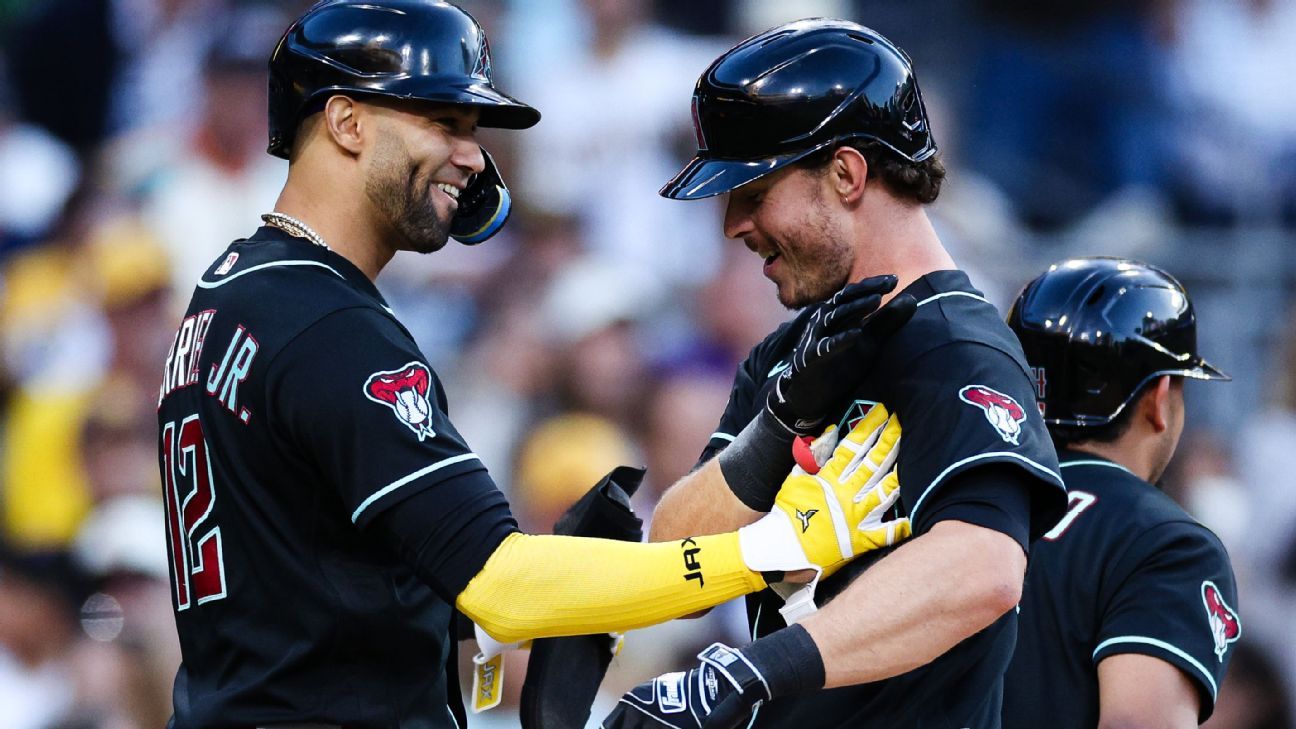
Max Kepler launched a 417-foot blast into the right field bleachers at Petco Park on Monday night, his first home run since the Arizona Diamondbacks activated him on June 25 following an 80-game suspension for a positive test for Epitrenbolone. The three-run drive off Walker Buehler in the third inning fueled an 8-0 rout of the San Diego Padres, with Kepler finishing the night 2-for-4 with four RBIs. At 33 years old and 12 days into his return window, Kepler is already operating at a level that suggests his pre-suspension mechanics have stabilized rather than eroded.
The mechanics of his activation matter more than the symbolic weight of the first homer. Manager Torey Lovullo credited Kepler's early batting practice work as the catalyst for the offensive eruption, and Kepler himself acknowledged the discipline of the ramp-up: "It is about getting his legs under him, getting him strong and repeating swings." The swing that produced the homer was clean—94 mph fastball middle-in, precisely the pitch zone where a restored hitter should operate. Kepler's willingness to stay aggressive while remaining patient about his role speaks to a player who has internalized the compressed timeline. With half the season gone, he cannot afford both the physical adjustment period and the mental recalibration that a mid-season return typically imposes.
For prop markets, the near-term exposure cuts two ways. On one hand, single first-game/first-week performance spikes are inherently unreliable; Kepler may have benefited from fresh off-speed recognition and elevated adrenaline, both of which fade. On the other hand, the Diamondbacks are operating with clear positional depth—they waited until late June to activate him, suggesting they did not rush him into the lineup out of desperation. The team's willingness to delay activation, paired with his documented preparation work, indicates organizational confidence in his baseline rather than hope for a lightning strike. Over the next 10-15 games, prop books will recalibrate Kepler's hit and home run rates. Early bettors who take action on his performance should be aware that the edge is narrow and time-bound; by mid-July, the market will have collected enough return-sample data to properly price his at-bat distribution and exit velocity profile.
Kepler's four RBIs on Monday came largely from volume and sequencing—he batted cleanup in a blowout, which inflates counting stats in narrow windows. The homer itself, however, signals mechanical stability. A hitter fresh off a suspension does not produce a 417-foot carry distance without intact swing foundation. The prop angle here is not to chase his home run line higher on the back of one explosion, but rather to monitor his plate appearance total and team context. If the Diamondbacks maintain him in the 3 or 4 hole and he sees 4-plus at-bats per game consistently, then his RBI ceiling rises materially. His home run prop remains volatile—one well-struck ball does not reestablish a true talent level over 80 games of missed competitive reps—but the threshold for fade has risen. Any book pricing his homer line at pre-suspension baseline (roughly 0.35 HRs per game across his recent seasons) is likely too tight; a modest bump to 0.40 or 0.42 per game for the next two weeks is defensible given the activation context and the Diamondbacks' confidence signal.