Cubs' Seven-Run First Inning Torches Toronto; Explosive Offense Resurfaces After May-June Drought
By Erik Schwartz ·
Chicago's lineup delivered a rare vintage performance Friday, scorching the Blue Jays 16-2 with a seven-run first inning and signaling a potential end to its month-long offensive fade.
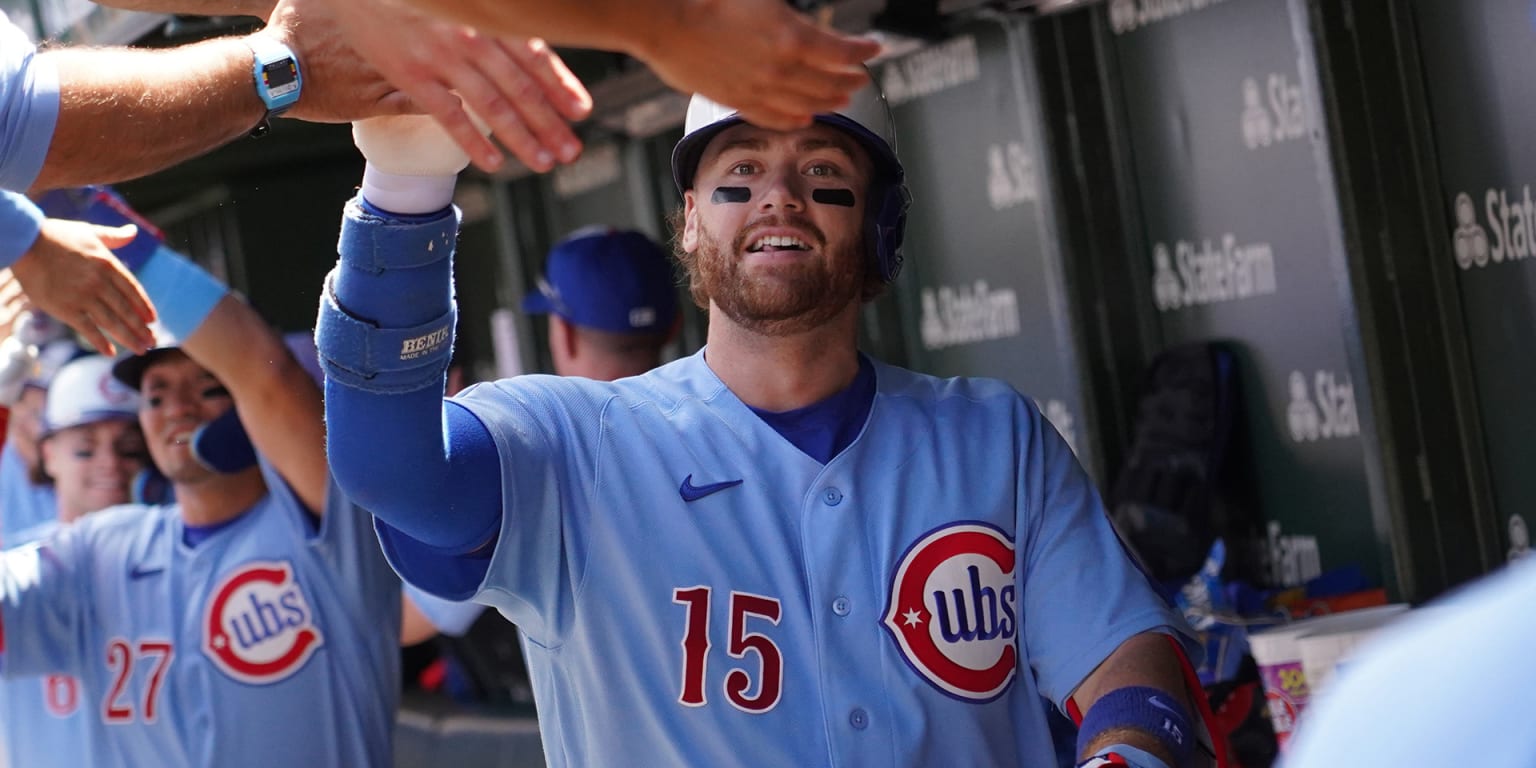
The Cubs dismantled Toronto 16-2 on Friday afternoon at Wrigley Field, unleashing a seven-run first inning that forced Blue Jays starter Kevin Gausman to burn 44 pitches before recording an out. It was a statement performance from a lineup that had mysteriously vanished through May and early June after starting the season as a versatile, multi-dimensional attack. Pete Crow-Armstrong led off with a walk, stole second, and reached base five times total. Carson Kelly provided the exclamation point with a grand slam on a first-pitch slider that hung middle-in—his second career big-league grand slam—finishing the day with a career-high six RBIs. Ben Brown's six-inning, 1.85 ERA performance made the early bombardment irrelevant.
What made Friday's offensive eruption noteworthy wasn't merely the run total but the mechanism: the Cubs didn't just hit home runs. They manufactured baserunners through walks, executed two stolen bases within that opening frame, and forced extended counts on a quality starter. Seiya Suzuki ripped a two-run double down the line; Ian Happ and Matt Shaw drew walks to load the bases for Kelly's slam. Justin Dean, called up from Triple-A Iowa prior to the game, delivered a three-run triple in the seventh. This was offensive operation at full efficiency—patience, timing, positional accountability.
The historical markers embedded in Friday's output hint at the Cubs' ceiling when synchronized. Scoring seven runs in a single inning marks only the second time in consecutive games this season (they'd done it again against Colorado the game prior). The last time Chicago mustered consecutive seven-run frames was July 5-6, 2001, in Detroit. At Wrigley Field specifically, it hadn't happened since May 7-8, 1984. These aren't random noise—they're signatures of a roster firing in unison.
For betting purposes, the timing of this explosion carries real weight. A month-long offensive dropout from a team built for pace and power creates line-shopping opportunities. Books had likely compressed Cubs team totals and run-line spreads tighter during the May-June slump, pricing in underperformance. Friday's 16-run output won't immediately reverse that discount—one-game spikes, even dominant ones, fade fast from the market—but it does validate that the personnel remains intact and capable of explosive sequences. The prop angle lies in the next 5-7 games: monitor whether the Cubs sustain multi-run innings or revert to drought patterns. If they produce two more games in the 12+ run range, sharp books will reprrice team totals up significantly. Until then, Cubs team totals in the 4.5-5.5 range carry modest value assuming the lineup stays locked into the patient, steal-and-score approach they displayed Friday rather than chase-heavy swings that plagued them in recent weeks.