Kelly's Complete Game at Coors Signals a Shift in D-backs Pitching Confidence
By PropBetEdge Editorial Team ·
At 37, Merrill Kelly threw his first career complete game in baseball's most homer-friendly park, signaling Arizona's starting rotation may finally have the durability to weather a full season.
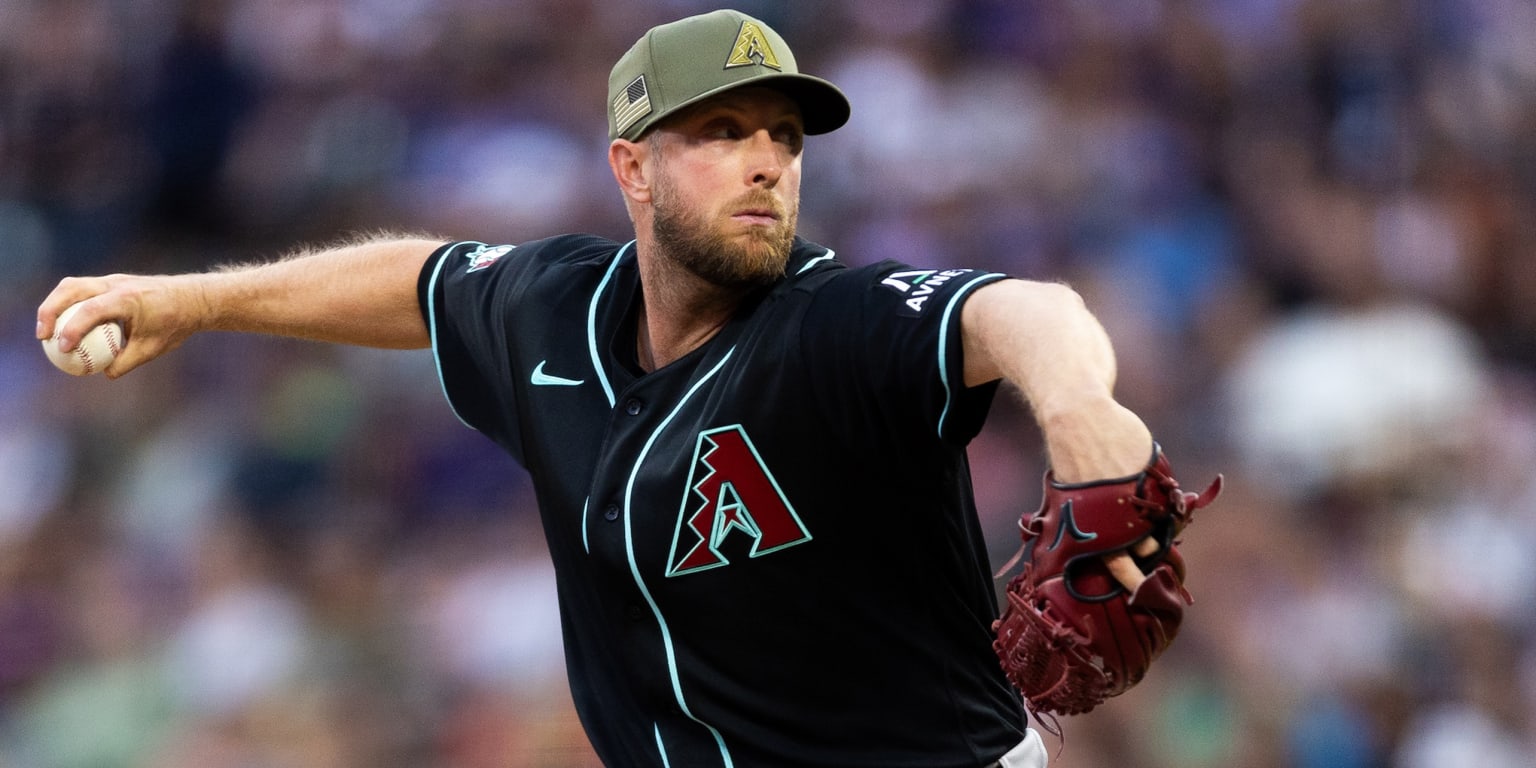
Merrill Kelly threw a complete game at Coors Field on Friday night—a feat that would seem routine in any other context, but at 37 years old and in his 178th career start, it represents something far more significant than the box score suggests. The Diamondbacks' 9-1 victory over Colorado wasn't just a statement win after a bitter loss to Texas; it was evidence that a pitcher widely viewed as a depth arm can still execute at the highest level when the moment demands it. Kelly's performance—one run on four hits, no walks, three strikeouts, exactly 100 pitches—wasn't flashy. It was economical. That's the real story here.
Kelly's approach at Coors Field, where balls carry further and layoff pitches invite damage, centered entirely on contact management and pitch efficiency. He worked ahead in counts, avoided deep pitch counts (reaching three balls only twice), and induced weak contact at a rate that shouldn't be possible in Denver's thin air. Thirteen of his 27 outs came on two pitches or fewer. In the eighth inning, he retired the side on four pitches. Manager Torey Lovullo had walked into the game prepared to pull Kelly around 95 pitches—a precaution given Kelly's history with soft-tissue injuries at altitude—but Kelly's command was so clean that Lovullo let him finish. For a pitcher in his late 30s, that's not luck. That's craft.
Kelly's durability matters for Arizona's rotation depth. Since 2022, he's posted seven consecutive quality starts at Coors—more than any visiting pitcher—and he now sits tied with Patrick Corbin for the fourth-most quality starts in Diamondbacks history with 85. That's not a data point that suddenly appeared on Friday; it's a multi-season pattern of reliability in the sport's most punishing environment. At an age when most pitchers are in decline, Kelly is actually tightening his mechanics and leaning harder on contact-first philosophy rather than overpowering hitters. That shift works especially well against lineups that chase, and it explains how he's navigated Coors' enormous outfield without surrendering home run distances.
For prop players, Kelly's complete game does two things. First, it suggests the Diamondbacks' team total and game lines should recalibrate slightly upward when Kelly takes the mound—his economic approach and low-stress outings mean Arizona's bullpen stays fresh, reducing late-inning leverage situations where the opposing team can press. Second, it signals that strikeout unders on Kelly are more durable than the conventional wisdom suggests. He's never been a high-volume strikeout pitcher (the complete game included just three Ks), but his pitch-to-contact method means oddsmakers pricing his K-prop at standard levels may be overestimating his strikeout rate. Teams that see Kelly coming are banking on his age catching up; the evidence from Coors—a ballpark that should have aged him more than any other—suggests the opposite is happening.