MLB · lineup
Jung's Fractured Hand Ends Rangers' Third-Base Stability in Final Stretch
Josh Jung's season-ending injury removes Texas's most reliable infield bat during the playoff sprint.
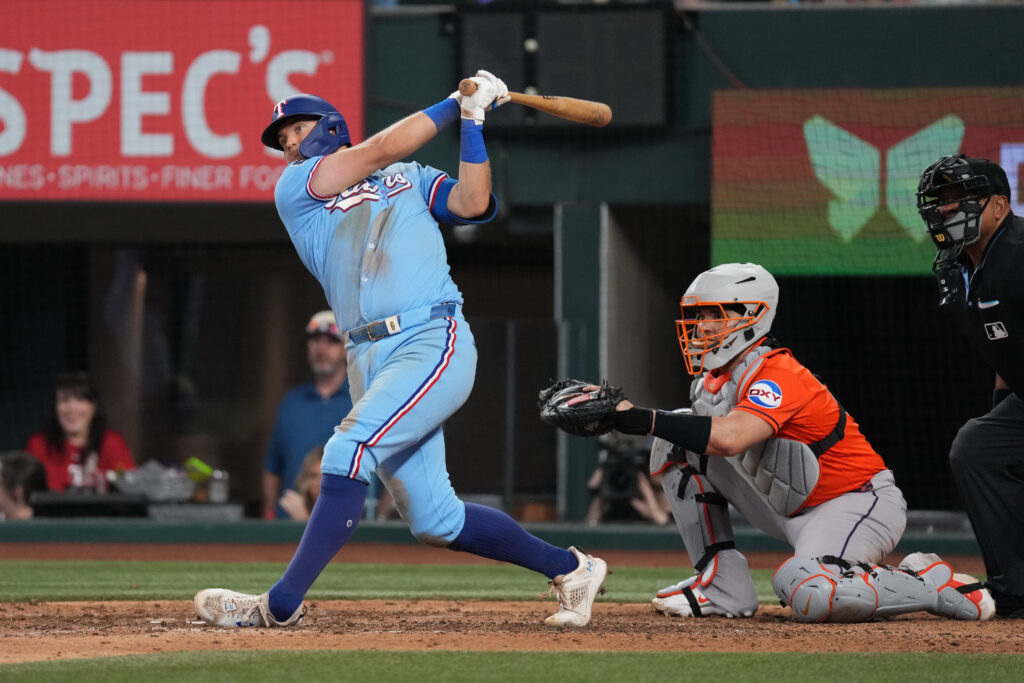
Josh Jung's fractured right hand, suffered when he was struck by a Joe Ryan pitch in Friday's first inning against Minnesota, ends his 2026 season and forces the Rangers into an unplanned defensive and offensive shuffle with playoff positioning still unsettled. Jung stayed in the game initially to run the bases—he scored on Wyatt Langford's RBI groundout—but imaging confirmed the break, and there is no recovery window that reaches October.
The timing is catastrophic for Texas. Jung has been the Rangers' primary third baseman and a consistent middle-order contributor all season. His departure creates a void that extends beyond raw offensive production. Third base now becomes a rotation of reserves, and the Rangers must either promote an internal option or lean on bench depth that hasn't shouldered an extended load. This happens with less than two weeks remaining in the regular season, when teams are typically sharpening lineup cohesion and not scrambling for positional answers.
From a roster construction standpoint, the Rangers lose their planned third-base anchor precisely when they need lineup stability most. The depth chart doesn't offer a natural replacement of comparable quality, and any fill-in introduces both variance in performance and a loss of the familiarity Jung provided in high-leverage spots. Defensive metrics and team totals will absorb this shock immediately.
For bettors, the Rangers' team total for upcoming games carries elevated risk. Jung's absence compresses the lineup's run-production ceiling, particularly in games where Texas relies on mid-order bats to drive in runners on base. Any preseason projections for Rangers scoring in the final two weeks are now too aggressive. Fade their run line and team total overs against playoff-positioned teams that can exploit a thinner middle order. The Rangers' moneyline shifts unfavorably as well—a team losing a 162-game regular-season starter five games before the postseason begins enters the playoffs emotionally and tactically disrupted.