Gage Jump's Seven-Inning Statement Changes A's Starter Math
By Erik Schwartz ·
A frustrated debut becomes redemption arc for Oakland's No. 3 prospect, and the pitching depth suddenly matters for next week's matchups.
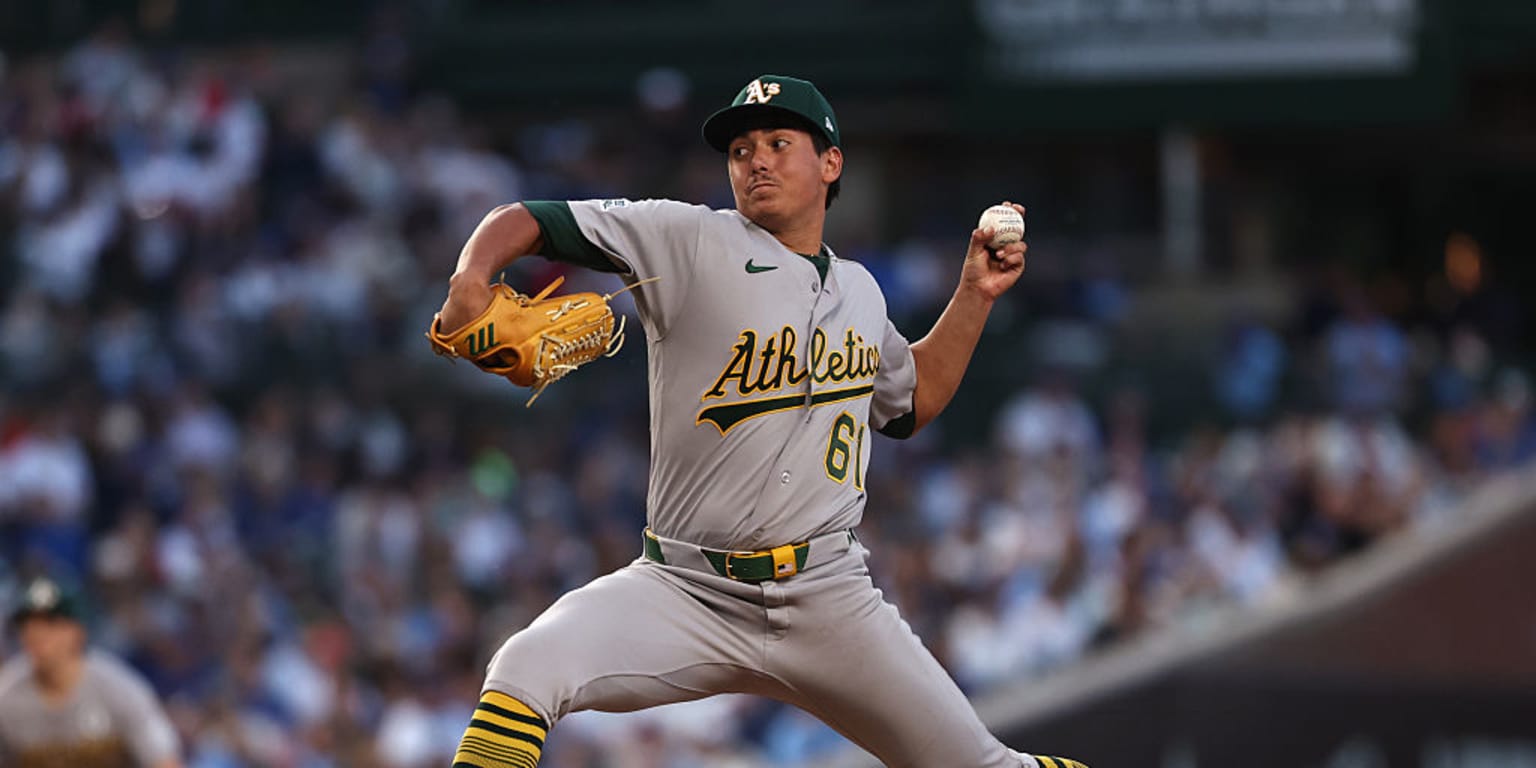
Gage Jump threw seven innings of one-run ball at Wrigley Field on Tuesday, giving the A's a 2-1 victory and his first Major League win after a four-run, five-inning debut that left him furious. The 23-year-old left-hander, ranked No. 3 in Oakland's system and No. 40 overall by MLB Pipeline, surrendered just three hits and a walk while striking out five. His only damage came on a first-inning Alex Bregman groundout; he then retired his final 14 consecutive batters and pitched deep into the game on what amounted to minimal offensive support.
The mechanical story here matters more than the one-start redemption arc. Jump doesn't have overwhelming velocity—he's a command pitcher who needs to live on the corners and induce weak contact. Tuesday's line (seven innings, three hits, one walk, five strikeouts) reflects a pitcher who found his release point and trust his stuff in a way his debut did not. He attacked the zone early, didn't chase trouble counts, and let the Cubs chase. That's a meaningful second start, not a small-sample outlier.
Oakland's offense did its part with minimal theater: Nick Kurtz's 11th homer (382 feet to left-center) and a Zack Gelof RBI single in the fourth accounted for all runs. The A's are not suddenly explosive, but they held a one-run lead for over five innings and Jump protected it. For the betting lens, this changes how we model Oakland starters going forward. If Jump has earned rotation stability—and a 7-inning, 1-ER line against a middle-of-the-pack NL Central offense suggests he has—then A's game totals in his starts should compress slightly. An offense that scored two runs yesterday doesn't bankroll overs; a pitcher who gave up one run and retired 14 straight creates under-friendly conditions.
The prop calculus here hinges on Jump's next start and lineup matchup. If Oakland faces a left-heavy opponent (Jump is a lefty), his strikeout ceiling likely sits 5-7 K range; righties will give him more whiffs. The Cubs lineup yesterday leaned left—Ian Happ, Marcus Semien—and he punched out five anyway, which argues his floor for K's is higher than a typical second-start rookie pitcher. The under on his strikeout prop (if it opens at 5.5 or 6.5) will carry appeal in matchups where the opposing team stacks righties; the over becomes worth attention in left-heavy lineups where his ground-ball approach thrives against right-handed hitters.
What matters for the next week: the A's rotation is no longer a pure weakness, and that shifts the leverage in team total props. Oakland will be favored or near-pick in games Jump starts if they avoid a top-tier offense. The Cubs tested him at home with nothing to show; on the road against a weaker lineup, Jump could steal starts. Lean unders on Oakland team totals in his next assignment, particularly if the matchup suggests modest offensive output. This is not a star-in-the-making story. It's a competent young starter who threw a competent line and changed the calculus for a team that had zero depth behind their rotation anchor.