Gage Jump's Season Ends With Shoulder Impingement; Athletics Shut Down Rookie Starter
By Ty Whitney ·
Oakland's top pitching prospect won't return in 2026, eliminating a volatile strikeout source and flattening the A's rotation depth for September.
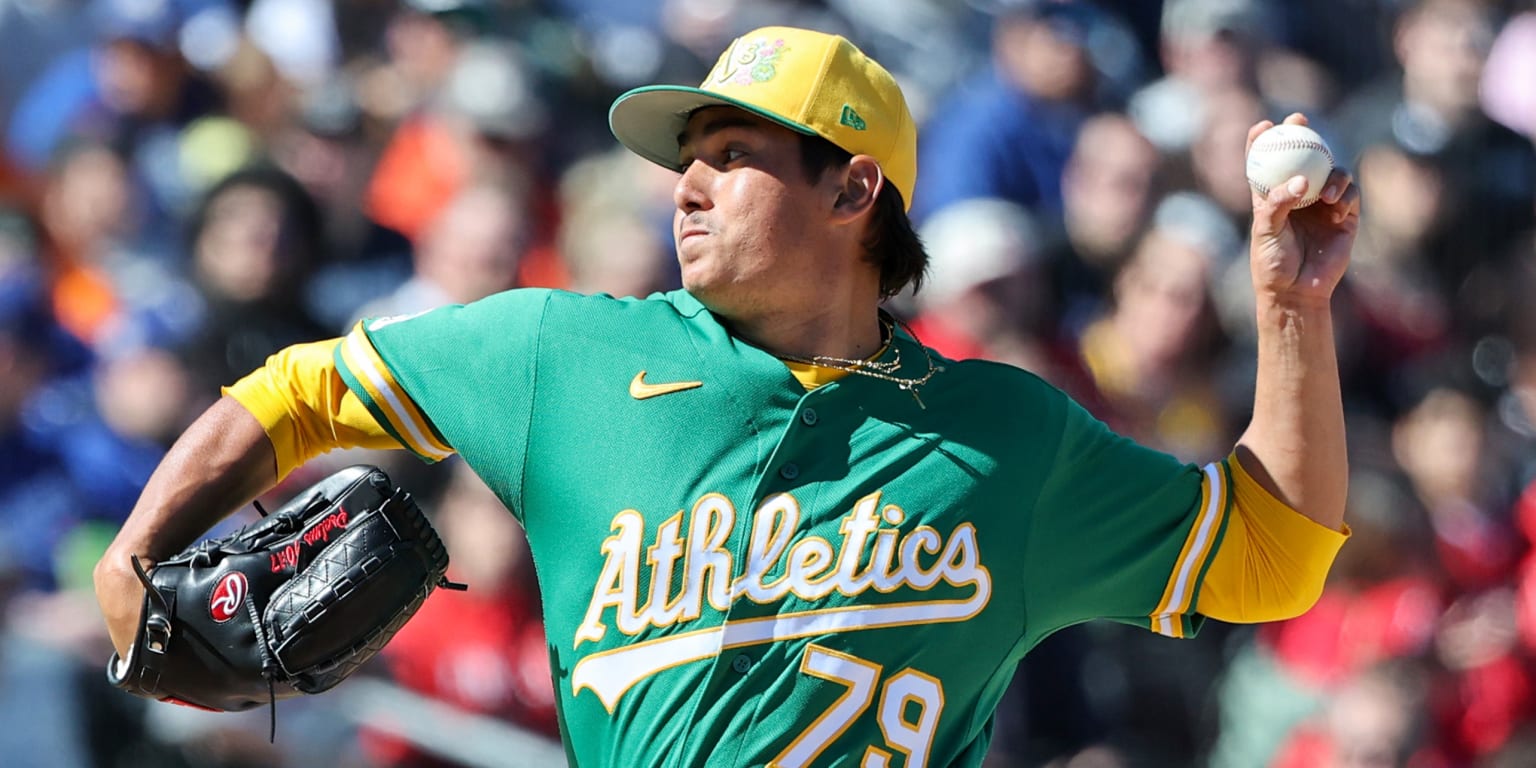
Gage Jump's 2026 campaign is over. Three days after exiting his start against Seattle with shoulder discomfort, the 23-year-old left-hander was diagnosed with left shoulder impingement and placed on the 15-day injured list before Tuesday's series opener in Tampa Bay. The A's have shut him down from throwing for the remainder of the season, a decision that carries less urgency in a rebuilding year but signals genuine concern about the structural integrity of his shoulder heading into the offseason.
Jump arrived at the majors in May as the A's No. 41 overall prospect and carried legitimate frontline starter upside: a fastball consistently touching 98-99 mph, a slider with a 37.4% swing-and-miss rate, and a curveball at 25.6%. But his season trajectory was a study in volatility. He posted a 2.93 ERA through seven starts, then collapsed to 7.21 over his final 13 outings, finishing with a 5.47 ERA across 20 starts, 108 strikeouts, and 46 walks in 98⅔ innings. The back-half deterioration stemmed partly from mechanics—he was late learning to trust his changeup and too enamored with chasing strikeouts rather than inducing soft contact. Manager Mark Kotsay noted that Jump's stubbornness early in the season cost him results, though his velocity and stuff remained intact throughout.
The impingement is the real issue here. Shoulder injuries in young pitchers, even when framed as brief rest situations, rarely stay contained. A shutdown through season's end gives the A's roughly 4.5 months to let inflammation settle before a normal offseason throwing program, but the diagnosis itself—impingement, not a clean muscular strain—suggests structural irritation that could linger into spring 2027. The A's wouldn't have pulled the plug this decisively if they were in contention; the lack of playoff positioning made the decision "easy," per Kotsay, which is manager-speak for "this needed to happen regardless."
From a betting lens, Jump's absence tightens Oakland's strikeout ceiling for September and October pitching props. He was on track for 170-180 K's if healthy for a full season, and while his ERA volatility made him an unreliable fantasy asset, his raw stuff generated elite whiffs. Any prop builder who had leaned on Jump volume for A's rotation strikeout totals or team K lines should mark down Oakland's September ceiling by 8-12 strikeouts per week—a meaningful compression on an already thin staff. Conversely, opponents facing Oakland's back-end starters over the final two weeks face slightly easier matchups; team run totals and batting lines against A's pitchers may warrant a modest uptick in expected value if Jump's replacement is a veteran innings-eater rather than another high-velocity prospect.
The recovery window is uncertain. Shoulder impingement in a 23-year-old can respond well to rest and rehabilitation, but it can also signal the beginning of a longer injury narrative. Jump's offseason work will determine whether he enters spring as a clear starter or a cautious candidate for limited workload. For now, Oakland loses a strikeout lever and adds one more data point to a rotation held together with tape and hope.