Mariners Gamble on Right-Handed Bench Depth as Rodríguez Returns to Face Boston Southpaws
By PropBetEdge Editorial Team ·
Seattle's roster reshuffling targets a critical weakness: the majors' worst collective performance against left-handed pitching.
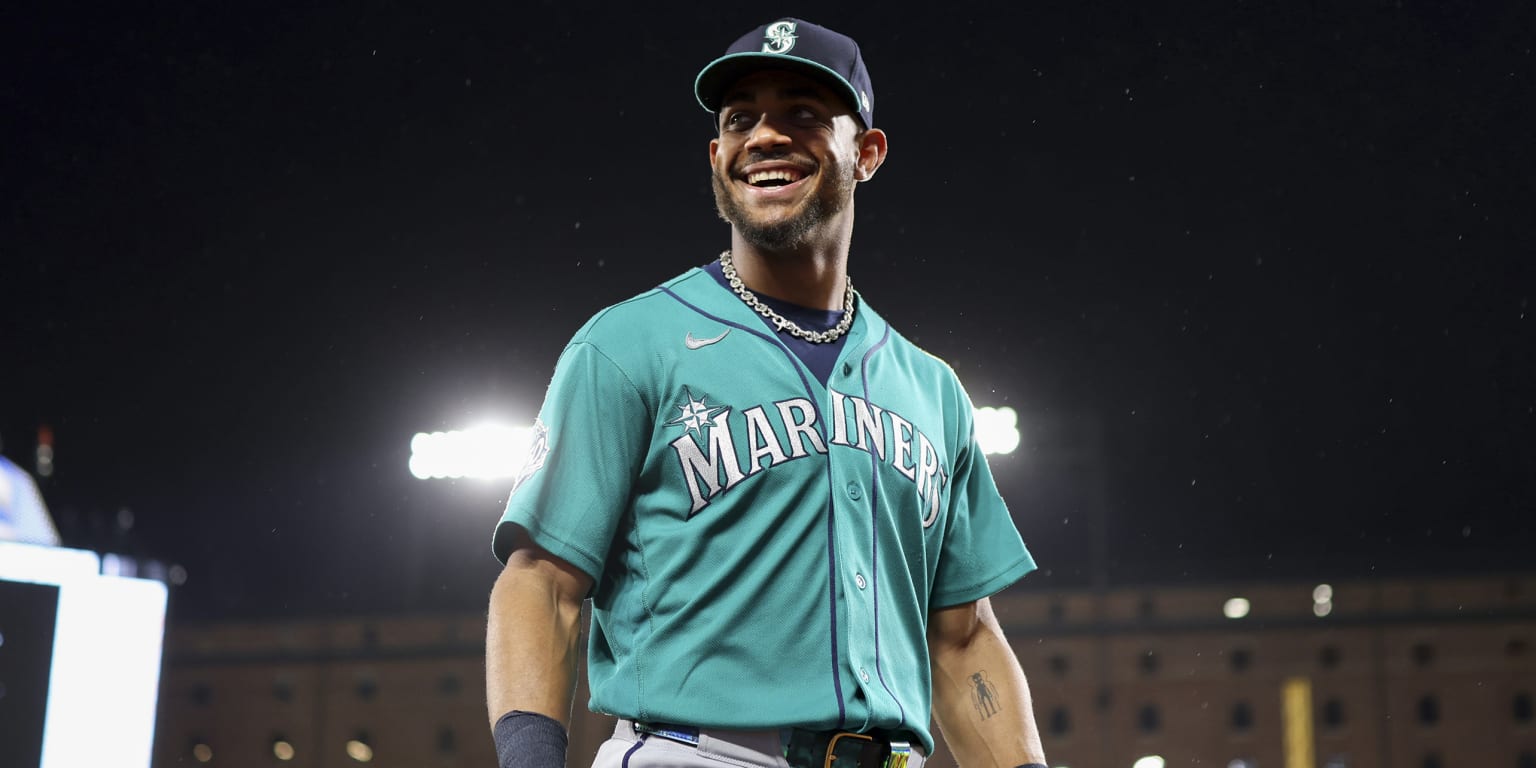
Julio Rodríguez returned to the Mariners' lineup Friday for the series opener against Boston after missing one game with a left hamstring spasm suffered on a leaping catch. The two-day absence proved brief enough to avoid IL placement, and manager Dan Wilson cleared him for action after Rodríguez moved through agility drills and took batting practice. The timing matters: Boston counters with three consecutive left-handed starters (Ranger Suárez, Connelly Early, Payton Tolle), which should have Seattle's front office grinning—or grimacing, depending on which hitter you're examining.
The Mariners face a structural problem that the Rodríguez return alone cannot solve. Seattle's collective .636 OPS against lefties ranks last in baseball, a gap so wide that it demands roster intervention beyond hoping the star center fielder delivers. Rodríguez himself carries a .930 OPS against southpaws, a statistical island in a sea of underperformance. Before Friday, seven of Seattle's thirteen position players hit left-handed, including the entire infield except Connor Joe. That roster construction doesn't square with the opposition's pitching mix—or the simple mathematics of platoon advantage.
Enter Weston Wilson, signed from minor league free agency just four days prior and immediately activated. Wilson, 31, arrives with righty-swinging credentials: a career .807 OPS against lefties (174 plate appearances, 124 wRC+) despite ordinary overall numbers with Baltimore (.231/.348/.333 in 21 games). The Mariners paid the transaction cost—Miles Mastrobuoni's DFA—to add positional flexibility and right-handed optionality. Wilson has played everywhere except shortstop and catcher, meaning he slots into gaps without demanding a position-specific skill set. Both Wilson and Mastrobuoni lack minor league options, a constraint that shaped Seattle's math: keep the southpaw-neutral bat or lose organizational depth entirely.
For betting purposes, the Rodriguez return and Wilson addition tighten Seattle's offensive profile against Boston's southpaw trio in a way that shifts propositional risk. Rodríguez entering the lineup increases his contact rate and barrel rate in a matchup where his handedness advantage is pronounced—his .930 OPS vs lefties substantially exceeds his season-wide .760 OPS. Wilson's insertion as a righty-swinging reserve could suppress strikeout volume for Boston's pitchers if he receives meaningful at-bats; though his major league track record is thin, his platoon OPS bump (124 wRC+) suggests he won't collapse as a pinch-hitter or defensive replacement. The Mariners' team total sits in a range where the absence of Rodríguez had likely suppressed projection, and his clearance to play represents material variance—not dramatic, but material enough to warrant attention if books haven't fully adjusted. The Wilson addition is marginal on volume but real on composition: fewer strikeouts, fractionally more production from the bench, less organizational strain.
The edge persists only through the Boston series. Once the Red Sox depart and Seattle faces right-handed-heavy rotations, the Wilson addition becomes noise—Mastrobuoni's departure matters more to depth than to output. Rodríguez is a three-game rental for the platoon math, then a full-season contributor regardless. Smart money captures the Mariners' marginal efficiency lift this weekend before rightie pitchers normalize the problem.