Spencer Jones Breaks Through After Early Struggles, Rips First-Career RBI Single on Mother's Day
By Ty Whitney ·
A Yankees prospect finally makes contact when it matters most, signaling the strikeout concerns that plagued his debut weekend may not be predictive of his immediate impact.
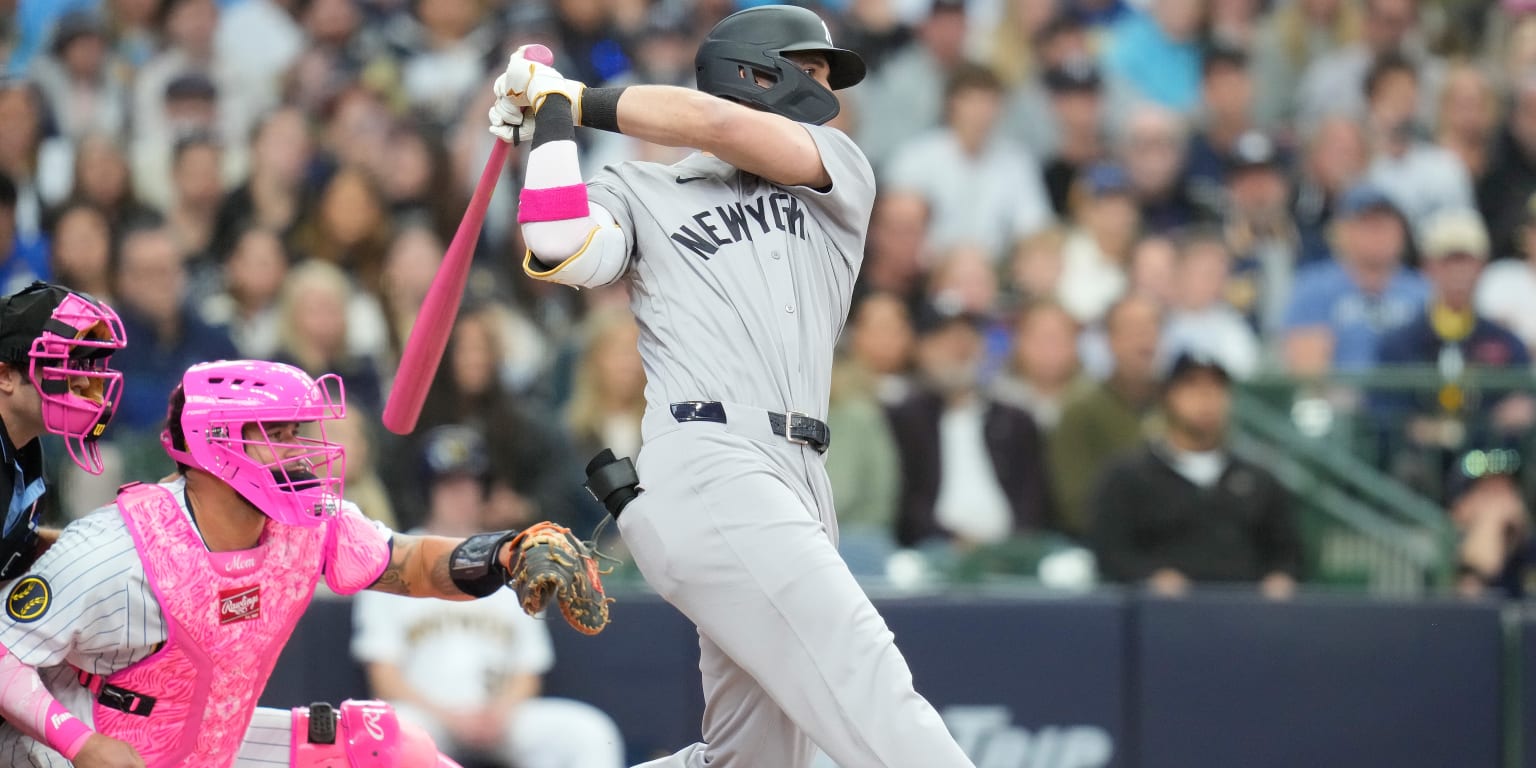
Spencer Jones arrived in the majors looking like a liability at the plate. In his first weekend with the Yankees, he whiffed four times in six at-bats—including an ugly strikeout in his inaugural appearance against Brewers prospect Jacob Misiorowski—and the swing-and-miss fears that have dogged him since his minor-league days seemed ready to metastasize into a bona fide big-league problem. Then, on Mother's Day in Milwaukee, something shifted.
With his family watching from behind the Yankees dugout and José Caballero perched on second base after a double in the previous inning, Jones stepped into the box against Brewers right-hander Logan Henderson and didn't overthink it. He pounced on the first pitch, driving a 106.4 mph liner up the middle for a single. Not only did Jones record his first major-league hit; he also notched his first RBI, pushing Caballero home to extend the Yankees' lead to 2-0. The moment arrived charged with narrative weight—a family trip arranged the moment Jones got the call on Thursday night, crowned by a tangible accomplishment on a day built for celebrating mothers. Jones marked the occasion with a fist pump toward the stands.
What matters more than sentiment, though, is what this at-bat reveals about Jones's ability to adjust under pressure. A prospect's first weekend is statistically noise, but the speed of his recovery is not. Striking out four times in six plate appearances is genuinely concerning; bouncing back with a hard-hit result in his next opportunity suggests either luck or legitimate confidence restoration. The 106.4 mph exit velo—a number that registers at the upper echelon of batted-ball quality—implies Jones made legitimate contact, not a seeing-eye single born of desperation.
For bettors tracking the Yankees' young talent, this is where the strikeout narrative begins to fracture. If Jones can stabilize his contact rate and maintain that exit-velo profile over his next 20-30 at-bats, the prop landscape shifts significantly. Early strikeout props on Jones should have been pricing in panic; a single productive weekend doesn't erase legitimate swing-and-miss concerns, but it does suggest those concerns may have been inflated by small-sample variance rather than systemic mechanical failure. Monitor his upcoming at-bat totals and strikeout rates closely—the difference between a 35% K-rate (disaster) and a 28% K-rate (merely above average) is massive for a prospect's long-term viability and team total implications.
The Yankees have urgency in their lineup construction. If Jones can sustain even league-average performance at the plate—a far cry from his debut-weekend baseline—he becomes a genuine asset in lower-order at-bats, which subtly lifts team total expectations. Right now, the market likely still prices in significant bust risk. A few more productive days could shift that calculus.