Jobe's Pitch Arsenal Overhaul Signals Rotation Cornerstone in the Making
By PropBetEdge Editorial Team ·
Jackson Jobe struck out nine batters Saturday while using a slider-heavy approach that fundamentally rewires how he'll attack hitters going forward.
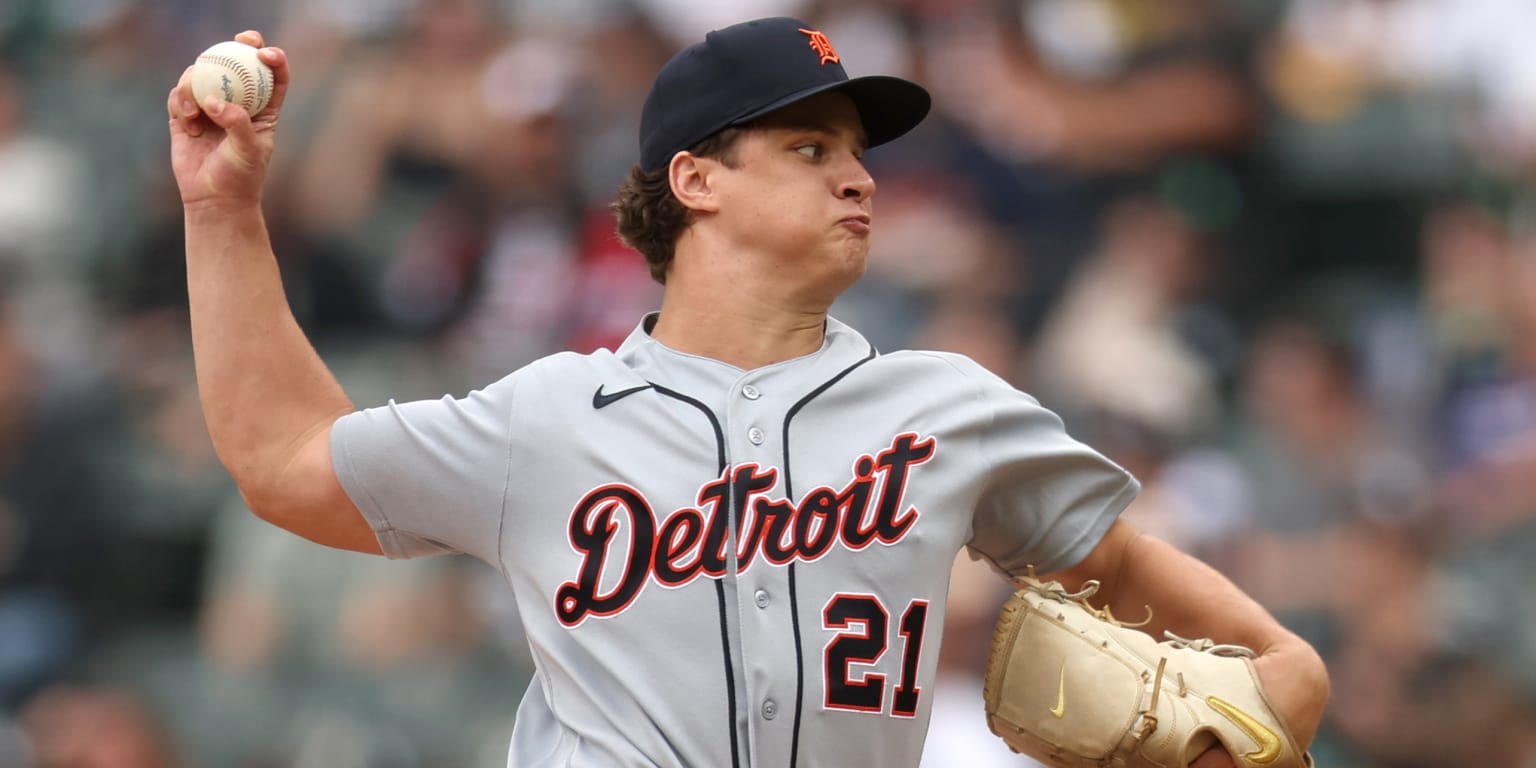
Jackson Jobe struck out nine batters in six innings against the White Sox on Saturday—a new career high that capped a three-start stretch in which he's progressively raised his strikeout ceiling. The Tigers' right-handed starter, returning from Tommy John surgery performed two years ago, has moved beyond the velocity-dependent reliever profile he carried into his 2024 callup. He's evolved into a pitcher with genuine command of four distinct offerings, each positioned to work in concert rather than compete for dominance.
The mechanical shift is unmissable. Jobe threw 40 sliders Saturday—more than double his seasonal rate and 42 percent of his entire pitch mix—while white-knuckling his fastball into a supporting role. Against a White Sox lineup that came hunting for that triple-digit heat, Jobe instead weaponized movement. His slider generated eight whiffs on 23 swings; his retooled curveball drew three called strikes while yielding just one whiff; his changeup landed three whiffs on 12 swings. The fastball, once his identity, became a speed change—a way to reset the count and frame his off-speed stuff when hitters were locked in on breaking balls. A.J. Hinch called it "excellent." The numbers bear that out: Jobe threw strikes at a markedly higher rate than his previous White Sox start on August 24, when he lasted 3⅔ innings, gave up six runs, and leaned heavily on four-seamers to no effect.
The timing matters. Jobe is being groomed as a cornerstone rotation piece for 2027, alongside Troy Melton. Detroit invested in his recovery and stretched him back out over two months in the rotation specifically to build a multi-pitch starter rather than a high-leverage reliever. The velocity is still there—98 mph fastballs mixed in—but it's now a tool in a toolbox rather than the entire contents. A pitcher who commands a slider at 55 percent usage, who can layer a curveball and changeup underneath it, and who can flip the fastball as a chase pitch operates at a different difficulty level for opposing hitters than a velocity arm.
For prop bettors, the mechanism is straightforward: Jobe's strikeout upside has expanded because his pitch-sequencing flexibility has expanded. When he was velocity-dependent, his strikeout rates were capped by fastball command variability and opposing hitters' familiarity with overpowering approaches. Now, with a slider whiff rate exceeding 30 percent and a changeup that can induce empty swings on a count where hitters expect heat, his K-per-nine ceiling has risen. His nine-strikeout Saturday outing is not a one-off spike—it's the logical endpoint of an approach that's been climbing over his last three starts. The market has not yet priced in that his baseline K prop should shift upward as his slider usage stabilizes in the mid-30s and he gains more reps with his retooled breaking-ball arsenal. A career-long fastball-dominant pitcher doesn't suddenly generate eight whiffs on sliders in one game and revert to 20-25 percent slider usage. This is a persistent mechanical change, not a sequencing variance.
The caveat is sample size. Jobe has thrown four consecutive quality starts only recently, and his total innings since returning from Tommy John remain modest. The strikeout rates he's generating over his last three starts (8, 9, and the previous high he'd set the week before) reflect a pitcher ramping into a new role, not yet fully battle-tested. If he stays healthy and continues to stretch out in a rotation slot, the upside holds. If he hits a fatigue wall or regresses to fastball-reliance, the edge compresses. For now, before the market has widely incorporated his pitch-mix evolution into November prop pricing, Jobe's strikeout lines for September and October remain undervalued relative to the mechanism he's installed.