Imanaga's Command Spike Exposes Cubs' Offensive Void
By Ty Whitney ·
The Cubs lefty struck out six against baseball's best lefty-hitting offense, but Chicago's lineup couldn't generate a run in support—a mismatch that will haunt their prop curves for weeks.
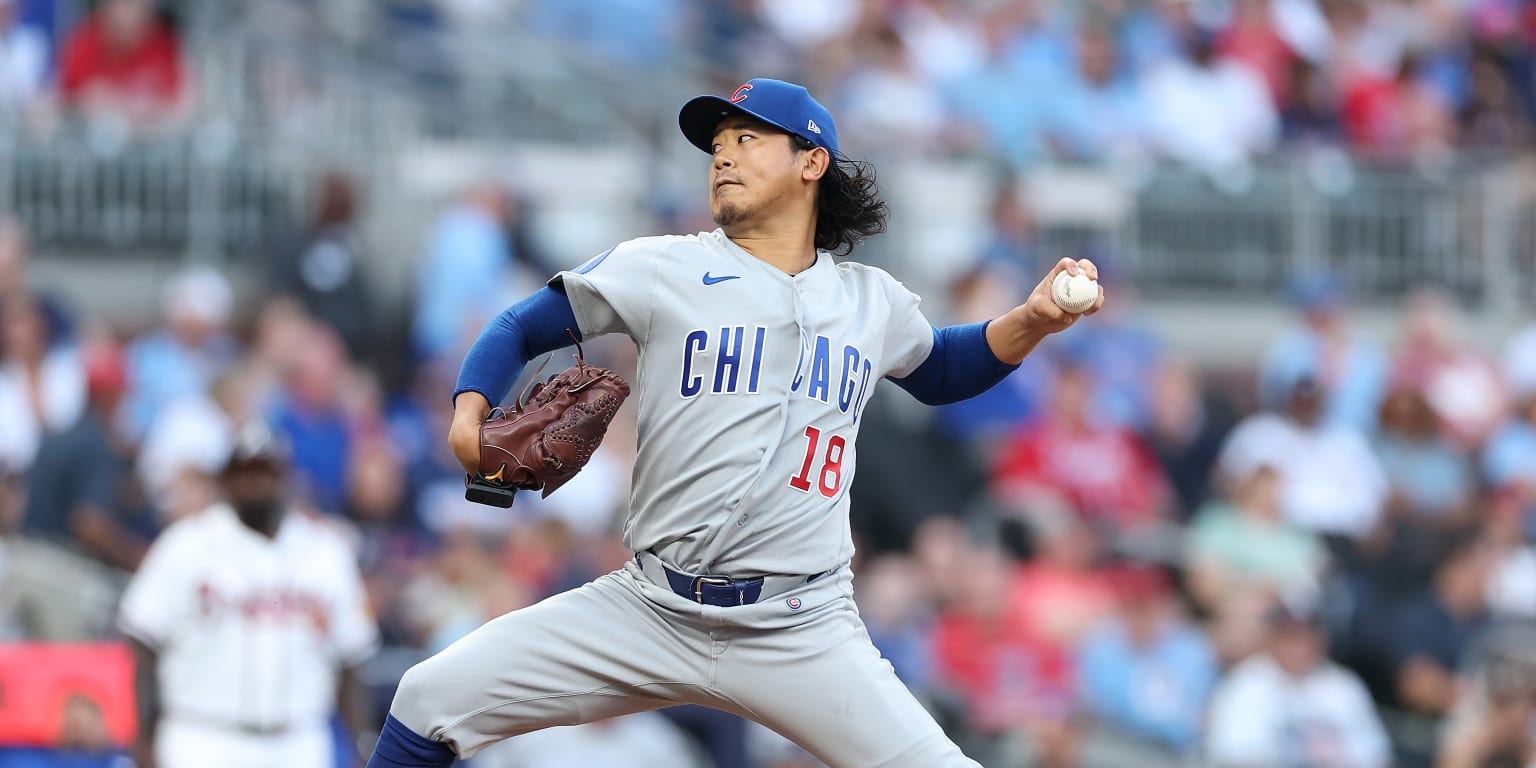
Shota Imanaga delivered a master class in pitch sequencing Wednesday at Truist Park, neutralizing the Braves' league-leading .270 average against left-handed pitching while fanning six through seven-plus innings on just 96 pitches. The Cubs lost 4-1 anyway—a result that tells you everything about their current offensive dysfunction and everything you need to know about how to price his strikeout props moving forward.
The mechanical foundation beneath Imanaga's outing is worth isolating. His four-seam velocity has climbed to 91.9 mph this season from 90.8 mph last year, and his chase rate—the percentage of pitches outside the zone that hitters swing at—has jumped from 31.5% to 39.9%. Against Atlanta, he operated at a 43% strike-zone rate while generating whiffs and called strikes on 29% of his pitches. That's the signature of a pitcher whose command and movement have tightened materially. Three of his six strikeouts came on four-seamers, a sign he's using his fastball more decisively in the zone rather than relying solely on his splitter-slider combination. His catcher, Carson Kelly, noted that Imanaga added sinker command this offseason and now adjusts mid-game when a pitch isn't generating swings—incremental improvements that compound into strikeout upside.
The problem, from a Cubs perspective, is that Imanaga's dominance landed in a vacuum. Chicago managed one run on five hits. The Braves' second-inning solo homer and an eighth-inning single were enough to end the game; the Cubs' bats never materialized. This isn't a one-game outlier—it's a structural crisis. When an ace-caliber outing yields no run support, the team's lineup prop totals should compress hard. Chicago's team total in this series sat at 4.5 runs; they scored one. That trend will persist until the offense shows tangible signs of life, not just until Imanaga pitches again.
For prop bettors, Imanaga's strikeout line carries legitimate edge on the upside in his next three to four starts. His K-rate climbed from 20% to 28.3% coming into this game, and his velocity and chase-rate improvements suggest the trend is mechanical, not noise. Against second-division offenses or teams with high strikeout rates of their own, his strikeout prop should command respect at standard -110 to -120 pricing. However, the Cubs' inability to manufacture offensive support means his quality starts will keep coming in low-scoring games. That creates an inverse angle: his team total—and any Cubs hitter prop who isn't a nine-hole pitcher—faces persistent downward pressure. The lineup's offensive environment has deteriorated enough that even stellar pitching performances become betting headwinds rather than tails.
Imanaga was excellent. The Cubs' lineup was not. Market adjustments will flow in opposite directions: strikeout props tighten on the downside (less value), team totals and run-line spreads compress downward (more action on unders). The gap between Imanaga's pitching talent and his team's run-scoring ability is the real story.