Olson and Baldwin's Two-Lefty Assault Is Making Braves Totals a Bet Worth Taking
By Erik Schwartz ·
The Braves' best-in-baseball offense is built on two left-handed hitters who are hitting where it matters most, and that structural advantage could sustain run totals all season.
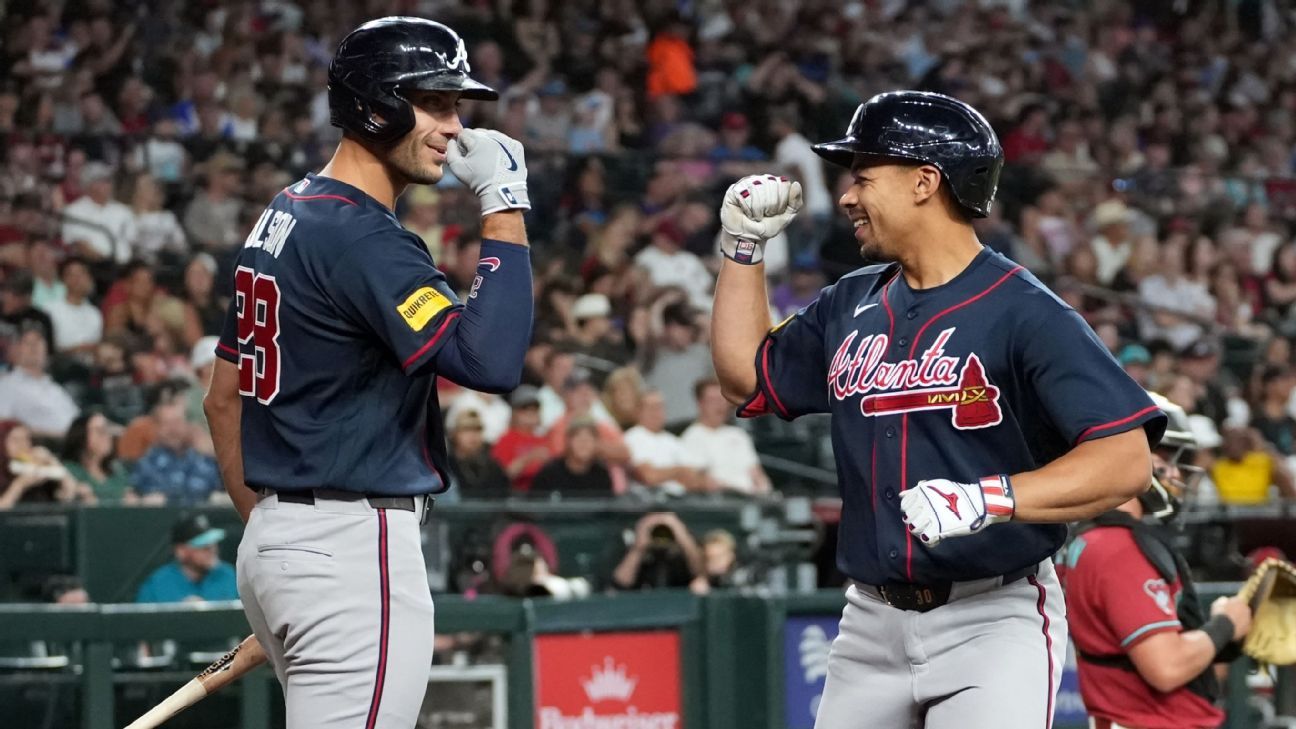
Matt Olson and Drake Baldwin are running away with the National League East, and their offensive dominance is no accident. The Braves' two left-handed sluggers are occupying consecutive spots in the lineup—Olson typically batting two ahead of Baldwin—creating a dynamic that forces opposing pitching into impossible choices. Olson, a 32-year-old three-time All-Star, is on pace for his best season with 14 home runs, a .296 average, and a 178 wRC+ tied for third-best in baseball. Baldwin, the 25-year-old Rookie of the Year, has added 10 homers and a .297 clip while producing at a level that even his front office expected but few outside Atlanta anticipated sustaining.
What makes this pairing dangerous is not just raw power but the structural mismatch they create. Baldwin leads the majors with 17 hits on pitches outside the strike zone—a stat that screams elite bat control and plate discipline. He's also slugging .410 on two-strike counts, 133 points above the league average, which means he's productive precisely when opposing pitchers think they have him cornered. Olson's .654 slugging percentage speaks for itself, but his .377 on-base percentage is the real leverage point; he's getting on base at elite rates and forcing Baldwin into favorable counts. The two communicate constantly in those on-deck moments, sharing adjustments about pitch recognition and approach. That real-time feedback loop—analytics meets veteran intuition—is harder to gameplan against than any single stat suggests.
The Braves have baseball's best offense partly because these two left-handed bats can't be neutralized by the standard bullpen deployment. Teams can't load up exclusively on right-handers; Olson and Baldwin would simply wait for favorable matchups, and the lineup depth (Ozzie Albies and others) would punish overshooting. This structural advantage tends to compress pitching efficiency over a full season. When you've built an offense around hitters who thrive in high-leverage spots and against out-of-zone pitches, you're not just winning individual at-bats—you're forcing opponents into higher pitch counts and deeper into their bullpens.
For prop bettors, the implication is straightforward: Atlanta's team totals are priced for a standard league-average offense, not the best one in baseball. Olson at 178 wRC+ isn't a hot streak; that's sustainable elite production. Baldwin's hard-hit rate (top 15% of the sport) and two-strike slugging aren't variance plays. The Braves began May running away in the NL East, and that run rate should persist. Overs on Braves team totals at conventional marks (4.5–5 runs per game) carry minimal downside when your two most crucial hitters are producing in high-leverage situations simultaneously.
The best offenses in baseball have a structural reason for staying elite, not just individual talent spikes. The Olson-Baldwin tandem—seven years apart, two different approaches, same left-handed advantage—represents the kind of multiplicative effect that doesn't regress. Fade the under on Atlanta totals until the numbers catch up to the performance.