Baltimore's Rotation Has Stopped Bleeding Runs—And the Market Hasn't Caught Up
By Ty Whitney ·
The Orioles' starting pitchers have vaulted from third-worst strike rate to elite execution in two weeks, transforming their playoff odds without much accounting in the betting market.
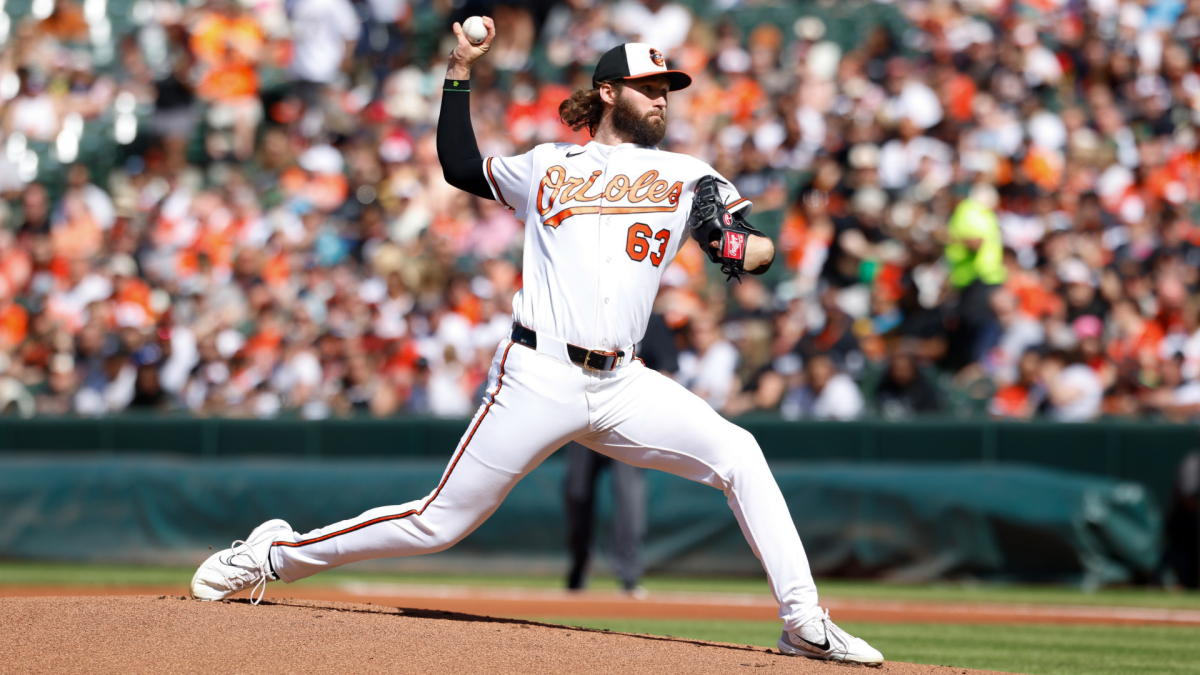
The Baltimore Orioles entered Friday night at 31–33, technically below .500 but only a half-game from a wild card spot in an AL East that has the structural integrity of wet cardboard. They demolished Toronto 13–3, extending a 10–4 run that would be remarkable for any team in free fall—but for Baltimore, it represents a hard reset from a season spent in the trenches of organizational disappointment. The difference between those two versions of the Orioles isn't an offensive discovery; it's a categorical shift in how their starting pitchers are executing.
Two months into 2026, the Orioles' rotation was broken. They ranked third-worst in baseball at a 62.3% strike rate, meaning batters were sitting on breaking balls from ahead in the count, working deeper into counts, and forcing Baltimore's starters to chase. The ERA sat at 5.11 across their first 50 games. Over the last 14 games—the stretch that has pushed them back into contention—that ERA dropped to 2.75. The strike rate jumped to 66.6%, a mark no team has sustained all season. FIP (Fielding Independent Pitching) improved from 4.72 to 4.09. xERA, which accounts for contact quality, moved from 4.61 to 4.17. These aren't noise fluctuations. They represent command restoration, better sequencing, and the byproduct of pitchers executing a philosophy manager Craig Albernaez has been preaching since spring: first-pitch strikes, 1–1 count wins, and attack the zone.
The mechanical specifics matter here. Shane Baz has dialed back his cutter and rebuilt his curveball into a put-away weapon; he's gone at least six innings in each of his last four starts and allowed more than two runs once. Brandon Young, a mid-rotation mainstay who arrived with questions, has leaned into an improved splitter (a new pitch last season that opposing hitters are still adjusting to) and sits at a 3.47 ERA over nine starts. Trevor Rogers threw five-plus innings of one-run ball in his recent appearance. These aren't one-off performances; they're patterns emerging from a rotation that has suddenly remembered how to pitch. Adley Rutschman's emergence on offense—he went 4-for-4 with a double and homer Friday—has relieved pressure on the mound and let starters pitch to their strength rather than chasing comebacks down 3–0 by the fourth inning.
For bettors, this creates a durable edge in a market still pricing the Orioles as a below-.500 liability. The improvement in strike rate isn't random; it's a structural output of a coaching philosophy taking hold. That jump from 62.3% to 66.6% represents starters who are no longer afraid to attack and a coaching staff drilling contact-quality principles into relief innings. When opposing lineups face a pitcher attacking the zone with first-pitch strikes, they're forced to swing earlier, which trades patience for solid contact—a net win for a staff managing contact quality. The xERA improvement proves that dynamic is holding. For the next 10–15 games, Baltimore's rotation will remain better than the preseason consensus; the market has not yet fully repriced Baltimore's odds relative to a rotation that is now top-15 in execution rather than bottom-10. Overs on O's team totals should be approached with caution for the immediate future, as this run-scoring pace is fueled partly by a suddenly competent bullpen and improved defense, not sustainable offensive gains. But unders on Baltimore's opponents' team totals—particularly against lineups that have struggled against zone-attacking approaches—carry value. The starting pitching is real. The market has barely moved.
One caveat: the strike rate spike sits at the edge of repeatability. No team has finished a season above 66.2%, and the Orioles have hit 66.6% in a 14-game window. That's elite territory, but it will likely regress toward 65–65.5% over the next month as the league adjusts and sequences randomness reasserts itself. The improvement is durable; the specific strike rate is not. Bet the rotation's sustained command and contact management over the next 20 games. Don't lock in the 2.75 ERA as a new floor.