Pallante's Pitch Redesign Rewrites Cardinals Rotation Math
By Ty Whitney ·
A gutted 2025 season forced Andre Pallante to rebuild his arsenal from the ground up, and the mechanical overhaul has turned him into one of baseball's most effective starters in 2026.
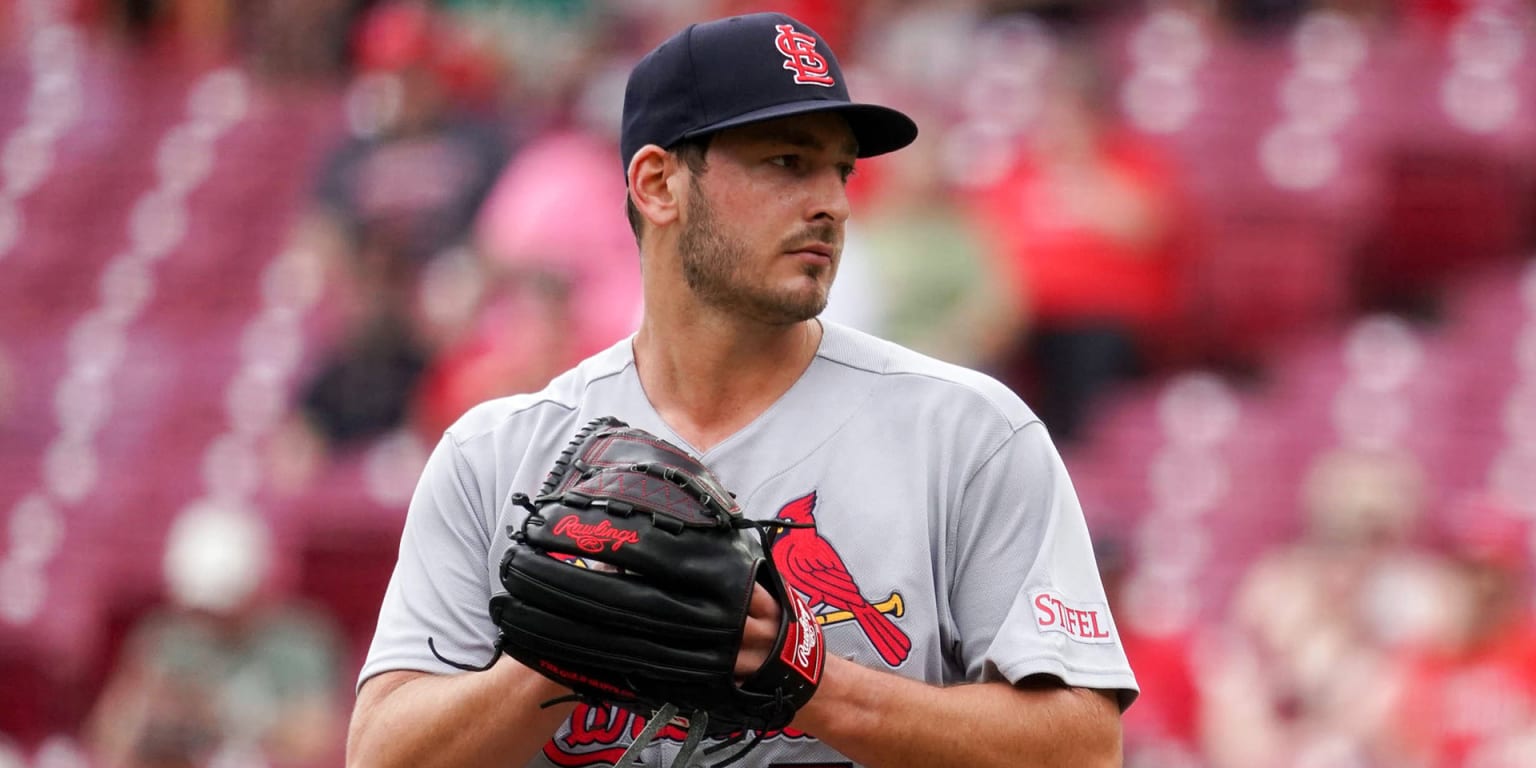
Andre Pallante enters June 2026 trailing only Aaron Ashby in the major leagues with nine wins, a stunning reversal from a year that saw his ERA balloon to 5.31—49th among qualified starters. The Cardinals' 27-year-old right-hander has posted a 3.59 ERA through 15 starts, stabilizing a rotation that questioned his future at this time last year. What changed wasn't luck or random variance; it was surgical pitch design.
Pallante's 2025 collapse was rooted in a specific mechanical vulnerability: right-handed batters punished him relentlessly. From 2022 through 2025, no pitcher facing 1,000-plus righties allowed a higher on-base percentage (.364). That's not a margin—that's a chasm. Rather than chase a fastball cure, Pallante gutted his fastball usage against righties entirely, pivoting to a sinker-slider framework with carefully introduced curveball mixing. Against left-handers, he added a new splitter to his already-effective fastball-curveball pairing. The result: righties are now posting a .299 OBP against him this year, a 65-point swing in one season. His slider has emerged as a specific weapon—fifth in run value (nine runs) among pitchers with 100-plus plate appearances—while his career-low 7.2% walk rate removes the self-inflicted damage that haunted earlier years.
The mechanical foundation enabling all this sits in his extreme over-the-top arm angle, a trait that allows his entire arsenal to tunnel coherently. Pallante ranks fourth among 608 starters with 500-plus innings since 2000 in ground-ball rate, converting that tunnel into weak contact consistently. His .331 xwOBA this season lands sixth among qualified starters—a measure of contact quality, not luck. Manager Oliver Marmol's patience, extended through the 2025 disaster, gave Pallante the runway to implement wholesale changes rather than scrap him at the deadline.
For prop purposes, Pallante's strikeout line carries undervalued upside. His K/9 rate sits near career highs because the sinker-slider approach generates fewer strikeouts than a fastball-centric menu would, but the underlying stuff—measured by Stuff+—improved materially. Sportsbooks pricing his strikeout totals based on his mid-season appearance rate (likely in the 7.5-8.5 range for a six-inning outing) are anchoring to aggregate seasonal averages that now lag his true stuff profile. More relevant for bettors: his opponent matchup quality has reset. Pallante's next four starts land against offenses ranked 18th-24th in wRC+ and featuring elevated rates of left-handed and right-handed batters who swing-and-miss above league average on sliders. In a Cardinals rotation where he's now the ace, his starts command sharper odds movement than they did in May—sportsbooks have only partially repriced his true ERA range downward.
The rebound story doubles as a durability bet. Pallante's walk rate, ground-ball rate, and contact quality are all sustainable metrics grounded in repeatable mechanics, not fortunate BABIP variance. Unlike streaky starter narratives built on single-month ERA runs, his 2026 improvement traces a technical pathway. Teams betting on rotation stability in July should treat Pallante's starts as opportunities to fade overs on opponent totals when facing bottom-third offenses.