Mason Miller's Slider Command Shift Rewrites Relief Valuation for the Padres
By Ty Whitney ·
A mechanical adjustment has transformed Miller from elite fastball pitcher into a two-pitch threat that hitters can't cheat, fundamentally changing how to price his strikeout and leverage outcomes.
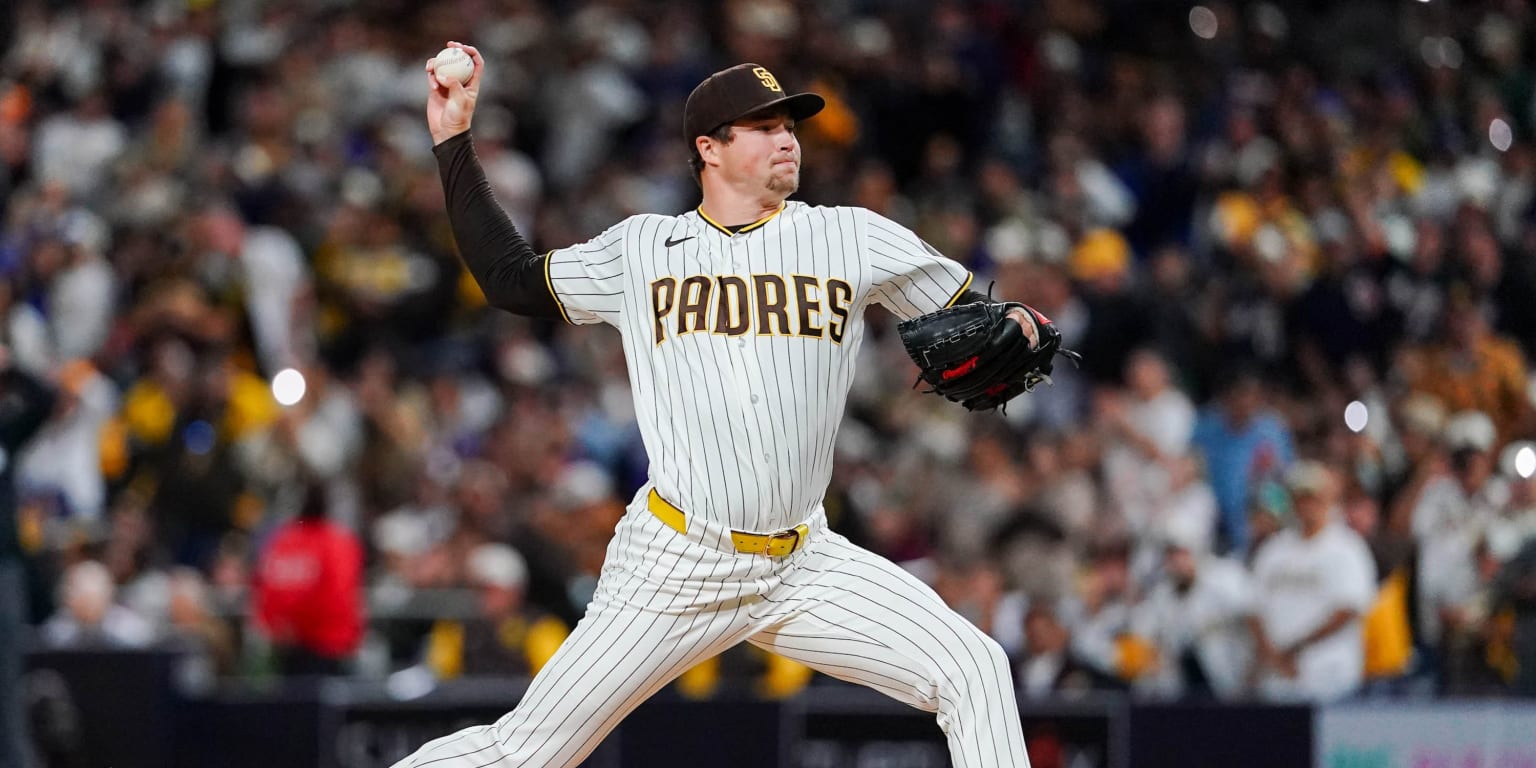
Mason Miller was already a top-tier relief arm when San Diego acquired him from Oakland last summer—a mid-90s fastball paired with a power slider that routinely buckled knees. The Padres didn't trade for what Miller was; they traded for what he could become. That bet is paying dividends faster than organizational projections typically allow.
The mechanical catalyst is subtle but measurable: Miller's arm angle has shifted from a consistent mid-30s throughout his first three years in the majors to a steady 40 degrees this season. That five-degree increase fundamentally changes release point geometry, which in turn has unlocked something Miller struggled with—the ability to locate his slider in the strike zone with intention. His walk rate was a glaring 12% last year, sixth percentile territory for a pitcher with his velocity. The problem was straightforward: hitters knew what pitch was coming in fastball counts, so they cheated early. A pitcher who can only throw strikes with one offering becomes guessable, no matter the stuff. Now Miller lands his slider for strikes in pressure counts—he's thrown seven consecutive three-ball sliders in the zone with the Padres after managing only seven total in his entire 1.5-year tenure in Oakland. At 50% slider usage, he's approaching the coin-flip mix he's chasing: no tell, no cheat, no escape.
The stuff itself hasn't changed on paper. Velocity and pitch shape remain stable. But results have sharpened. Through mechanical consistency—Padres' coaching appears to have simply steadied something that was drifting in Oakland—Miller now commands a secondary pitch that was previously unreliable. That command floor matters enormously for leverage relief outcomes. When a pitcher with 98-mph heat can also land a wipeout slider in any count, whiff rates and strikeout totals climb. The mechanism isn't velocity or spin; it's predictability elimination.
For betting purposes, this is a durable edge rather than a one-game spike. Mechanical adjustments that survive a full season tend to persist because they're rooted in repeatable form, not variance. Miller's strikeout rate and walk rate trajectories from August onward are the operative data—if the slider command holds through high-leverage September and October innings, the underlying xFIP and K/9 metrics supporting higher strikeout prop lines are justified. The market may still be pricing Miller off his Oakland profile (bloated walk rate, single-pitch reliance) rather than his current architecture. That gap closes for bettors who recognize the mechanical shift as permanent rather than temporary.
Risks exist: Freeman and Muncy both drew walks on three-ball sliders this week, which illustrates that even improved command isn't perfection. High-leverage counts remain high-variance environments. But the directional arrow points upward. A reliever moving from 12% to sub-8% walk rate while maintaining strikeout volume is fundamentally more valuable and more predictable than the version teams faced six months ago.