Caminero's Trajectory Reshapes Rays MVP Case and Offensive Props Through August
By PropBetEdge Editorial Team ·
Junior Caminero just turned 23 with a pace that puts him in historic company, and the Rays' home dominance is reshaping how to value his run-production props.
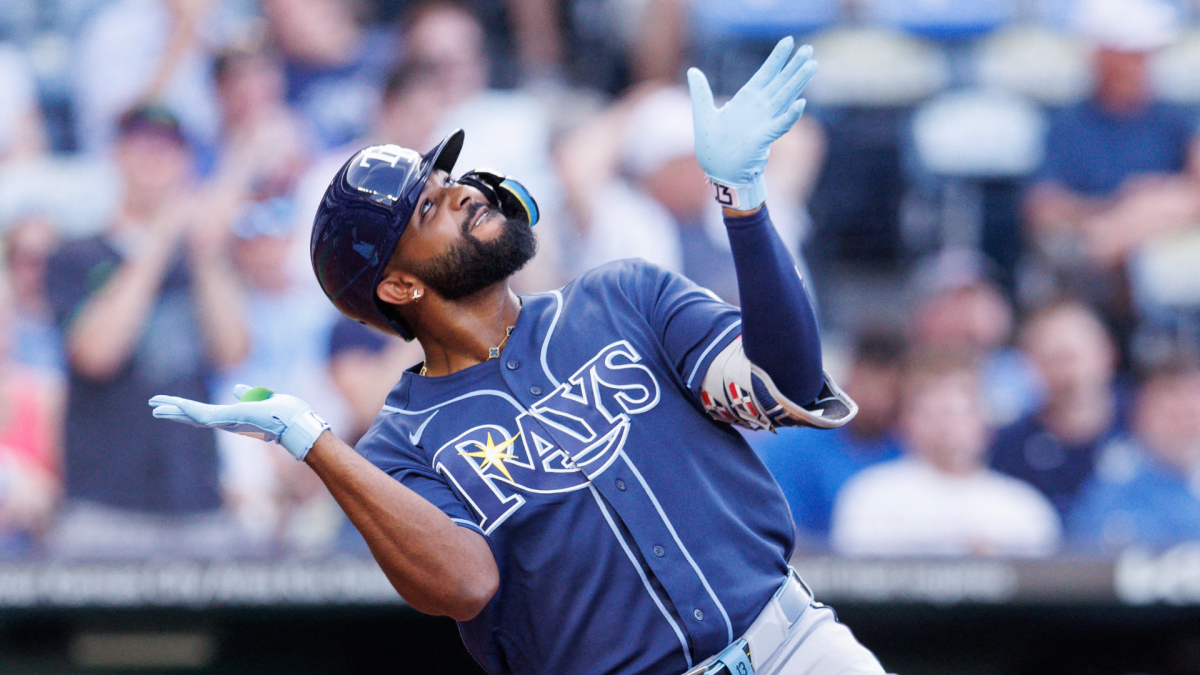
Junior Caminero celebrated his 23rd birthday yesterday sitting third in AL MVP odds at +600, trailing only Yordan Alvarez (-160) and Nick Kurtz (+400). The Rays third baseman has constructed one of the cleaner two-year ascensions in recent baseball history: after a 45-home-run, 110-RBI season at age 21, he's already accumulated 26 homers and 56 RBIs through 87 games this year with a .288/.378/.561 slash line (157 OPS+). The statistical refinement matters more than the volume. His walk rate has nearly doubled from 6.3% to 12.9%; his strikeout rate dropped from 19.1% to 17.8%. He's simultaneously hitting the ball harder—logging gains in both exit velocity and hard hit percentage—while demonstrating a more disciplined approach. At the 100th percentile in bat speed, Caminero possesses the physical tools to sustain both outcomes simultaneously.
The comp set for his age-22 season is instructive. He's the second player in MLB history to post multiple 40-homer, 100-RBI campaigns by age 22, after Hall of Famer Eddie Mathews. The only other players to accomplish it even once—Guerrero Jr., Acuña, A-Rod, Bench, DiMaggio, Ott—span eight decades of baseball excellence. Over the past two weeks, from June 23 onward, Caminero has hit 11 home runs in 11 games, including a six-game homer streak. He's five long balls shy of Jose Canseco's Rays single-season pre-All-Star mark of 31, set in 1999. That he's generating this power while also ranking seventh in AL batting average and third in slugging percentage speaks to a rare combination of contact quality and frequency.
The Rays' structural advantage amplifies Caminero's individual ceiling. The team sports a 31-12 home record—best in baseball—a dramatic reversal from last season's stadium damage that forced them into Tropicana Field repairs and an unfavorable schedule featuring mid-summer road stretches. Caminero has internalized this home-field edge, batting .338/.435/.675 with 15 home runs across 43 games at The Trop. That 97-point batting average gain and 240-point slugging jump from his overall season line is not noise; the Rays play 81 games at home annually, and Caminero's performance splits suggest he's capable of sustaining a materially different level of run production in that environment.
For prop bettors, the betting implications flow directly from this split. Caminero's home-run prop lines have compressed upward as his MVP visibility increased, but they haven't fully absorbed his Tropicana Field splits. In any game series played in Tampa Bay through August, his home-run over should carry value relative to his season-long line. The market is pricing a blended average that includes his road performance; the home matchup subset—particularly against pitchers unfamiliar with The Trop's dimensions and the Rays' aggressive batting-practice environment—operates at a higher run-production floor. His RBI prop similarly benefits from this environment adjustment: runners in scoring position accumulate faster on a 31-12 home team than in the marginal matchup his average line suggests.
The MVP narrative itself is a volatility accelerant. Caminero's odds have moved from outside the top five just weeks ago; rapid short-term line movement in MVP betting typically reflects a cascade of public money chasing recent performance. This creates a temporary overvaluation of his near-term ceiling props while the market recalibrates. The edge exists not because Caminero's production will regress—his underlying mechanics and the Rays' team quality argue against it—but because single-game props on MVP-momentum plays tend to overshoot before settling into match-specific pricing. Play the home Rays props early in any series window before the MVP narrative and home-field advantage are fully incorporated into line prices.