Crow-Armstrong's Plate Discipline Overhaul Rewrites His Offensive Profile
By PropBetEdge Editorial Team ·
A single conversation with Alex Bregman transformed Pete Crow-Armstrong's approach at the plate, turning walk avoidance into a competitive edge and landing him a second All-Star selection.
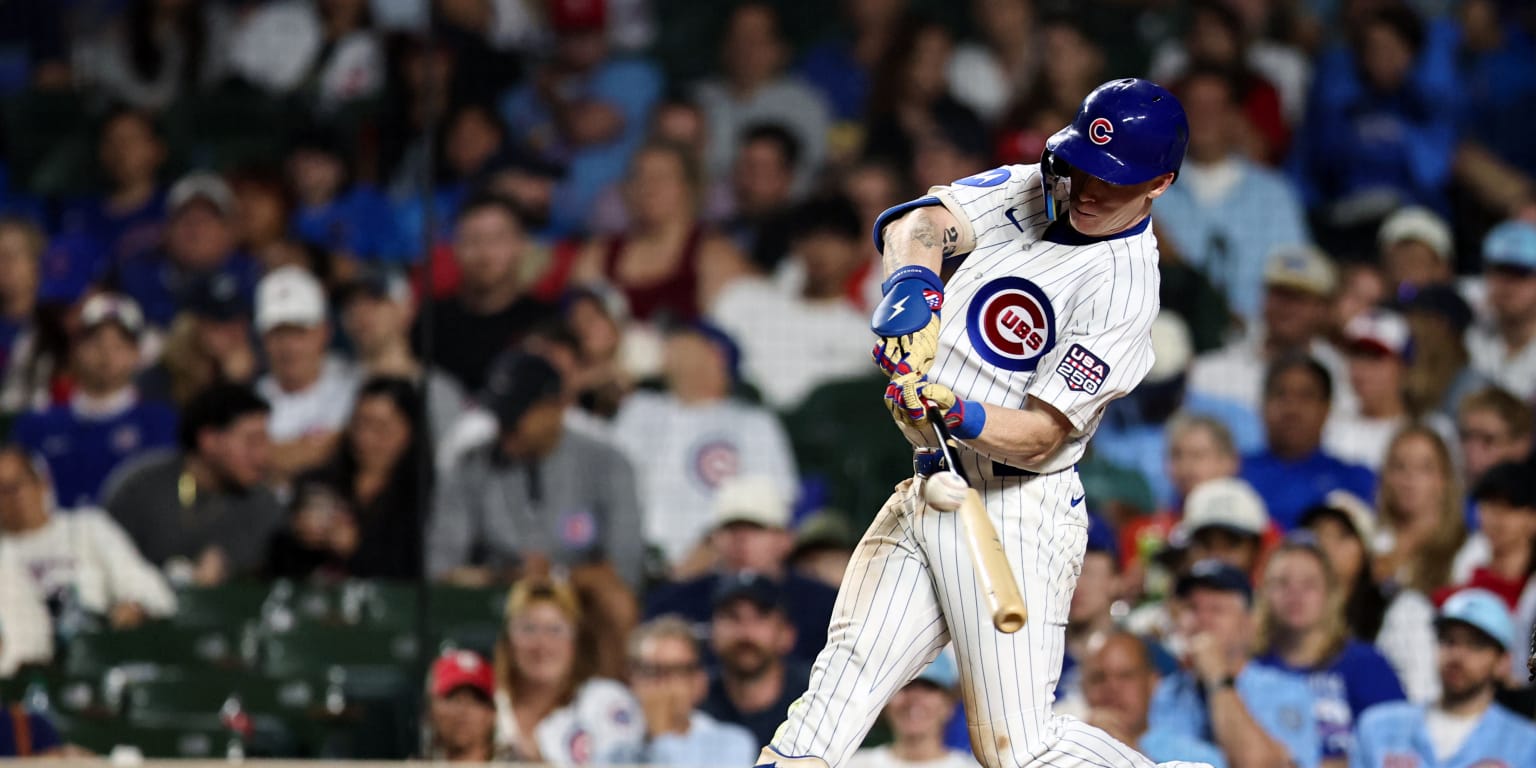
Pete Crow-Armstrong stepped into the box on May 13 facing Braves closer Raisel Iglesias and fell into a tactical trap: hunting for a fastball or changeup while Iglesias delivered the slider he almost never throws to left-handed batters. The result was an infield pop-up, a forgettable at-bat in a growing pattern. What happened next, though, became the inflection point of his season. Back at Wrigleyville, Bregman pulled the Cubs center fielder aside and reframed the entire conversation. Forget chasing stuff outside the zone. Forget trying to cover the entire plate. Hunt one pitch—the one you expect—and let everything else go. "The way he said it clicked with me," Crow-Armstrong recalled. By early July, that framework had produced one of the sharpest turnarounds in baseball's first half.
The statistical shift is neither subtle nor debatable. Through 90 games, Crow-Armstrong carries a .383 on-base percentage, up 96 points from last year's .287. His walk rate has tripled from 4.5% to 10.5%, already accumulating 41 walks after recording just 29 all of last season. Most tellingly, his swing rate has collapsed by 9.3 percentage points—the steepest year-over-year drop among all qualified hitters. This isn't regression or seasonal variance. This is a philosophical reset embedded in his daily process. He's hitting .292 with 19 homers through the first 90 games, maintaining power while operating at a fundamentally different baseline of selectivity.
What makes this evolution potent from a betting perspective is its mechanical durability. Crow-Armstrong didn't stumble into a hot June; he internalized a discipline framework that reduces variance in his offensive output. The Cubs hitting coach Dustin Kelly articulated it directly: when Crow-Armstrong is aggressive with a plan—hunting a specific pitch or zone—damage goes up, walks follow, and swing decisions sharpen. This is the inverse of the passive walk-rack archetype. He's becoming more selective without becoming passive, which is the rarest combination in baseball. The Iglesias example wasn't a one-off teaching moment; it was a template. Crow-Armstrong now enters each at-bat with a mental constraint, and that constraint has narrowed his strikeout risk while expanding his walk equity.
For bettors, the implication runs deeper than Crow-Armstrong's individual props, though those lines have already adjusted upward. His plate discipline gains translate to elevated on-base rates and walk totals that will now price in his vastly improved selectivity—and the market likely overshot in early July adjustments. More important is the team-offensive angle: a Cubs middle-order bat who no longer expands the zone on fastball counts becomes a far more difficult out to manufacture through velocity and edge-of-zone stuff. When Crow-Armstrong stops chasing, opposing pitchers must either elevate fastballs into the zone (where he's hit 19 homers) or waste pitches deeper in the count. Both scenarios compress the Cubs' team strikeout rate and lower overall team batting totals against pitchers lacking elite command. This is why Bregman's investment in Crow-Armstrong's process mattered to Chicago's front office and why it matters to sharp bettors tracking offseason adjustments: a single conversation reshaped the offensive architecture of a contending team's lineup.
The All-Star selection validates the shift without explaining it—voters see the .292 average and the power and the steals. They don't internalize the walk-rate explosion or the swing-rate compression because those are structural gains, not highlight-reel moments. That invisibility is where the edge lives. Crow-Armstrong will continue to draw walks at elevated rates against fastball-heavy pitchers (which comprises roughly 60% of the league's rotation). His strikeout rate will remain compressed relative to his power profile. And Cubs team totals that priced in his 2025 aggressive baseline should face downward pressure as the market catches up to his new operating procedure. The prop lines on his walk totals may have shifted, but the underlying mechanism—disciplined pitch hunting—remains underpriced relative to its persistence across the remainder of the season.