Rice and Schlittler's All-Star Selection Signals Yankees' Prospect Pipeline Depth
By Ty Whitney ·
Two homegrown arms from New England will represent the Yankees' future at this week's All-Star Game, a development that reshapes how sharps should value the team's second-half ceiling.
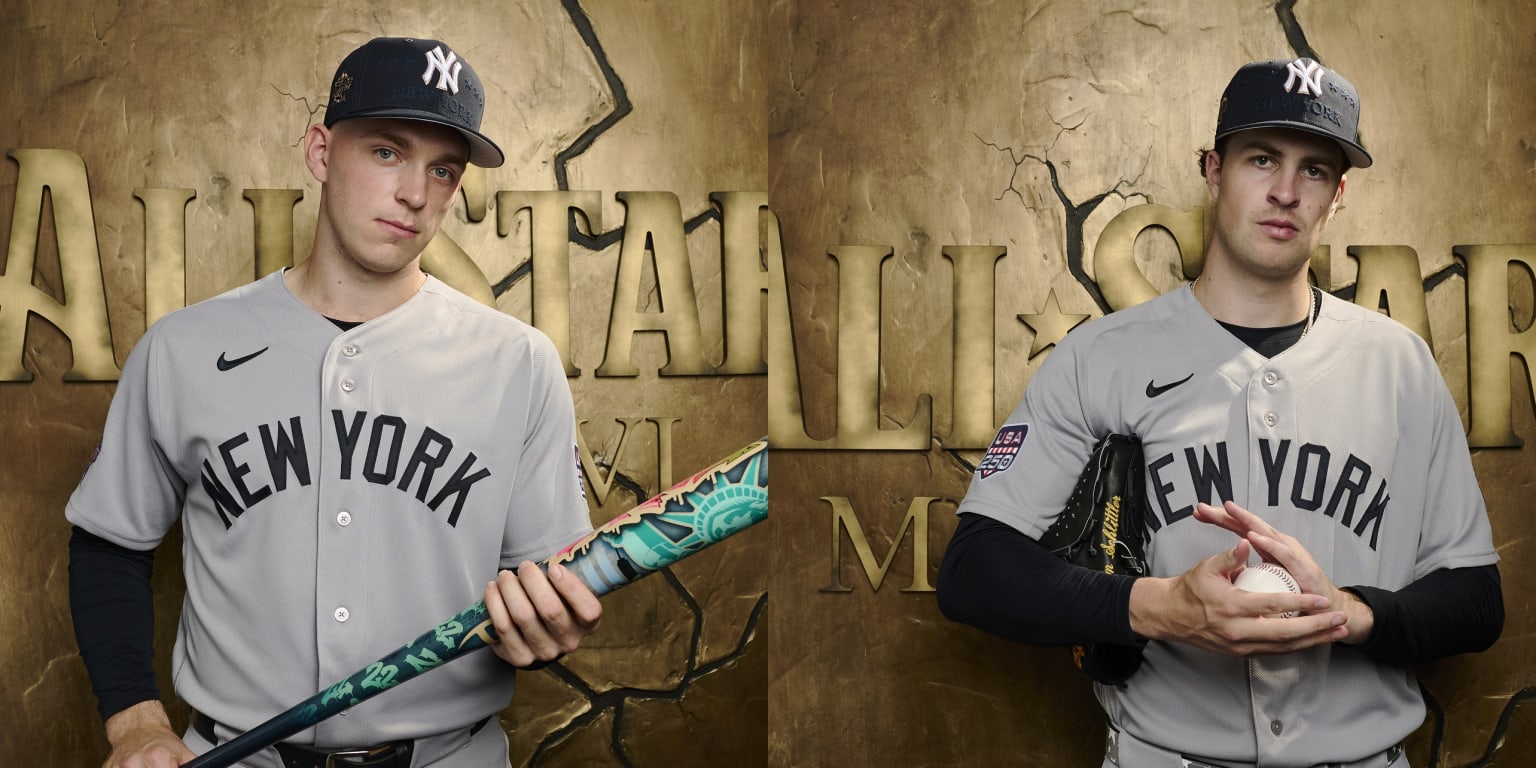
Ben Rice and Cam Schlittler walked through Citizens Bank Park on Monday afternoon as first-time All-Stars, a milestone that arrives faster than most forecasted when the Yankees signed both prospects out of the Boston area. Rice, a 12th-round pick who grew up in Cohasset, Massachusetts, will start at first base in Tuesday's All-Star Game after posting 29 homers and a .971 OPS this season. Schlittler, a seventh-round selection from Northeastern, carries a 9-5 record with a 2.05 ERA and 137 strikeouts in 118⅔ innings. Neither path was linear—Rice had to wait for injuries to Guerrero Jr. and Kurtz to secure his spot, and Schlittler voluntarily prioritized recovery over starting duties—yet both selections reflect genuine production, not roster filler.
The deeper story is organizational. Matt Hyde, the Yankees' Northeast amateur scout who signed both players, spotted something in Rice's power display at Nashua and Schlittler's strike-throwing mechanics at Walpole High School that translated to immediate big-league impact. Rice rejected the narrative that a 12th-round slot defined his ceiling; Schlittler absorbed accountability-driven coaching from Northeastern into his professional approach. This isn't prospect lottery noise. These are selections that the front office valued enough to keep in-house through the system, convert to major-league roles, and now field on baseball's biggest midseason stage. It matters because it validates the organization's eye for talent when it counts: not in the draft room, but in living production under pressure.
For prop bettors, the implication is straightforward. Rice's 29 homers and .971 OPS are not a half-season blip; they reflect a hitter who was drafted low but has outperformed every projection line. His All-Star selection signals that the market-setting algorithms—which price first-time All-Stars as high-variance breakouts—may be underselling his floor for the remainder of the season. At first base, Rice faces no shortage of rest days or extended outings in low-leverage spots, which inflates both power opportunity and strikeout risk. Schlittler's strikeout rate (10.35 K/9 over 118⅔ innings) is sustainable; his ERA benefits from a Yankees defense that ranked in the AL's top quartile in runs saved in recent years. Both players will see consistent usage through October—a luxury most late-round picks never access—which means their prop lines should not collapse as injured stars return and crowd the depth chart.
The broader frame: Yankees roster construction is no longer dependent on singular star performance. Judge's rib fracture sidelined him from All-Star attendance, yet the team sent three representatives anyway. Rice and Schlittler's elevation proves the organization has multiple levers to pull in the second half. For totals and run-line bettors, this is a signal that Yankees win probability models may be underweighting the team's ability to sustain offensive output even when stars rotate or rest. Rice's postseason potential is locked into first-base depth now; Schlittler's strikeout prop carries less injury risk than a typical fourth starter because the Yankees will protect his workload heading into October.