May's Hot-Bat Brigade: Judge's Crown Slips as Emerging Threats Rewrite the Power Hierarchy
By PropBetEdge Editorial Team ·
Aaron Judge's slide from the top ranking exposes a mid-season reversal in offensive momentum that redraws the landscape for both MVP equity and individual hitting props.
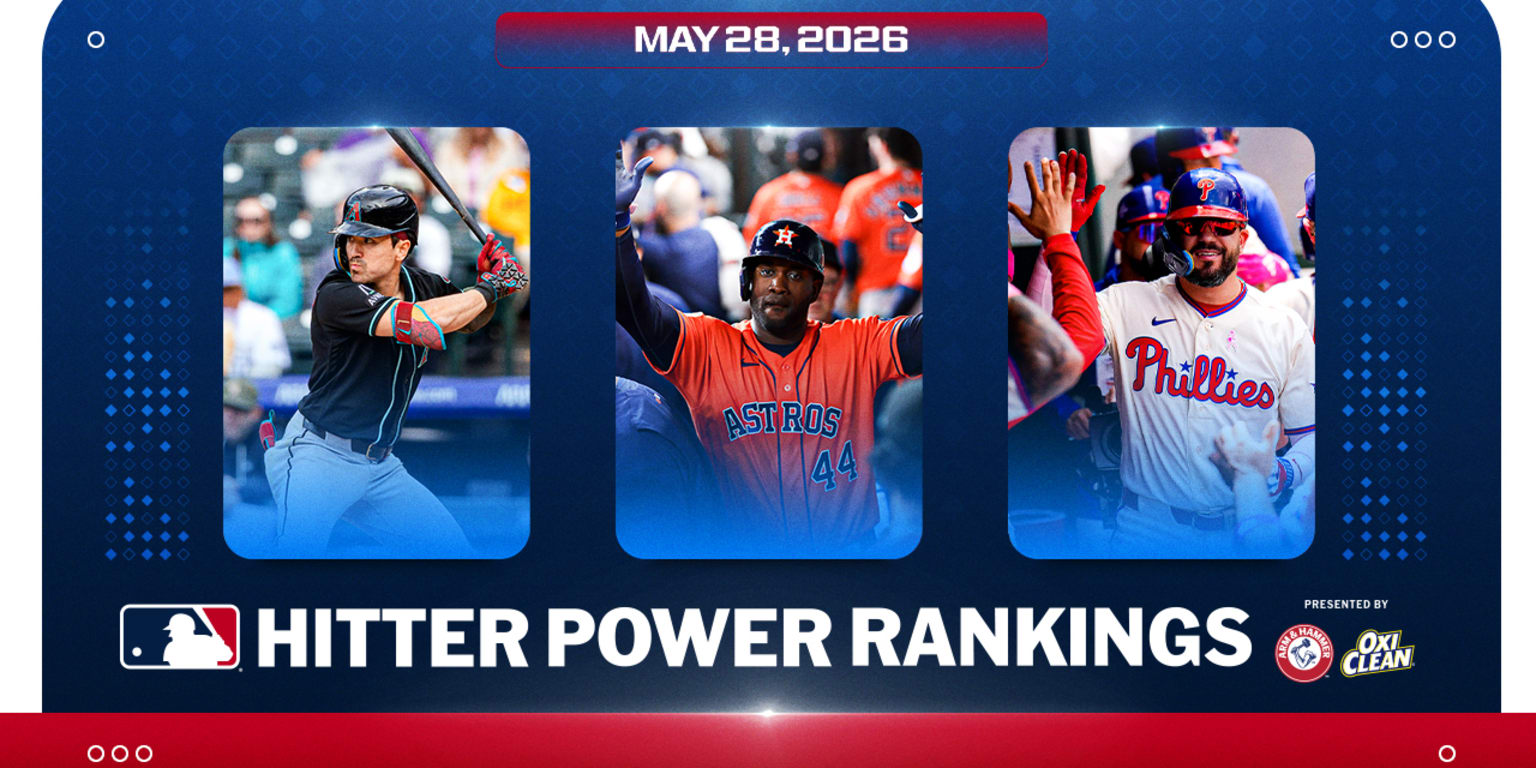
Aaron Judge has ceded the Hitter Power Rankings' top spot for the first time this season. Per MLB.com's expert poll through late May, the Yankees slugger fell from No. 1 to No. 7—a sharp enough drop to signal a meaningful cooling at the plate, not a temporary weather pattern. Judge had managed just one home run in recent games while his peers stormed ahead with multi-homer stretches and OPS climbs that reshaped the pecking order entirely.
Corbin Carroll seized the throne, entering the list unranked and landing at No. 1 on the strength of a .400 average with a 1.226 OPS over 11 games. His eight triples lead baseball; his 4-for-4 night against Colorado and two-triple game in the same contest weren't noise—they reflected a hitter operating at an elite level across all batted-ball categories. Carroll's OPS had jumped 86 percentage points since the prior poll, signaling sustainable improvement, not one-game variance. Meanwhile, Yordan Alvarez climbed back to No. 2 after a brief dip, powered by five home runs and a 1.122 OPS in his last 11 games, with a two-homer, four-RBI outburst against Texas showcasing his ability to inflict damage in leverage spots. Kyle Schwarber held firm at No. 3, his 21 home runs pacing the majors; James Wood and Nick Kurtz both emerged into the top five—Wood with a 1.207 OPS over 12 games and a league-leading walk rate, Kurtz with a .437 on-base percentage (the widest margin in baseball) despite a snapped 48-game on-base streak.
The volatility in these rankings carries direct implications for hitting props. Judge's decline is not a single-game anomaly but a measurable shift in production over a multi-game window, which means his power and slash-line props will likely face tighter lines as sportsbooks reset their season projections downward. Conversely, Carroll and Wood represent the inverse: their recent output is moving in a direction that books may not have fully captured yet. Carroll's triple count (eight already with plenty of season left) suggests that alternative props on three-base hits, which typically go under-bet at the sportsbook level, could carry hidden value. His elevated batting average (.400 in the recent window) also tracks with a higher hit total going forward, though base hits tend to regress toward longer-sample averages; the 86-point OPS jump is more durable because it reflects plate discipline and power, not random sequencing.
Schwarber and Alvarez represent the most straightforward prop angles because their power is persistent and measurable. Schwarber's 21 home runs already rank first league-wide; if he maintains his recent pace (four dingers in nine games), he'll eclipse 50 for the season—a mark that rarely gets fully priced into team total overs and individual HR props until mid-June. Alvarez's 18 home runs, second in the AL, come with a 1.045 OPS that leads all of baseball; his leverage—turning a Tuesday game against Texas into a two-homer, four-RBI clinic—signals that he's a threat in high-leverage spots where run-production props (RBI lines, team totals) benefit most. Wood's on-base percentage leading baseball by a wide margin reflects both a walk-heavy approach (leading the NL) and quality contact; that combination rarely reverses course mid-season, making his OBP prop and walk totals more reliable than, say, batting average or home-run chase.
Judge's fall is the real prop story here. His one home run in the recent stretch, against his season-long pace, suggests that either his underlying metrics have degraded (exit velo, barrel rate) or he's in a temporary cold spell. The ranking drop implies the expert consensus leans toward the former. For bettors, this means Judge's power props and team-total contributions warrant skepticism until he shows a multi-game rebound. His HR line will likely be offered at a lower total than market-open numbers suggested a week ago, but that adjustment isn't yet over—expect further downward movement if he stays quiet through early June.