Holliday's Shortest Path Back: What a 337-Foot Homer Signals About the Orioles' Return Timeline
By Erik Schwartz ·
Jackson Holliday's first big-league homer since hamate surgery came via a 337-foot chalk-eater—and his activation pattern tells a clearer story about Baltimore's offensive depth than the unusual batted ball itself.
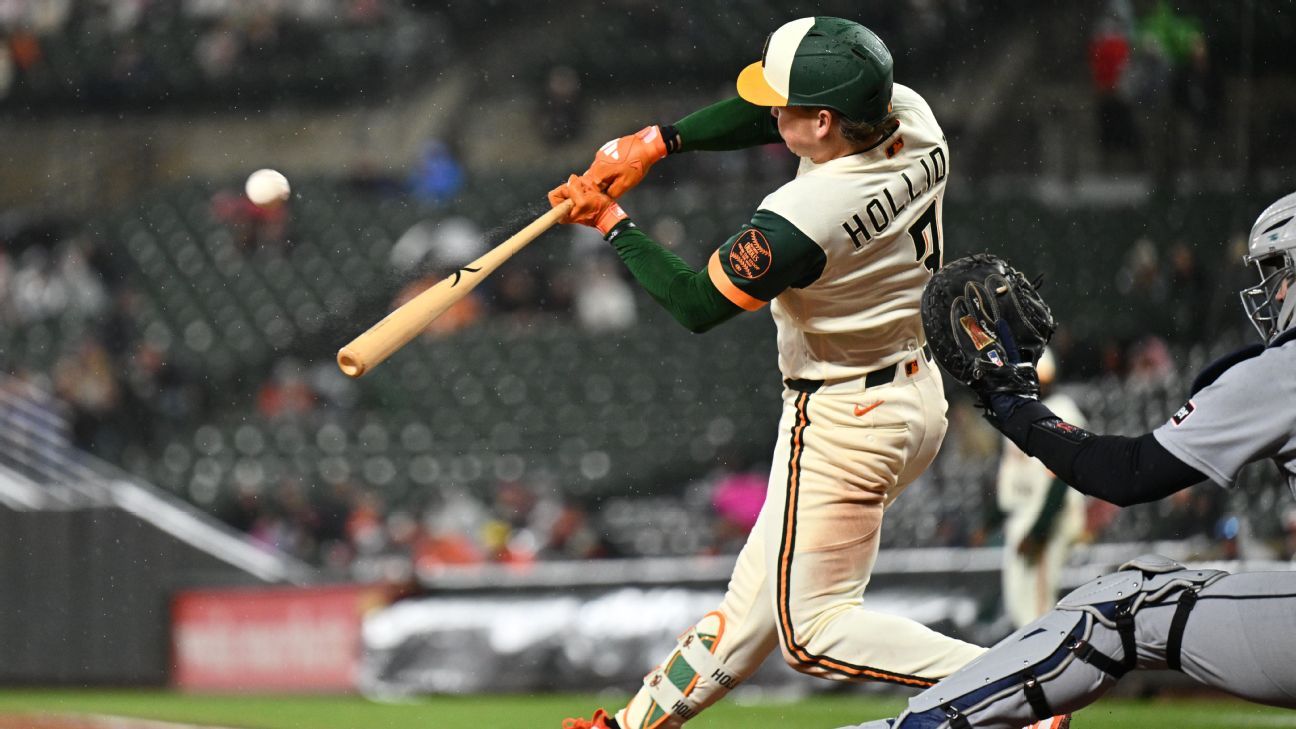
Jackson Holliday hit a two-run home run in Friday's fourth inning that traveled 337 feet, the shortest left-field home run at Camden Yards since 2015, per Statcast. The ball sneaked just over the wall and wedged itself under the foul pole—a geographic accident that gave the Orioles a 6-4 lead in their eventual 7-4 win over Detroit. Holliday also singled in the third, walked once, and scored twice. The unusual home-run geometry matters less than the fact that he's back on the field at all.
Holliday has been sidelined since March 22 following hamate-bone surgery on his right hand—an injury that forced him through eight weeks of minor-league conditioning. In 22 minor-league games before activation on Monday, he hit .176 with one homer and five RBIs. That's a steep ramp-up curve, but the Orioles weren't willing to wait longer. The 2022 first overall pick batted .242 in 2025, his first full season, with 17 homers and 55 RBIs. For a franchise still searching for consistent middle-order production, that's a known commodity worth rushing back.
The timing of his activation—paired with his immediate two-hit, walk, two-run effort in game two—suggests Baltimore views him as roster-critical, not depth insurance. He played in just 11 games in 2024 before the injury reset his timeline. Now, with the offensive core settling into the season, the Orioles are banking on Holliday's bat to compound production in the middle of the lineup. His 337-foot homer, strange as it was, is less a skill marker than confirmation that his hand has recovered enough for full load-bearing in the batter's box.
For prop bettors, Holliday's return carries a single-event halo that will fade fast. His minor-league slash line (.176 average) signals rust, not decline—a distinction that matters for position players returning from surgery. Over his next 10-15 games, expect elevated volatility in counting props (RBIs, runs, hits) as his swing mechanics re-groove and pitchers test the rehab timeline. The market will initially overcorrect, pricing him as a 2025-version player (17 HR, 55 RBI pace) when he's actually a conditional asset whose fantasy value depends on equilibration speed. Single-game overs on his hit or RBI totals in the next week carry inflated risk; his minor-league performance suggests he's more likely to go 1-for-4 than replicate Friday's two-hit outing on a consistent basis.
The Orioles' decision to activate him now—rather than letting him accrue another 20 minor-league at-bats—is itself a valuation signal. They needed him. But teams don't rush back hamate-surgery rehab unless they're accepting short-term volatility for long-term payoff. Watch Holliday's rolling 15-game average for hits and RBIs; if it stabilizes above .250 and 0.8 RBI/game within three weeks, the edge flips. Until then, his props are a sucker play built on Friday's unusual geometry, not sustainable mechanics.