Holliday's Bark at the Park Curse Is Now a Feature, Not a Fluke
By Ty Whitney ·
Jackson Holliday has hit three career grand slams in 25 homers—and two of them came on Bark at the Park Night.
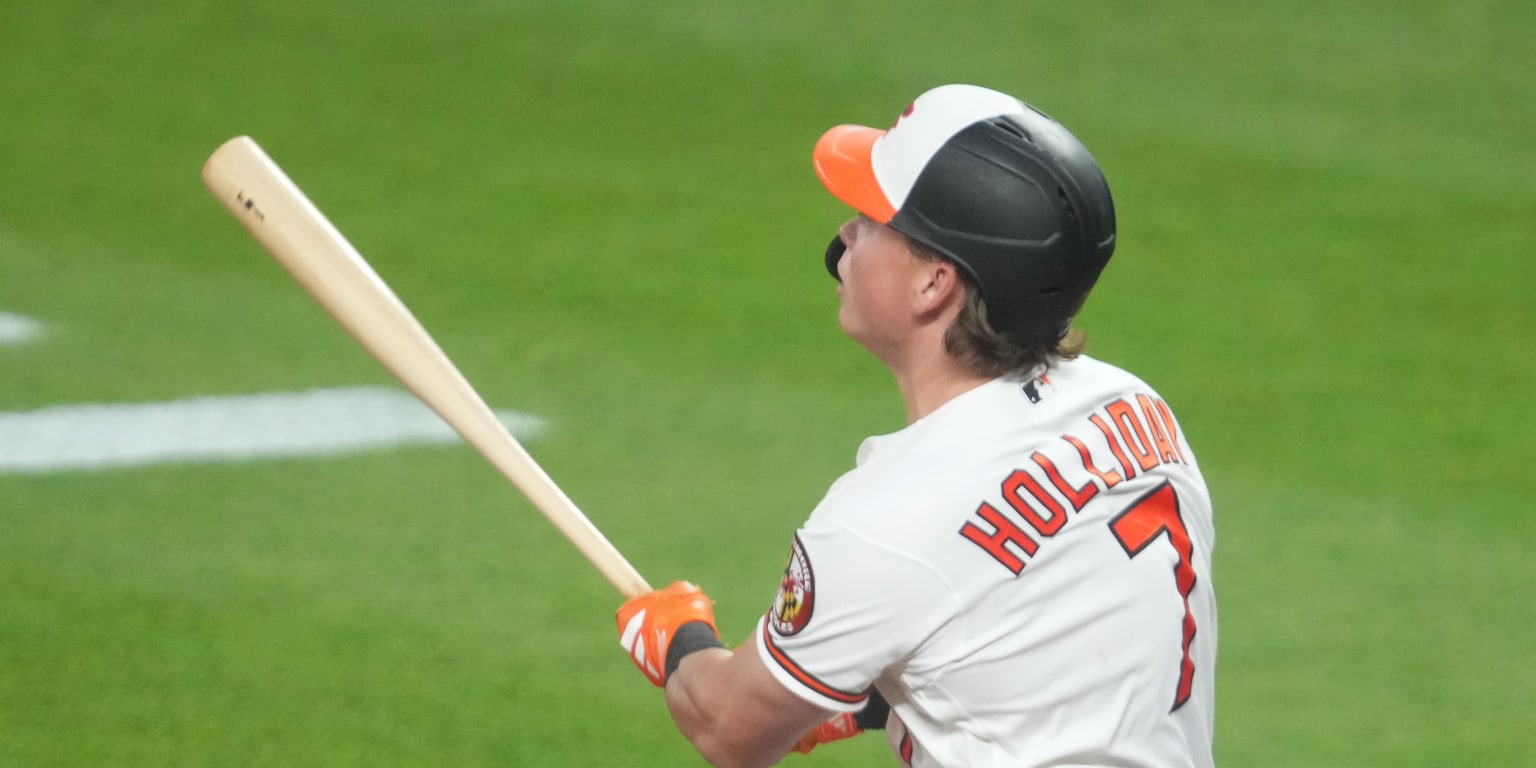
Jackson Holliday launched his third career grand slam Wednesday night at Camden Yards, a seventh-inning blast that pushed Baltimore past Seattle 7-2 and snapped a four-game losing streak. The 22-year-old's timing was surgical: he cleared the bases off George Kirby to extend the Orioles' lead to 7-0, with Brandon Young pitching a seven-inning shutout gem on the mound. This wasn't a random moment of power—it was the second time Holliday has gone yard with the bases loaded during a Bark at the Park promotion.
The pattern is now unmistakable enough to warrant a second look. Holliday's first two grand slams—July 31, 2024 vs. Toronto and April 16, 2025 vs. Cleveland—were separated by nearly nine months, but they shared a common thread: one came on his debut (the second player ever to reach Eutaw Street on a first MLB homer), and the second came during a Bark at the Park Night, which he dedicated to his bernedoodle, Coconut. Wednesday's third slam arrived in the same ceremonial context. Three career grand slams in his first 25 homers is elite company: he's only the second Oriole since 1954 to pack that many slams into such a small sample, joining Hall of Famer Brian Roberts. The velocity of that climb—from debut to third slam in less than two years—suggests Holliday isn't just a young hitter hitting home runs; he's a young hitter who produces in high-leverage situations.
What's driving this is structural, not superstition. Holliday has shown a willingness to hunt elevated fastballs with runners in scoring position, and Bark at the Park crowds tend to bring a certain energy that correlates with Orioles' offensive aggression in the early-to-middle innings. More importantly, Young's dominant performance (five strikeouts, two hits, 88 pitches) and the Orioles' six-run sixth inning—anchored by Pete Alonso's 14th homer of the season plus two RBI doubles—tells you Baltimore's offense is finally executing with men on base. The Mariners' pitching staff (Kirby especially) left fastballs in the zone, and Holliday didn't miss.
For prop bettors, the immediate takeaway is narrower than the headlines suggest. Holliday's grand slam total is a micro-niche play with limited volume—there are only 81 games left in the season and no player hits four slams in that window. His HR prop, however, deserves attention. He's now at three homers in what appears to be a healthy stretch of at-bats, and his 12% home run rate within his first 25 dingers (3 of 25) is well above league average for young power hitters. The Orioles' offense showed genuine rhythm Wednesday after the four-game skid, with back-to-back multi-run innings. If that structure persists and Holliday continues to see elevated pitches in counts where he can be aggressive, his HR line—likely in the 0.5-to-1.5 range per game—carries modest upside over the next week, particularly against softening pitching.
The real edge is situational: track Holliday's at-bats with runners in scoring position. His grand slam frequency isn't repeatable, but his willingness to be aggressive in those spots is. When the Orioles face teams with below-average strikeout rates (teams that work ahead in the count), Holliday's RBI and total bases props should tick higher. Wednesday's win also matters for the team context—Baltimore's moneyline now carries better value in Thursday's follow-up game against Seattle because the offense proved it can deliver in bunches rather than relying on pitching to carry the load.